




Edwardian Leather Travel Trunk
These robust Edwardian leather travel trunk pieces offer utilitarian storage and timeless character for contemporary interiors.
Edwardian Leather Travel Trunk
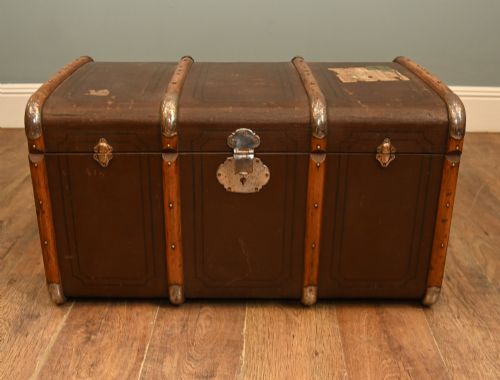
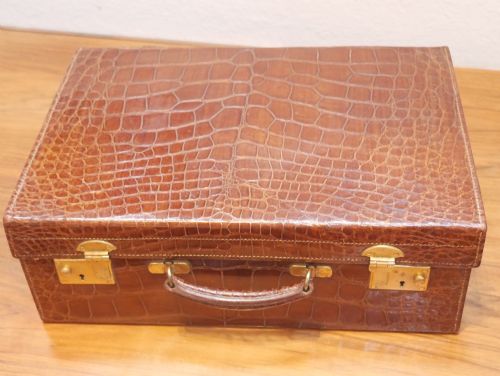
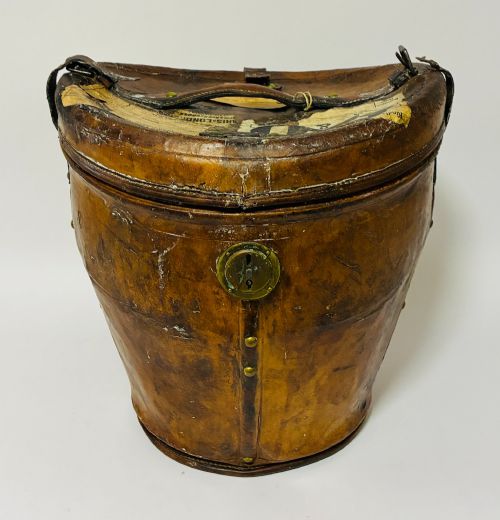
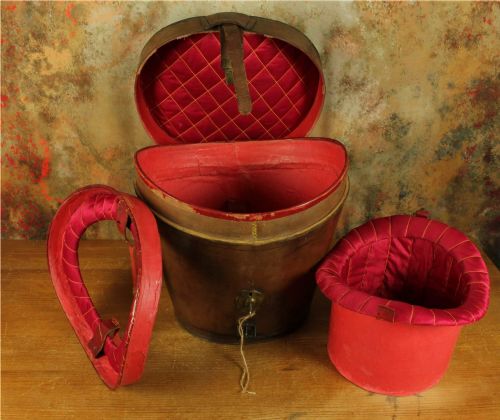
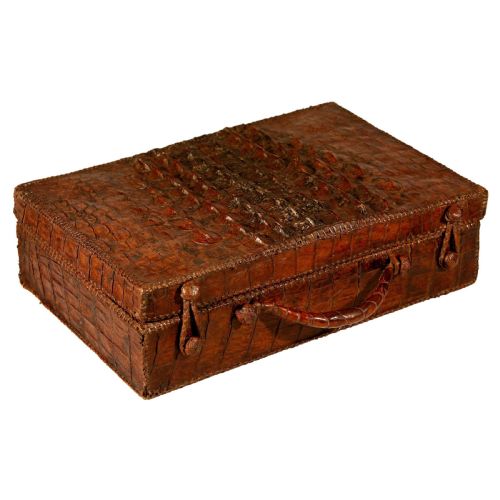
An Edwardian leather travel trunk serves as a sturdy receptacle designed for personal luggage during transit, appearing in various forms such as steamer trunks, hat boxes, and suitcases. Buyers encounter sturdy boxes constructed for lengthy journeys, often bearing the marks of extensive travel.
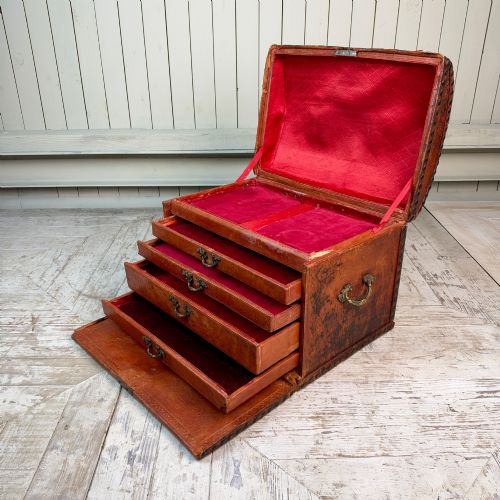
The selection ranges from compact picnic cases and double hat boxes to large storage chests and fitted gentleman's valets. Most examples originate from the Edwardian era, alongside pieces spanning the Victorian period up to the nineteen-thirties.
Makers utilise durable hides reinforced with canvas, wood, and metal to create practical luggage that doubles as decorative storage within modern homes. These containers reflect the luggage requirements of period travel, accommodating garments, hats, and specialised accessories.
How they were made
Craftsmen built these pieces using a core of wood, metal, or thick canvas enveloped in robust leather. Brass hardware, iron locks, and paper linings completed the construction, ensuring the contents remained secure during transit.
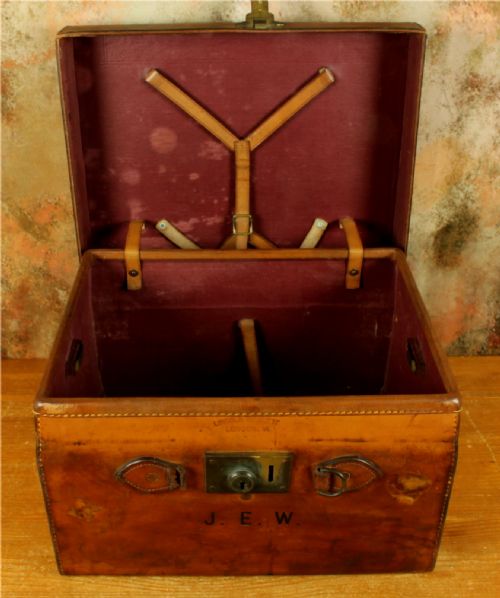
External surfaces frequently featured leather binding, stitched seams, and protective wooden battens to withstand the rigours of railway and steamship travel. Interior fittings involved bespoke compartments, fabric pockets, and fitted trays tailored for specific items like hats or silver dressing sets.
Edwardian Leather Travel Trunk Retail Price Guide 2026
Typical asking prices for edwardian leather travel trunk among the pieces listed under this phrase on Sellingantiques today, from the lower quarter to the upper quarter. They describe what is for sale here now, not the wider market.
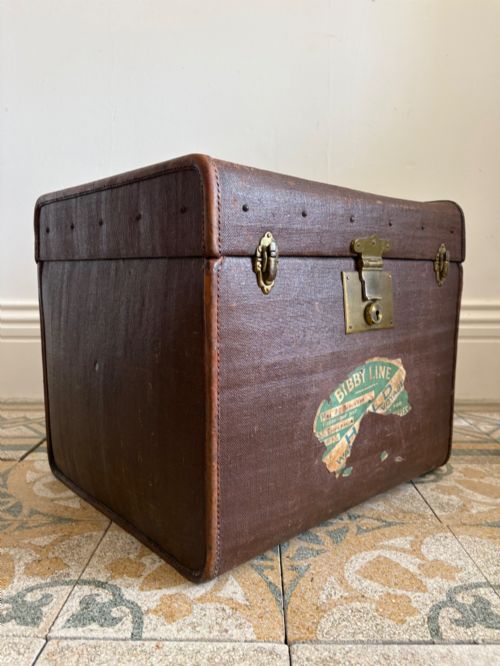
Several trunks retain original travel labels that hint at forgotten journeys across continents.
What varies in quality
Quality rests upon the integrity of the original construction, the sophistication of any fitted interior, and the presence of notable maker marks. Examples featuring complete internal compartments, original keys, and robust brass fittings occupy the upper tier.
The historical character imparted by authentic travel labels, monograms, and age-related patina distinguishes finer specimens from standard utility luggage. Superior hides and refined stitching demonstrate the skill invested by period makers.
Lincoln Bennett·Army and Navy·Aux Etats Unis·John Pound·Harrods·W Insall·C Antrobus·Finnegans of Bond Street·Louis Vuitton·Goyard
The Edwardian Leather Travel Trunk Glossary
- Steamer trunk
- A lower-profile travel trunk designed to fit beneath the berth on a steamship. These pieces allowed travellers to access personal belongings easily during ocean voyages.
- Hat box
- A specialised storage case shaped to protect tall hats or top hats during transit. These circular or oval containers often feature internal cradles.
- Portmanteau
- A large leather suitcase that opens into two equal compartments. The term describes traditional hinged luggage used by nineteenth and early twentieth-century travellers.
- Vellum
- A fine parchment material derived from calfskin, utilised to cover luxury trunks. It provides a smooth, pale surface distinct from standard grained leather.
- Fitted interior
- An internal arrangement featuring dedicated compartments, trays, and holders for bottles, brushes, or garments. Such designs indicate higher-tier gentleman's luggage.
Edwardian Leather Travel Trunk: Frequently Asked Questions
How were these trunks used?
Travellers packed personal clothing, hats, and accessories into these reinforced containers for journeys by train, ship, and carriage.
Luggage handlers subjected them to heavy use, which accounts for the durable leather, canvas, and metal construction seen today.
How do I live with a trunk?
These pieces function well as coffee tables, end tables, or decorative storage chests at the foot of a bed.
Their interiors accommodate blankets and books while adding tactile character and period warmth to a room.
How do I date a piece?
Dating relies on construction styles, materials, and associated maker stamps or historical travel labels.
Victorian and Edwardian examples often display distinct brass hardware and canvas bindings characteristic of their respective decades.
What is a fitted interior?
A fitted interior contains specialised compartments, removable trays, and straps designed to secure grooming items or garments.
Gentleman's valets and dressing cases frequently include silver brushes and glass bottles within these organised spaces.