

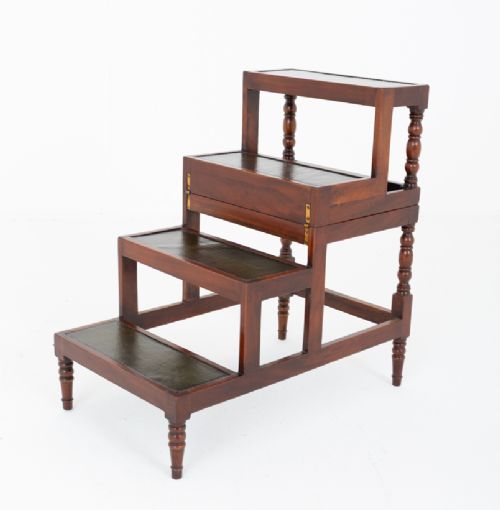


Brown Leather Library Steps
Brown leather library steps are practical climbing pieces designed for reaching high shelves, combining polished timber and hide.
Brown Leather Library Steps
Brown leather library steps encompass freestanding sets and dual-purpose metamorphic chairs originating from the nineteenth century onward. These furnishings served tall bookcases in private studies and grand libraries, allowing access to upper shelves.
The versions encountered on this page range from Regency pairs to later mahogany stair forms and oak metamorphic chairs. Many feature inset hides on the treads for grip, alongside spiral configurations or traditional stepped risers.
Makers utilised architectural styles including Regency, Victorian, and Gothic Revival to match period interiors. Pieces often integrate sturdy timbers such as mahogany and oak with brass fittings.
Construction and Materials
Cabinet makers constructed these climbing pieces primarily from solid mahogany and oak, often incorporating brass castors and hinges. Treads were frequently inset with tooled brown leather to provide traction and a refined finish.
Metamorphic designs required intricate pivot mechanisms and folding joints to transform an armchair securely into a set of steps. Joinery remained robust to support regular weight-bearing use in domestic and institutional libraries.
Brown Leather Library Steps Retail Price Guide 2026
Typical asking prices for brown leather library steps among the pieces listed under this phrase on Sellingantiques today, from the lower quarter to the upper quarter. They describe what is for sale here now, not the wider market.
Some steps include secret folding mechanics to let tired scholars sit down immediately after reaching a book.
Assessing Quality
Quality rests upon the precision of the joinery and the ingenuity of any folding mechanism in metamorphic examples. Smooth operation when converting an armchair into steps indicates superior craftsmanship.
The choice of timber and the preservation of the original leather tread inserts distinguish finer examples from standard utility items. Subtle details like stamped maker signatures and brass mounts elevate the standing of a piece.
J.Jarvis·Morgan and Sanders·Richard Hicks Bridgens
The Brown Leather Library Steps Glossary
- Metamorphic furniture
- Pieces designed to transform from one form of furniture into another, such as an armchair converting into library steps. This clever engineering solved space constraints in period homes.
- Tread
- The horizontal surface of a step where one places the foot when climbing. On library steps, these surfaces are frequently lined with leather.
- Gothic Revival
- An architectural and decorative style popular in the nineteenth century, drawing inspiration from medieval forms. Pieces in this aesthetic often display pointed arches or heavier structural elements.
- Regency style
- A design aesthetic reflecting the early nineteenth century, characterised by classical restraint and elegant proportions. It draws heavily on ancient Greek and Roman motifs.
Brown Leather Library Steps: Frequently Asked Questions
What are brown leather library steps?
These are functional pieces of antique furniture created to help readers reach high bookshelves in private libraries. They combine timber frames with inset leather treads for safe climbing.
Many examples double as metamorphic chairs that fold out into stair configurations when needed.
How do metamorphic library steps work?
Metamorphic library steps utilise hidden hinges, pivots, and sliding tracks built into the chair frame. By manipulating the backrest and seat, the furniture safely transforms into a sturdy staircase.
This clever dual purpose allowed homeowners to save space without sacrificing utility.
Where were library steps used?
They originated in the grand libraries and studies of large country houses where ceilings were high. Owners needed reliable access to elevated rows of bound volumes.
Over time, they found places in smaller domestic studies and institutional reading rooms.
How do I care for leather treads?
Leather treads benefit from gentle dusting and occasional treatment with appropriate leather dressings to prevent drying. Avoiding direct sunlight helps preserve the colour and suppleness of the hide.
Careful use ensures the tooled surfaces remain intact over decades.