


Brown Leather Club Armchair
A brown leather club armchair offers deep, enveloping seating that anchors a room with rich texture and enduring comfort.
Brown Leather Club Armchair
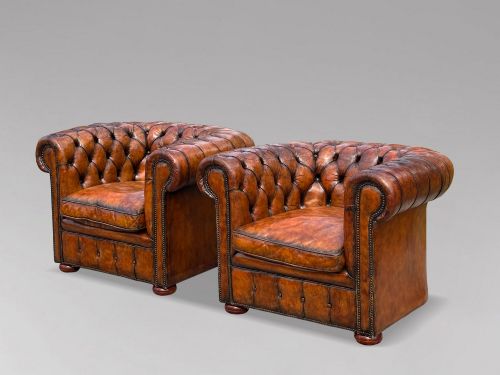
A brown leather club armchair provides substantial seating designed for heavy use and deep relaxation, appearing frequently in library, fireside and club configurations. Buyers seeking this form will find examples spanning the nineteenth century through the Art Deco period.
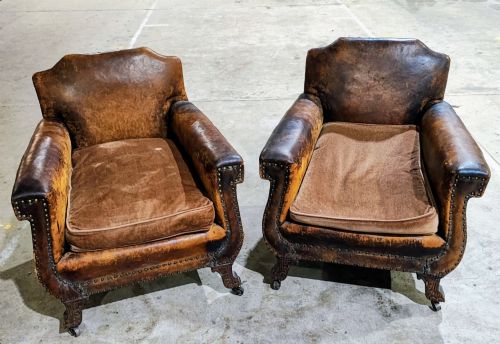
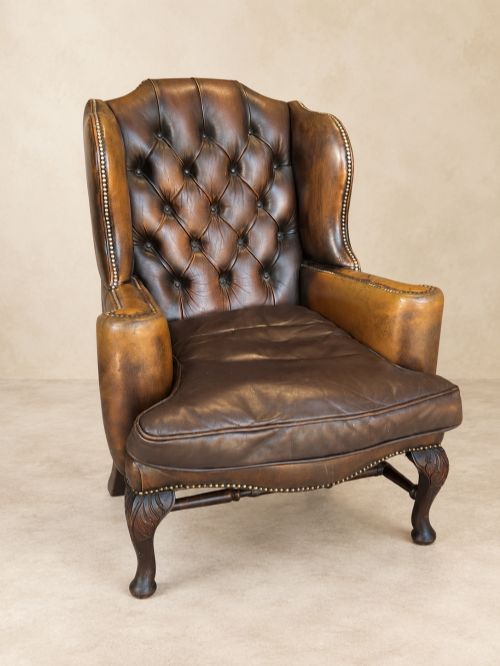
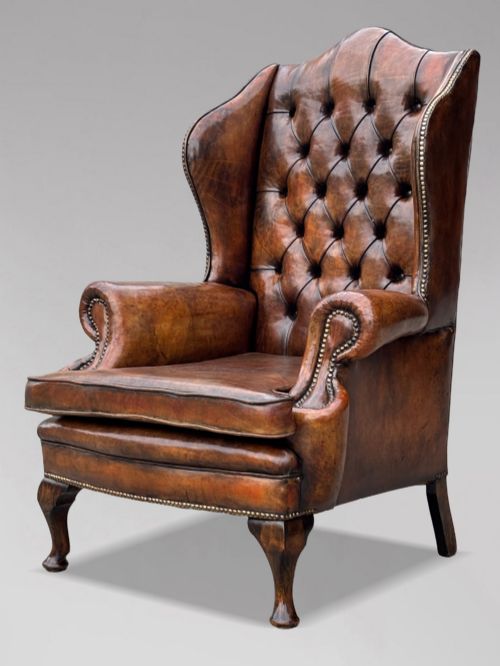
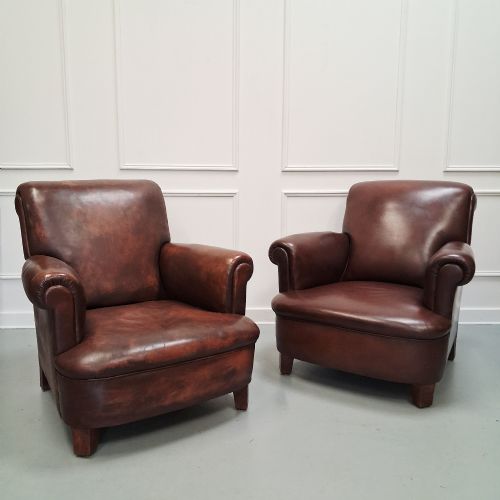
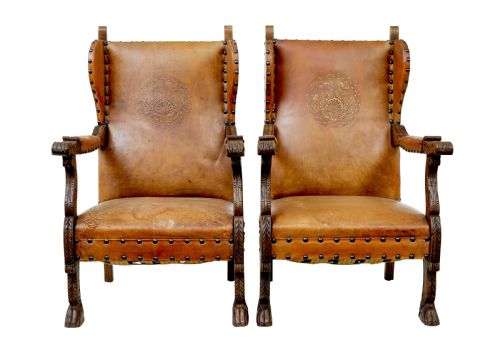
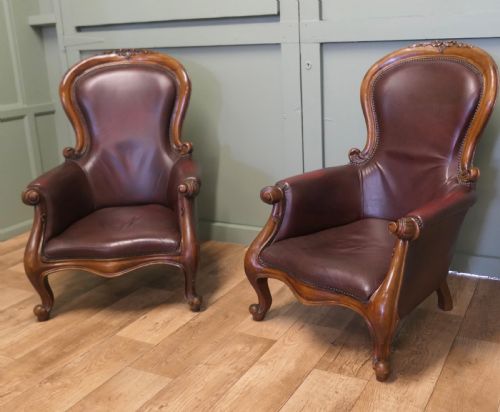
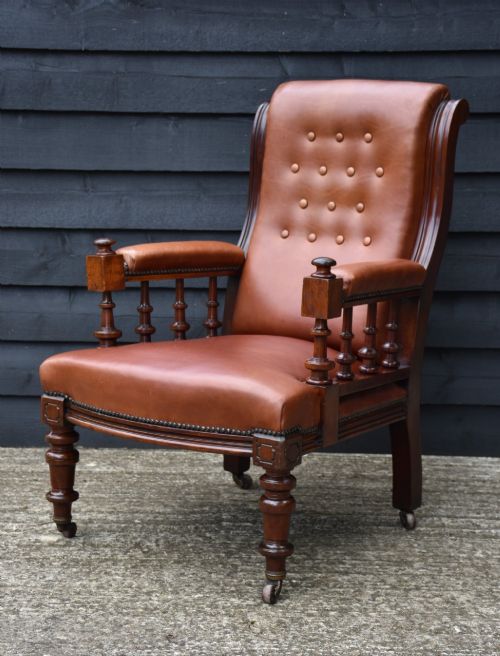
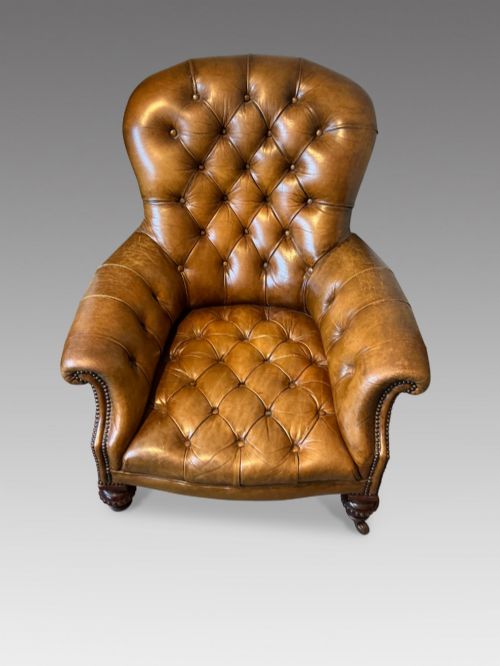
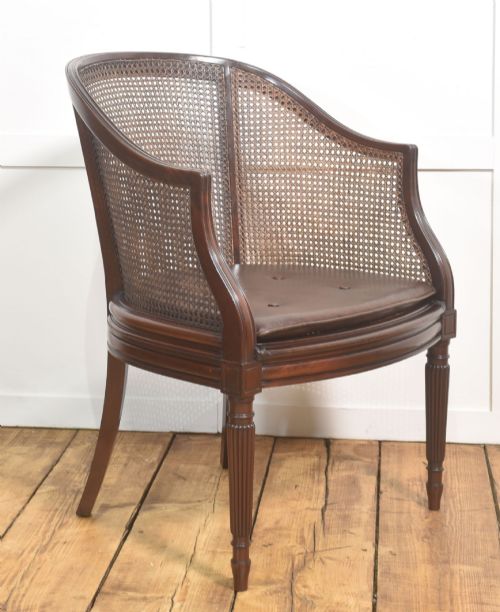
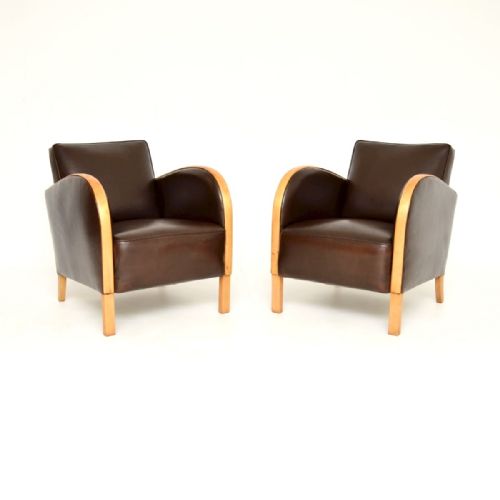
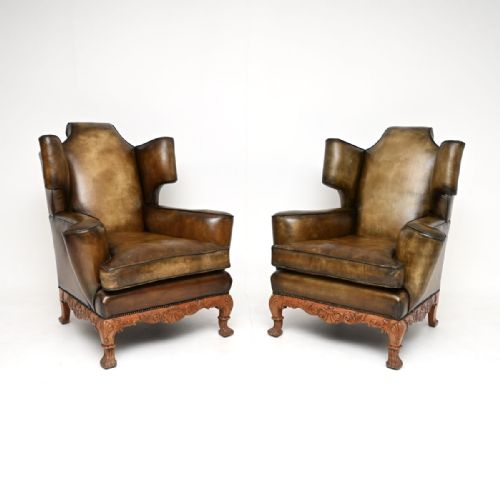
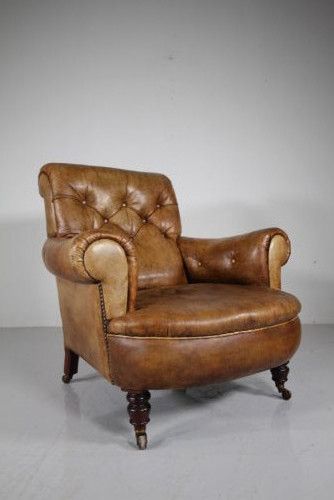
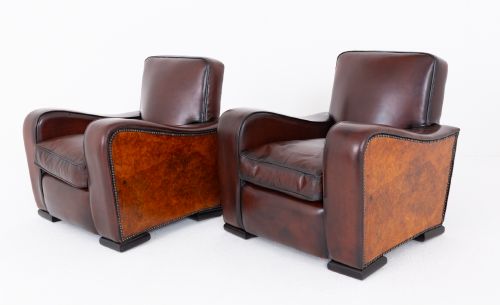
The selections on this page range from Victorian button-backed library chairs and Edwardian models to French Art Deco club chairs. Common variations include wing backs, tub shapes and low fireside forms paired with generous proportions.
Origins stretch across English, French and Swedish workshops, utilising timber frames such as mahogany, oak and walnut. These seating options serve as focal points in studies, sitting rooms and reading corners.
Materials and construction
Frames rely on sturdy timbers including mahogany, oak, walnut and satin birch, providing the structural skeleton necessary to support deep upholstery. Wood and metal elements often work alongside cane panels in specific Edwardian variants.
Upholstery centres on durable leather, sometimes embossed or buttoned, stretched over sprung or padded interiors. Brass tacks frequently secure the hide edges to the wooden frames of nineteenth-century and twentieth-century pieces alike.
Listings feature frames constructed from mahogany, oak, walnut, satin birch and general timber alongside brass and metal details.
Assessing quality and character
Quality rests in the harmony of the timber frame and the depth of the leather patina, where heavier nineteenth-century library models differ markedly from streamlined Art Deco club chairs. The integrity of the internal support dictates how firmly the chair holds its generous shape over decades of use.
Subtleties in carving, such as those on Victorian mahogany frames, separate standard utility seating from finer library armchairs. The suppleness of the hide and the precision of brass tack work distinguish regional workshops and master makers.
Harry and Lou Epstein
The Brown Leather Club Armchair Glossary
- Wing back
- An armchair style featuring protective side panels designed to shield the sitter from draughts. These high-backed chairs often appear in Victorian and Edwardian iterations.
- Club chair
- A deep, comfortable armchair upholstered in leather, originating in French and English establishments. They prioritise low profiles and padded armrests.
- Buttoned
- An upholstery technique where depressions are created in the leather using buttons pulled tight to the frame. This method secures internal padding and introduces texture.
- Library chair
- A sturdy seating form traditionally utilised in studies and reading rooms, frequently rendered in oak or mahogany with leather upholstery.
- Tub chair
- A curved armchair where the back and arms form a single continuous rounded enclosure. Edwardian examples often combine this shape with cane panelling.
Brown Leather Club Armchair: Frequently Asked Questions
What defines a club armchair?
A club armchair is characterised by a deep seat, low back and thick leather upholstery designed for prolonged comfort. These chairs originated to provide substantial seating in private establishments and reading rooms.
Over time, the form evolved from nineteenth-century library models into the rounded, streamlined proportions seen in twentieth-century French and Art Deco examples.
How do I date a leather armchair?
Dating relies on observing structural shifts in the wood frame, the styling of the legs and the method of upholstery. Victorian pieces often display carved mahogany or oak with buttoned leather, while Art Deco versions favour smooth lines and walnut or satin birch.
Evidence from nineteenth-century designs shows heavier frames and wing backs, whereas later twentieth-century iterations embrace compact club shapes.
Where should I place a club chair?
These armchairs suit studies, libraries and living rooms where deep seating and durable leather integrate with wood furniture. Their substantial presence anchors a reading corner or sits comfortably beside a fireplace.
Pairing them with wooden desks or matching secondary club chairs creates a balanced seating arrangement.
How do I care for antique leather?
Antique leather benefits from regular dusting and occasional conditioning to maintain suppleness in the hide. Keeping these chairs away from direct heat sources prevents the material from drying out over time.
Preserving the natural patina maintains the historical character developed through decades of use.