




Art Deco Leather Settee
An art deco leather settee anchors a room with bold geometric presence and tactile warmth, bringing signature twentieth-century style into modern interiors.
Art Deco Leather Settee
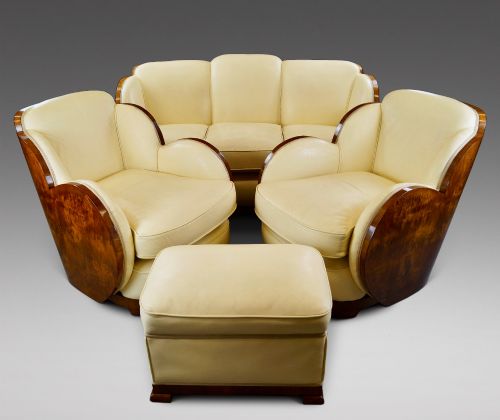
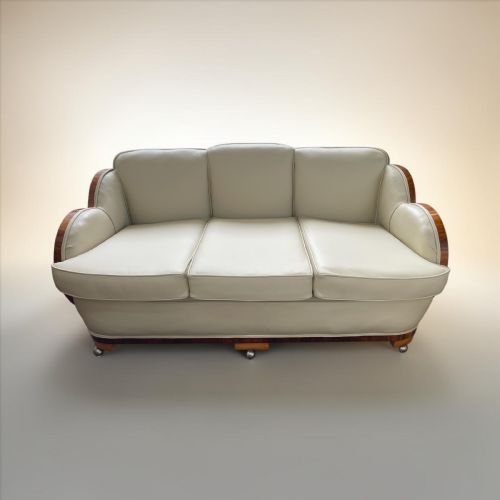
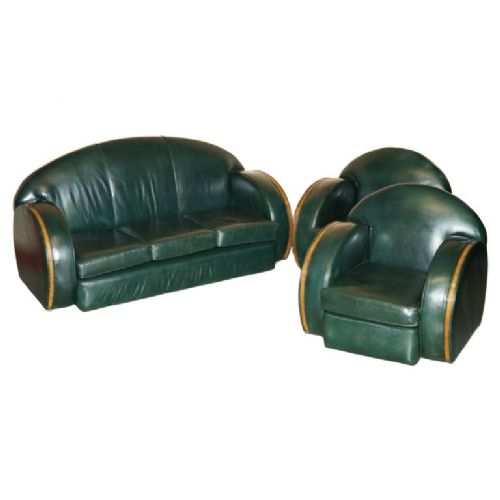
When you search for an art deco leather settee, you encounter substantial seating forms rooted in the 1920s and 1930s. These pieces range from grand three-seater suites and cloud sofas to compact club settees and miniature apprentice examples.
The versions most commonly met on this page combine supple hides with striking wooden frames, often appearing as part of matching lounge suites alongside armchairs. Forms vary from sweeping scroll shapes to the iconic rounded contours of cloud designs.
Originating predominantly from the interwar decades, these settees reflect a period of bold design experimentation. They serve as both functional seating and sculptural statements within a home.
Materials and construction
Makers built these settees using sturdy hardwood internal structures to support the generous upholstered volumes. Timber frames provided the necessary rigidity for sweeping arms and low, deep seating profiles.
Visible woodwork frequently showcased decorative veneers such as walnut, burr walnut, maple, and palisander. These exotic and figured woods added rich grain patterns that contrasted sharply with the smooth leather upholstery.
Listings feature pieces spanning the 1920 and 1930 periods, incorporating materials such as leather, walnut, palisander, and zebrawood.
Judging quality in design and finish
Quality in these settees rests upon the ambition of the silhouette and the harmony between the timber elements and the hide. Superior examples exhibit confident proportions, such as well-balanced scroll arms or pronounced cloud forms that command the space.
The selection and application of surface materials further divide the range. Expert use of figured veneers like burr walnut or palisander elevates a frame, while the integration of specialist leathers defines the finish of the seating.
Harry and Lou Epstein
The Art Deco Leather Settee Glossary
- Art Deco
- A design style spanning the 1920s and 1930s characterised by streamlined forms, geometric symmetry, and modern industrial influences. It rejected Victorian ornamentation in favour of sleek, forward-looking aesthetics.
- Cloud Suite
- A specific 1930s upholstery style featuring rounded, bulbous armrests and backrests that evoke soft cumulus formations. These suites offer deep, enveloping comfort through exaggerated, padded contours.
- Palisander
- A dense, richly figured exotic hardwood often utilised for its dark grain and luxurious polish. It provided a dramatic dark contrast in high-end interwar cabinetwork.
- Burr Walnut
- A timber veneer harvested from the gnarled growths of walnut trees, displaying swirling, highly decorative grain patterns. It was favoured for luxury furniture surfaces during the art deco period.
- Club Settee
- A deep, comfortable lounge sofa typically upholstered in leather, designed for relaxed seating. Its generous proportions make it a staple of twentieth-century club and lounge interiors.
Art Deco Leather Settee: Frequently Asked Questions
How do I date an art deco leather settee?
Pieces generally date from the 1920s and 1930s, aligning with the height of the modernist design movement. Stylistic cues like cloud-shaped padding or specific veneer choices help narrow the timeframe.
Examining the construction methods and internal framing also provides clues to the exact manufacturing era. Most pieces maintain distinct interwar proportions.
How do I incorporate one into a modern room?
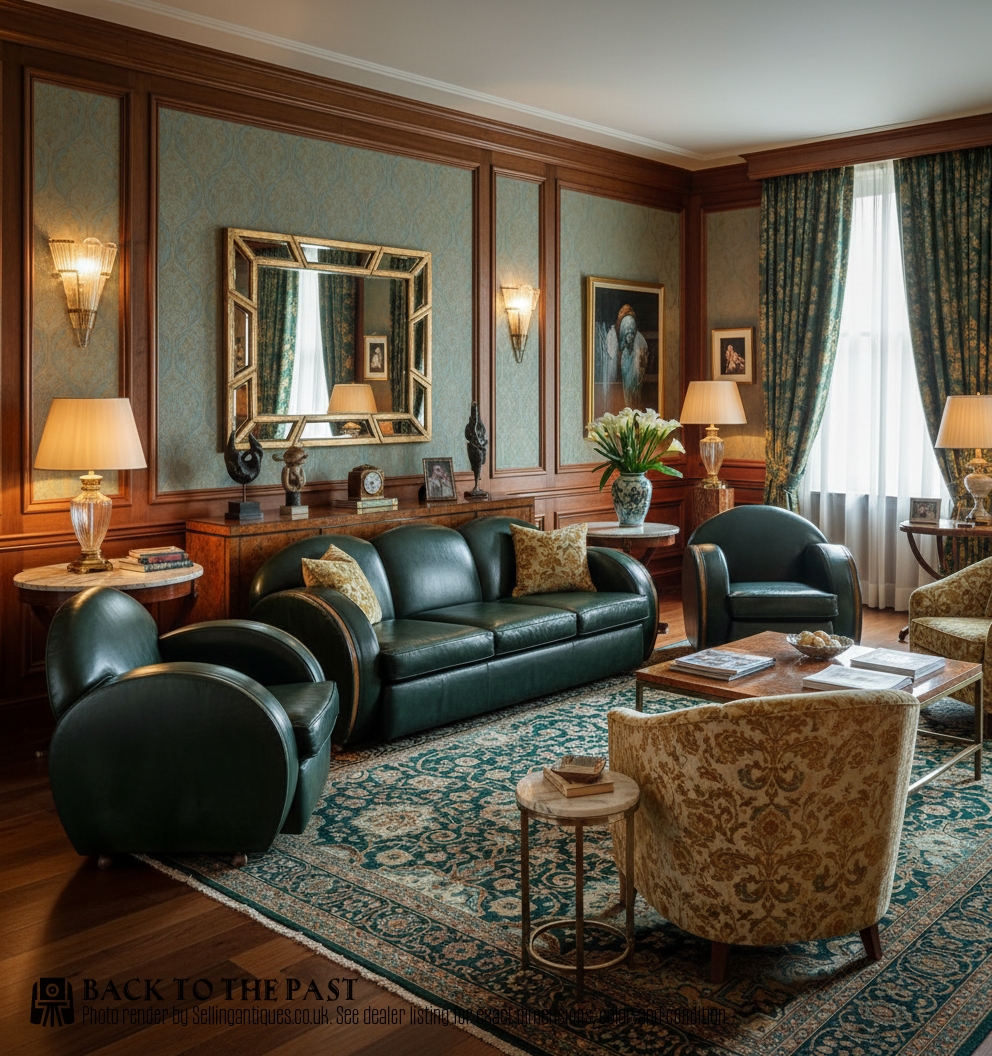
An art deco leather settee works well as a focal point in contemporary living spaces, contrasting against minimalist walls and floors. Pairing the piece with neutral surroundings highlights its distinctive silhouette and tactile hide.
The rich wood veneers and leather tones complement both industrial interiors and traditional settings. Proper placement allows the sculptural form of the sofa to command the room.
What woods were used on these settees?
Makers utilised solid hardwoods for internal framing while applying decorative veneers to visible exterior surfaces. Common choices included walnut, burr walnut, maple, and palisander.
These timbers provided striking grain patterns and rich colour variations. The wood elements framed the leather upholstery to create a balanced two-tone aesthetic.