



1930s Burr Walnut Sofa
These pieces known as a 1930s burr walnut sofa bring striking grain patterns and geometric forms to a room.
1930s Burr Walnut Sofa
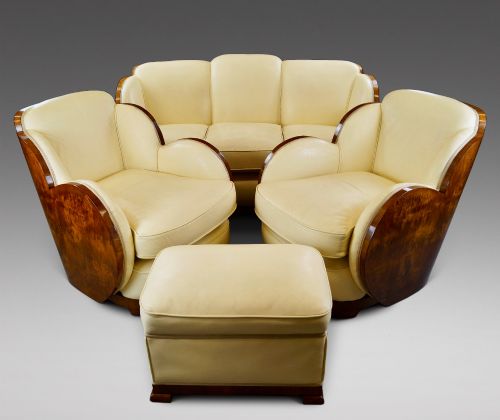
A 1930s burr walnut sofa defines an interior through distinct Art Deco design and rich timber grain. Buyers investigating this search phrase encounter cloud-shaped seating forms and lounge suites originating from the 1930 and 1920 periods.
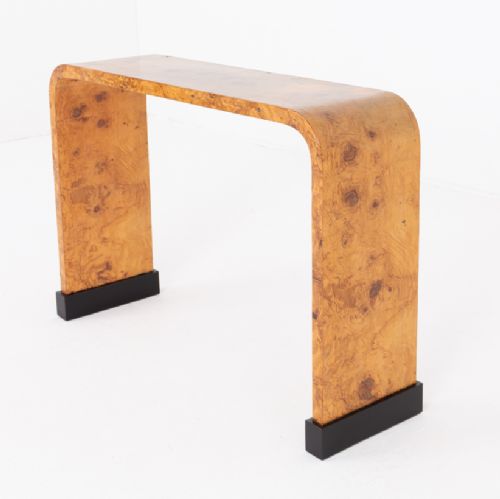
The versions most commonly met on this page combine walnut veneer with upholstered elements such as leather. Makers like Hille and Epstein shaped these seating forms alongside matching occasional tables and console pieces.
How They Were Made
Craftsmen applied burr walnut veneer over solid hardwood frames to achieve sweeping, curvilinear silhouettes. This technique highlights the intricate, swirling patterns of the wood across broad surfaces.
Makers integrated leather upholstery with polished wooden frames to complete the cloud shape characteristic of the period. Metal elements occasionally appeared in auxiliary tables associated with these suites.
Miniature apprentice furniture brings full-scale Art Deco cloud suites down to dollhouse proportions.
What Varies in Quality
The selection of the veneer distinguishes finer examples from simpler production. Master workshops chose burr walnut with dense, symmetrical figuring that wraps fluidly around rounded edges.
Attribution to notable makers such as Epstein or Hille elevates a piece through superior joinery and sophisticated proportion. The integration of the wooden frame with the upholstered seating core dictates the overall refinement.
Hille·Epstein·Harry and Lou Epstein
The 1930s Burr Walnut Sofa Glossary
- Burr Walnut
- A specialised wood grain obtained from the growths on walnut trees. It provides the highly decorative, mottled patterns seen on Art Deco furniture.
- Art Deco
- A design style dominant in the 1920s and 1930s. It relies on streamlined forms, geometric symmetry, and luxurious materials.
- Cloud Suite
- An upholstered seating arrangement characterised by rounded, voluminous contours. The shape mimics soft cumulus clouds and defines high-end lounge furniture of the era.
1930s Burr Walnut Sofa: Frequently Asked Questions
What defines a 1930s burr walnut sofa?
These pieces display the distinctive rounded contours of the Art Deco cloud shape. They rely on figured walnut veneer to create visual movement across the timber surfaces.
Makers often paired the polished wood frames with leather upholstery to build cohesive lounge suites. The overall aesthetic balances bold modernity with traditional cabinet-making skills.
How do I care for burr walnut veneer?
Keep the wood away from direct sunlight and steady heat sources to prevent the veneer from drying out. Regular dusting with a soft, dry cloth preserves the polished finish.
Avoid using harsh chemical polishes that can degrade the historic surface. Natural beeswax applied sparingly helps maintain the lustre of the walnut.
Were these sofas part of larger sets?
Many examples formed part of comprehensive lounge suites that included matching armchairs. Designers also produced complementary console tables and occasional tables in the same timber.
Miniature apprentice pieces also exist alongside full-scale furniture. These smaller items demonstrate the same stylistic commitment to cloud-shaped geometry.
What is the difference between walnut and burr walnut?
Standard walnut timber provides a straight, relatively uniform grain pattern with deep brown tones. Burr walnut comes from a tree growth that creates swirling, knotty configurations full of movement.
Cabinet makers reserved burr walnut for the most visible exterior surfaces. This decorative veneer elevates the visual impact of Art Deco furniture.