
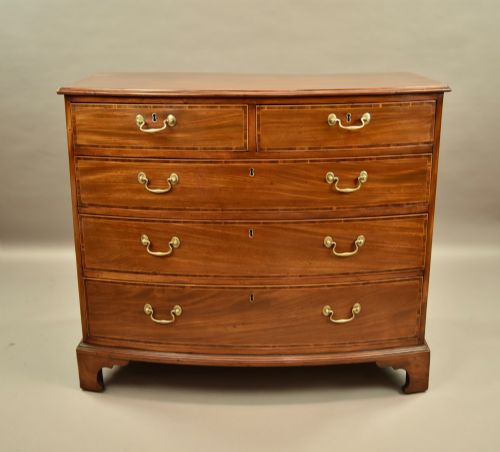
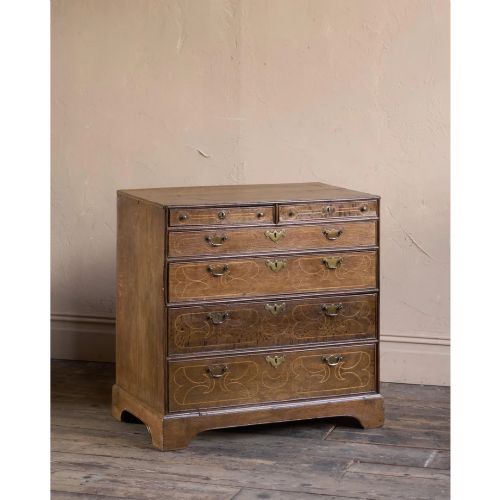
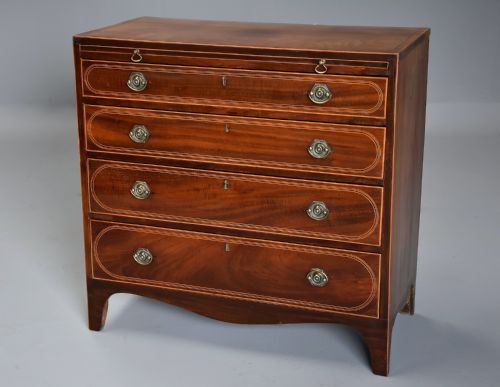
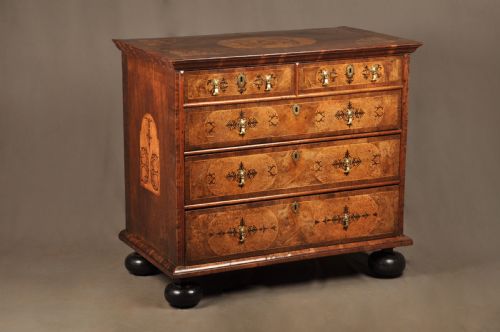
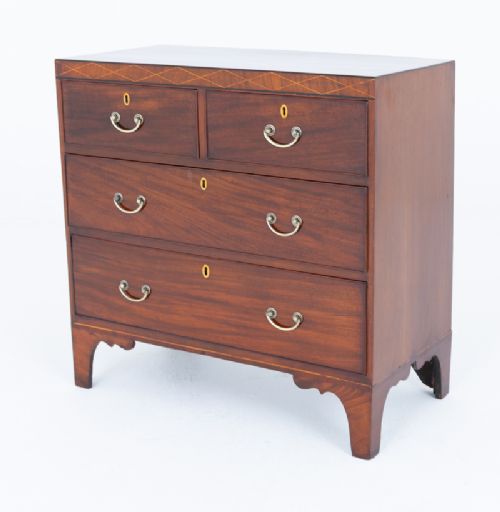
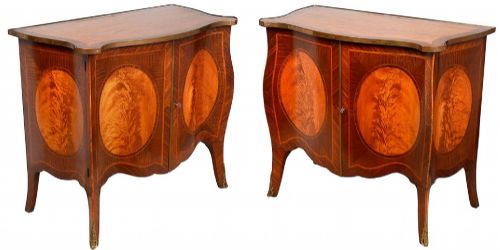
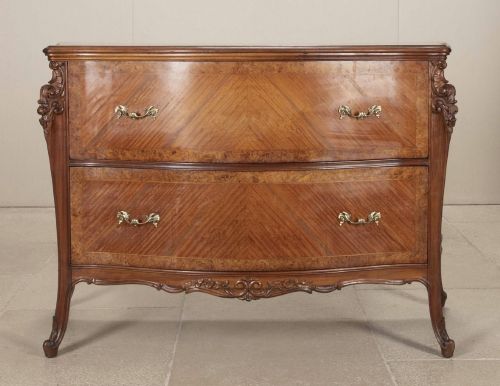
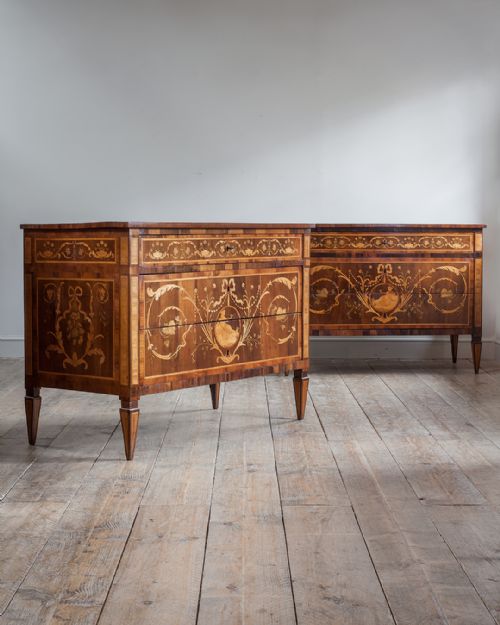
Brown Inlaid Commode
A brown inlaid commode brings together rich cabinet timbers and detailed marquetry across centuries of European design.

Brown Inlaid Commode
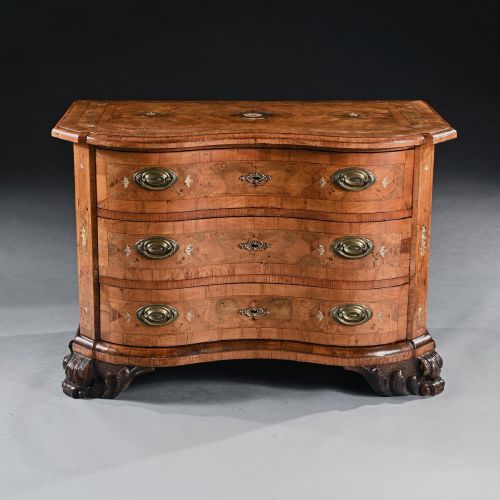
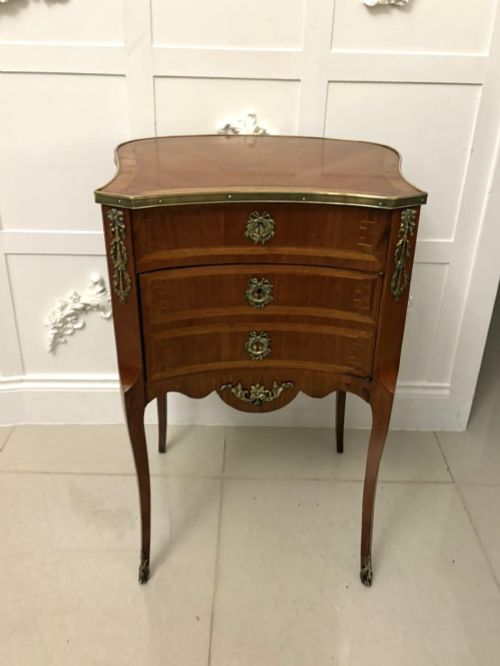
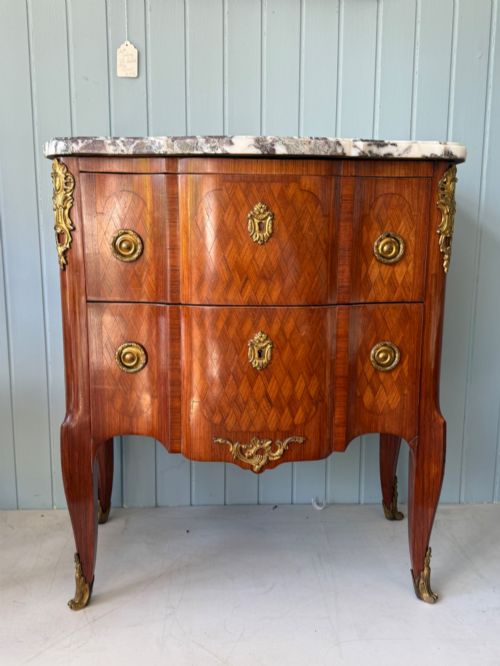
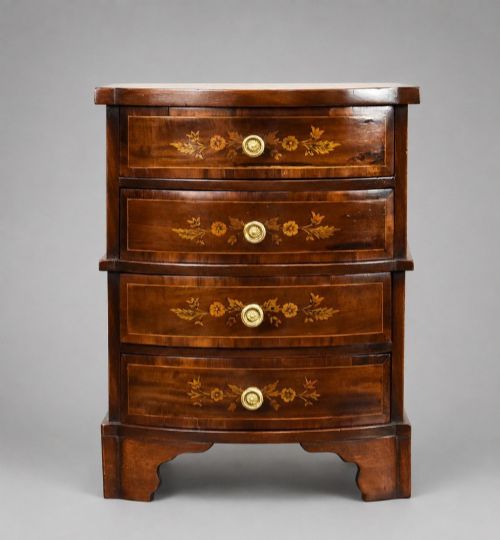
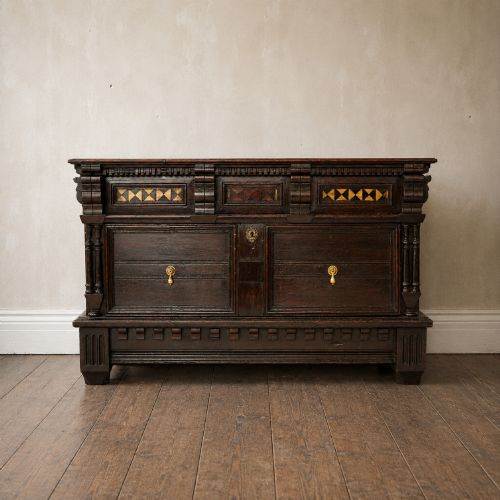
A brown inlaid commode unites low storage cabinetry with decorative surface work, appearing most frequently in forms described as chests of drawers, side cabinets, and commodes. Pieces span the 17th, 18th, and 19th centuries, alongside later revivals from the early 20th century.
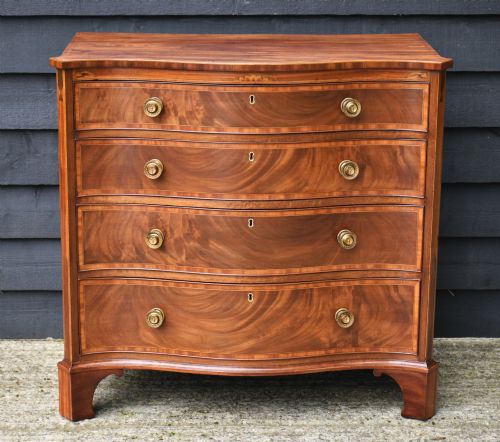
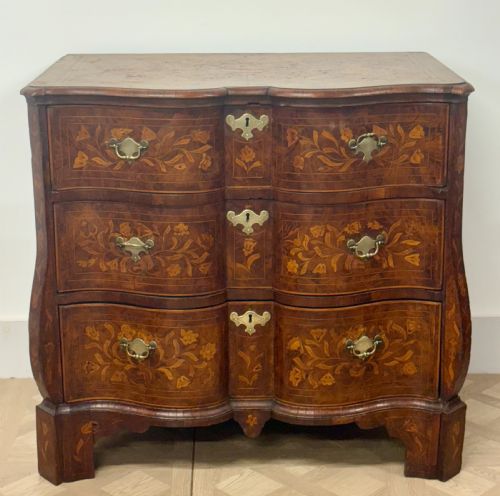
Makers across England, France, Italy, Germany, and the Netherlands utilised distinct regional proportions, moving from substantial oak and walnut structures toward curved serpentine and bombe fronts in mahogany, satinwood, and kingwood.
Construction and materials
Cabinetmakers built foundational carcases from dense timbers such as mahogany, oak, and walnut, selecting figured grains for primary visible surfaces.
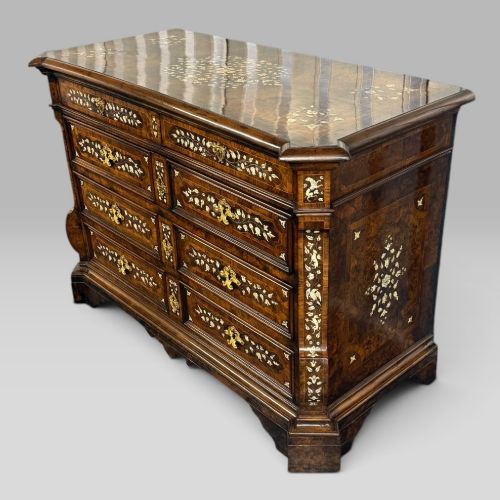
Decorative detailing relied on contrasting veneers, marquetry in pewter and ivory, and line inlay in satinwood, frequently paired with marble tops and cast brass or ormolu mounts.
Listings feature oak, walnut, and mahogany timbers alongside specialist materials like kingwood, satinwood, marble, and ormolu.
Judging the work
Quality rests upon the precision of the marquetry cutting and how seamlessly contrasting veneers meet across curved drawer fronts and serpentine edges.
Finer examples maintain structural integrity in their drawer linings and secondary timbers, while incorporating integrated brass hardware or heavy marble surfaces that fit the carcase precisely.
Druce & Co·Sormani
The Brown Inlaid Commode Glossary
- Marquetry
- The art of forming decorative patterns by fitting together small pieces of wood veneer, pewter, and ivory into a wooden ground. This technique defines the elaborate floral and geometric surface designs found on continental examples.
- Serpentine
- A furniture front curved in a wave shape, concave centrally and convex at the sides. This contour requires advanced woodworking skill to match the inlay accurately.
- Bombe
- A swollen or bulging outward curve characteristic of continental cabinet design, particularly on Dutch and French pieces. It creates deep storage capacity within a rounded profile.
- Kingwood
- A dense, heavy tropical timber featuring dark violet-brown tones with lighter streaks, utilised for high-end decorative veneers. It provides strong contrast against lighter woods like satinwood.
- Ormolu
- Gilded bronze used for decorative mounts, handles, and feet on continental commodes. It adds metallic definition to the corners and borders of the cabinet.
Brown Inlaid Commode: Frequently Asked Questions
Where should I place a commode?
These cabinets suit principal reception rooms, hallways, or bedrooms where surface space and drawer storage are both useful.
Their decorative marquetry fronts allow them to function as focal points against plain walls.
How do I care for marble tops?
Marble surfaces require gentle cleaning with neutral soap and water to avoid staining the porous stone.
Keep liquids away from unsealed edges and support the stone evenly across the wooden carcase.
Are these pieces suitable for daily use?
Period drawers provide practical storage for clothing or linens, provided the runners remain stable.
Careful handling of antique drawer mechanisms preserves the original internal timbers and linings.
How do I distinguish 18th-century work from later revivals?
Examination of internal construction methods, secondary timbers, and hand-cut dovetails reveals the period of manufacture.
Revival pieces from the early 20th century often display standardised machine work and different ageing patterns in the veneer.