

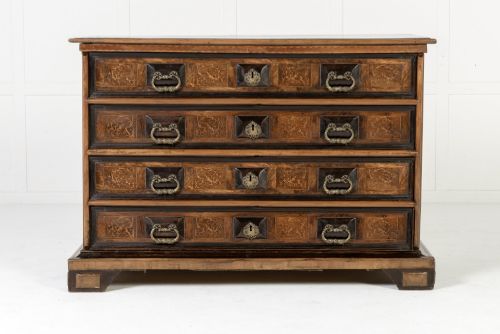


Italian Marquetry Commode
An italian marquetry commode brings intricate wood inlay and substantial storage to a room, offering both decorative impact and practical utility.
Italian Marquetry Commode
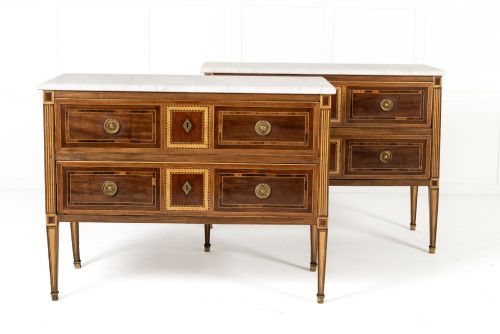
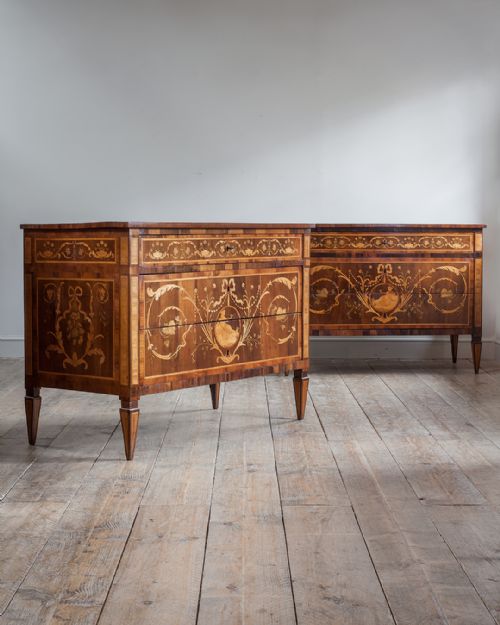
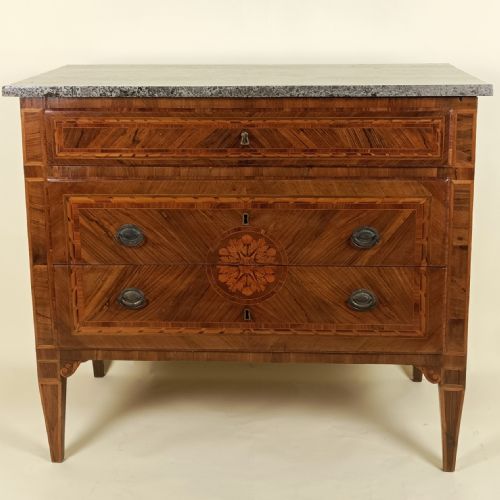
An italian marquetry commode is a decorative storage piece featuring elaborate wood veneer patterns across its surface. The examples found here span from the eighteenth century through to the twentieth century, encompassing styles such as Neoclassical, Baroque, and Rococo.
Buyers will encounter various forms including traditional chests of drawers, bombe commodes with curved fronts, and demi-lune side cabinets. These pieces originate from different Italian regions, displaying regional preferences in their joinery and decorative motifs.
Materials and Construction
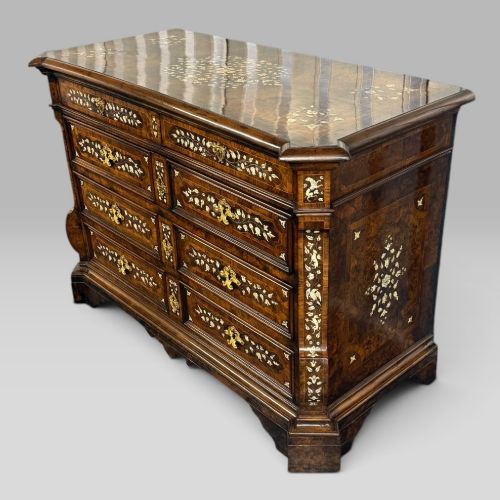
Cabinet makers utilised a foundation of solid timbers like walnut and mahogany, overlaid with delicate veneers of fruitwood, kingwood, and tulipwood. Individual pieces of contrasting wood were cut and fitted together to form complex pictorial or geometric marquetry designs.
Many examples incorporate additional decorative elements such as brass mounts, marble tops, or bone inlay. Structural integrity relies on traditional joinery techniques suited to the sweeping contours of bombe profiles and bow front cabinets.
Italian Marquetry Commode Retail Price Guide 2026
Typical asking prices for italian marquetry commode among the pieces listed under this phrase on Sellingantiques today, from the lower quarter to the upper quarter. They describe what is for sale here now, not the wider market.
The listings on this page feature multiple periods, spanning from eighteenth-century craftsmanship through to mid-twentieth-century revival pieces.
Factors of Quality
The sophistication of the marquetry design and the precision of the veneer work distinguish different tiers of quality. Finer items exhibit seamless integration of disparate wood species with sharp detailing that remains crisp across curved surfaces.
The selection of secondary materials also influences overall calibre, with superior items featuring heavier marble slabs, finely chased or cast ormolu, and robust internal framing that withstands centuries of use.
Grand Ducal Workshops·Pietro Ferrario
The Italian Marquetry Commode Glossary
- Marquetry
- Decorative veneer applied to furniture in patterns or pictures using thin slices of wood. This technique allows for elaborate pictorial scenes and complex geometric arrangements across the drawer fronts and sides.
- Bombe
- A swollen or bulging profile shape characteristic of certain period commodes. This curved contour requires advanced woodworking skill to ensure the veneer adheres smoothly without lifting.
- Kingwood
- A dense, richly figured exotic wood utilised in high-end cabinet making. Its dark colour and distinct grain provide strong visual contrast within marquetry designs.
- Ormolu
- Gilded bronze mounts applied to furniture for decorative accent and edge protection. These metallic elements are typically cast and chased to enhance the sculptural qualities of the piece.
- Demi-lune
- A half-moon shape used for the footprint and top of specific side cabinets. This curved form accommodates tight spaces while retaining a decorative presence.
Italian Marquetry Commode: Frequently Asked Questions
How do I care for an antique wood commode?
Keep wooden furniture away from direct sunlight and strong heat sources to prevent the veneers from drying out and cracking over time. Dust gently with a soft dry cloth and avoid harsh chemical polishes.
Maintain a stable room humidity where possible, as dramatic shifts can cause the underlying timber and delicate marquetry to expand or contract unevenly.
Where should I place an inlaid commode?
These decorative chests work well in hallways, living rooms, or bedrooms where their intricate wood patterns can be appreciated up close. Ensure the chosen spot allows adequate clearance for opening drawers and cabinet doors.
Because many period pieces feature delicate marble tops or fine veneer, avoid placing them in damp areas or high-traffic zones where they might sustain accidental knocks.
How do I distinguish regional Italian furniture styles?
Regional differences often appear in the choice of primary woods and the specific motifs used in the marquetry. Northern workshops frequently employed walnut and kingwood with restrained Neoclassical geometry.
Southern or central variants might lean towards more exuberant Baroque or Rococo curves, utilising fruitwood veneers and elaborate floral arrangements across the drawer fronts.
What is the difference between marquetry and inlay?
Marquetry involves assembling a complete veneer puzzle on a paper backing before gluing the entire sheet onto the furniture carcass. This technique covers the entire surface with a decorative wood skin.
Inlay typically refers to cutting recesses directly into a solid wood surface and fitting contrasting materials like bone or different woods into those specific depressions.