
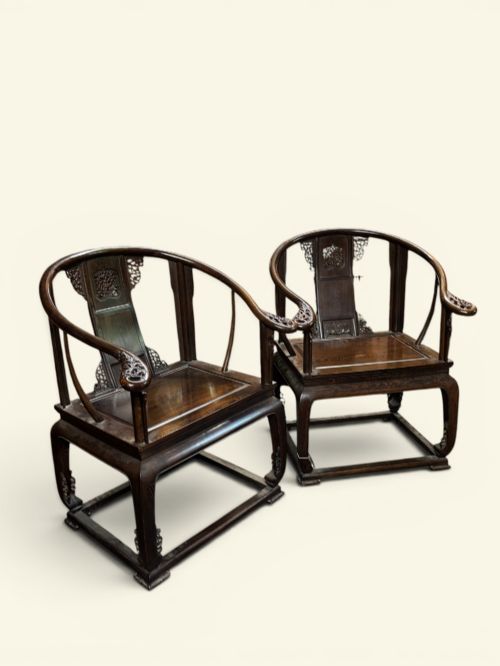


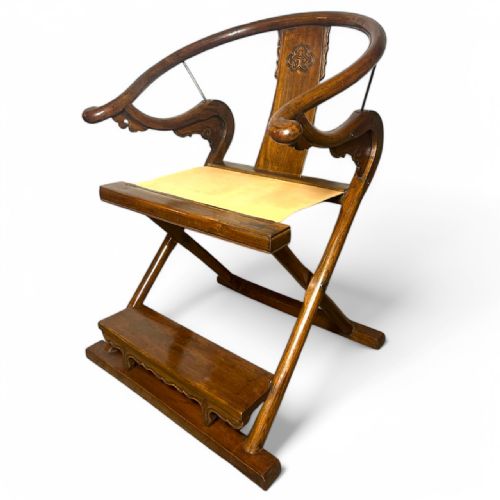


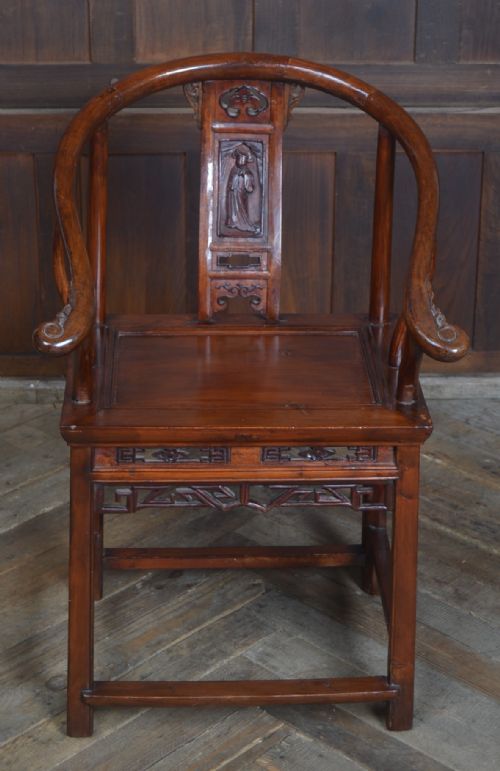


Brown Hardwood Armchair
A brown hardwood armchair brings rich timber grain and commanding form to a room, ranging from folding thrones to horseshoe-back seats.
Brown Hardwood Armchair
When you search for a brown hardwood armchair, you encounter seating shaped by traditions spanning Chinese, Indian, and European workshops. The pieces on this page lean heavily towards Chinese forms, including horseshoe-back designs, folding chairs, and throne chairs.
You will also find regional variations such as Anglo-Indian brass-inlaid chairs, Burmese throne chairs, and French Art Nouveau seating. These chairs utilise dense timbers like elm, teak, and rosewood, often displaying dark polished surfaces.
Many examples arrive as pairs or sets, serving as substantial statement furniture for halls, studies, and living spaces. The eras represented stretch from the eighteenth century through the nineteenth century and into the early decades of the twentieth century.
What varies in quality
Depth of carving and sharpness of detail separate standard seating from exceptional examples, particularly in pieces featuring profuse floral or figurative motifs. The choice of timber also dictates quality, with dense rosewood and teak commanding greater presence than softer domestic woods.
Structural integrity depends on the precision of traditional joinery, especially in complex designs like folding thrones and curved horseshoe-backs. Preservation of the original dark polish, brass inlays, and lacquered surfaces preserves the aesthetic integrity of the period.
Materials recorded across current inventory include elm, teak, rosewood, brass, and fabric applied to dark polished hardwood frames.
The Brown Hardwood Armchair Glossary
- Horseshoe-back
- A chair design featuring a continuous curved backrest and armrail shaped like a horseshoe. This form provides ergonomic support and appears frequently in traditional Chinese seating.
- Savonarola chair
- A folding armchair constructed from multiple intersecting wooden slats forming an X-shaped frame. Originating in Italy, this style was later adopted in Indian workshops with local carving.
- Throne chair
- A large, high-backed ceremonial seat designed to dominate a room. These pieces often feature profuse carving and substantial hardwood construction.
- Elm
- A durable hardwood utilised by traditional makers for structural furniture frames. It offers strong grain patterns and accepts dark polishing well.
Brown Hardwood Armchair: Frequently Asked Questions
How do I style a brown hardwood armchair?
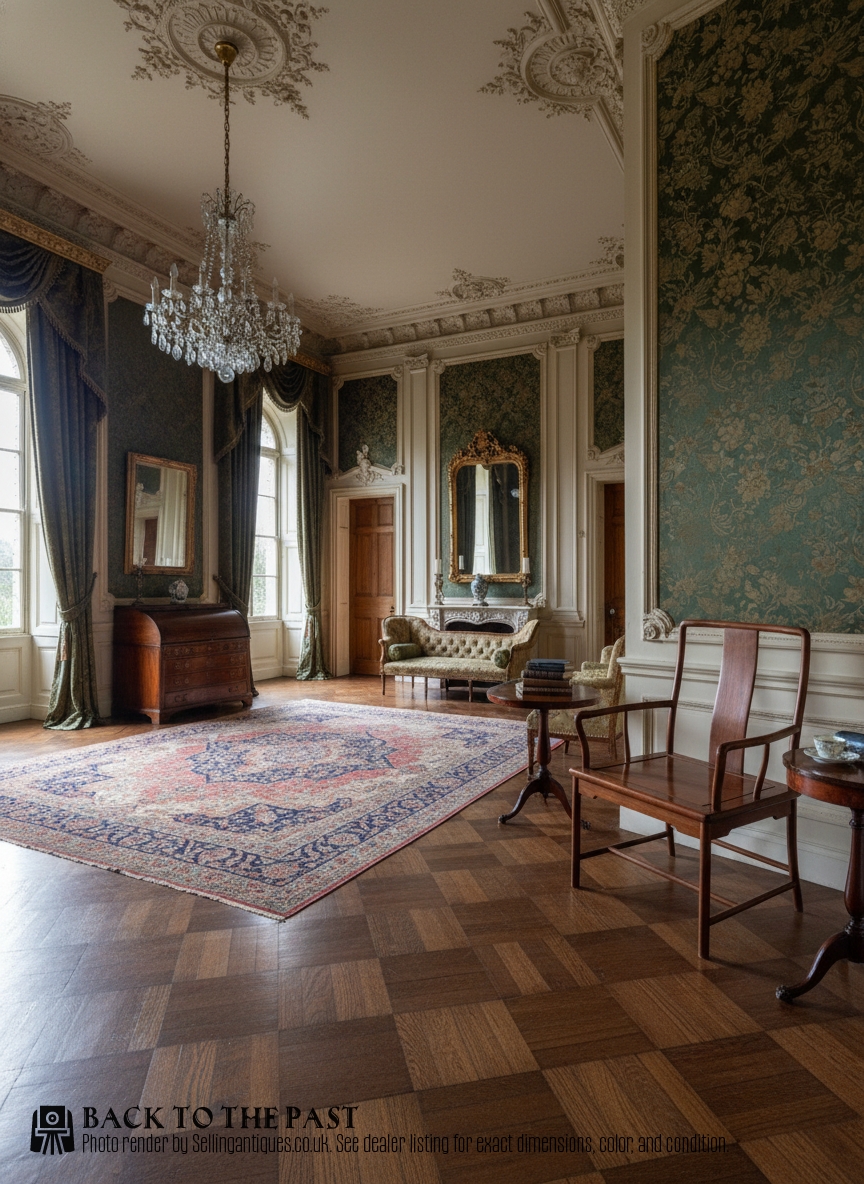
Pair the chair with neutral walls and minimal surrounding furniture to let the dark timber grain and complex joinery command visual attention.
Incorporate soft textiles like wool throws or cushions to balance the rigid frame and dense materials of nineteenth-century seating.
Are these chairs comfortable for daily use?
Many traditional designs prioritise upright posture and structural form over deep cushioning, particularly horseshoe-back and folding throne chairs.
Adding a tailored seat pad can improve comfort while maintaining the period appearance of the wooden frame.
How do I identify the period of a hardwood armchair?
Examine the tool marks, timber ageing, and joinery methods visible beneath the dark polish to estimate the date of manufacture.
Stylistic markers such as Qing Dynasty proportions or Art Nouveau curves help narrow down whether a piece originates from the eighteenth, nineteenth, or early twentieth century.
What is the difference between Chinese and Indian armchairs?
Chinese examples frequently utilise horseshoe-back rails, folding mechanisms, and clean elm or teak surfaces reflecting traditional dynasty styles.
Indian variants, such as Hoshiarpur or Moghul pieces, tend to feature profuse floral carvings and brass wire inlay across dark hardwood frames.