




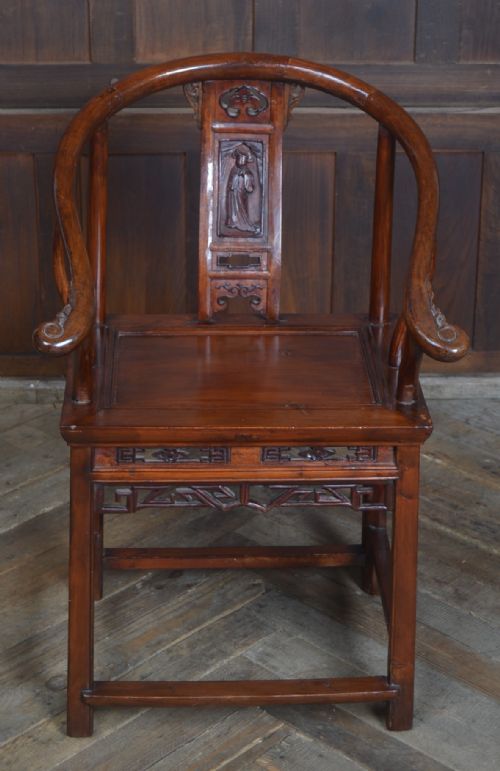

Chinese Horseshoe Chair
A Chinese horseshoe chair brings a graceful, curved backrest and storied seating tradition directly into your interior.
Chinese Horseshoe Chair
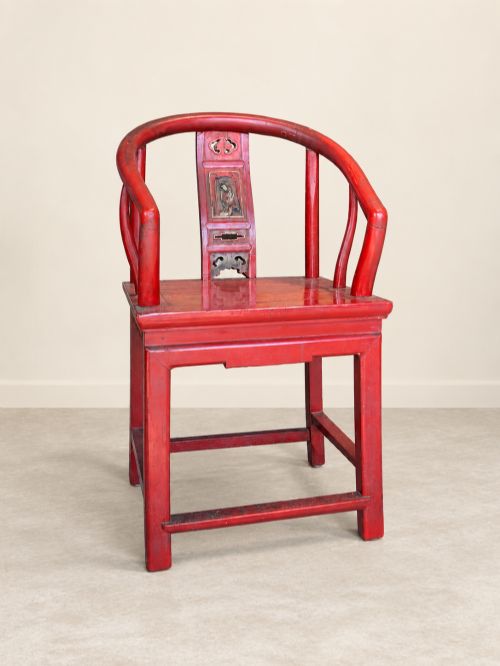
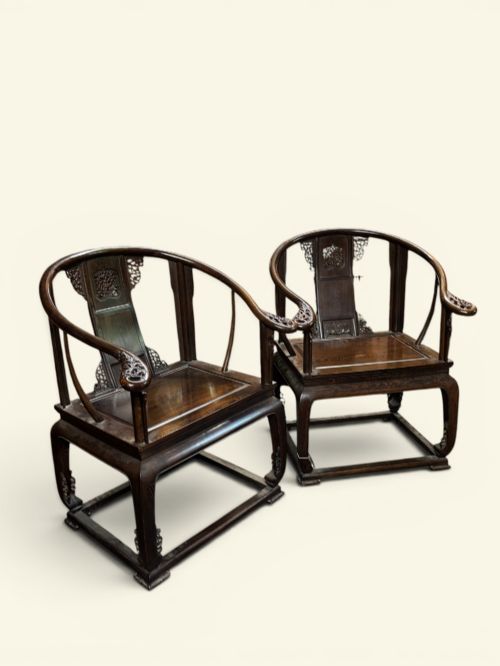
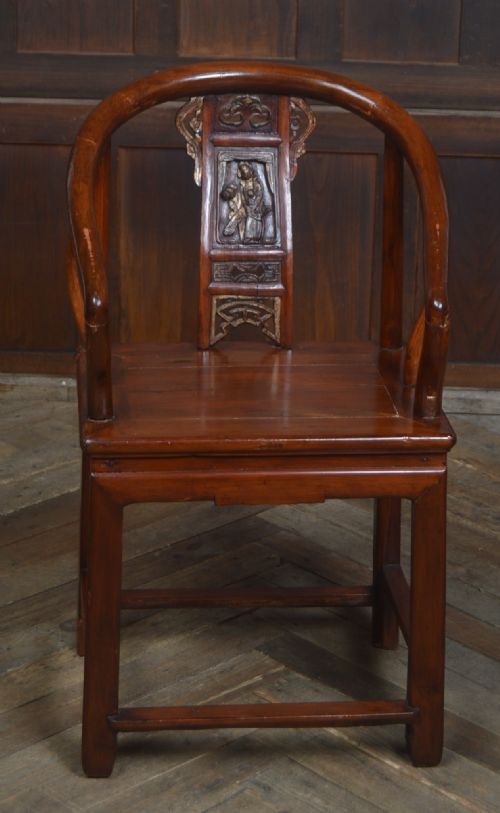
A Chinese horseshoe chair is a striking form of seating defined by its continuous, sweeping arm and back rail that resembles the shape of a horseshoe. These pieces emerge in styles ranging from traditional Chinese and Qing Dynasty designs to Chinese Ming style.
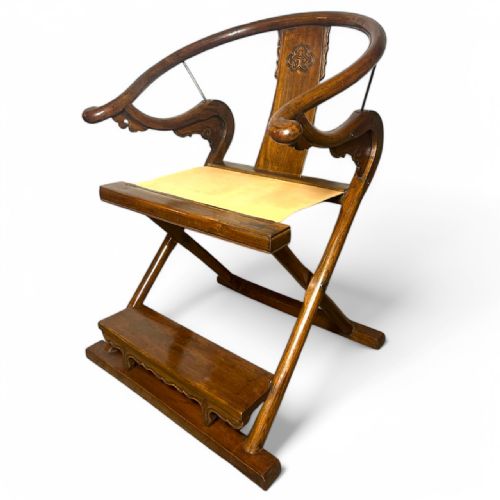
Buyers on this page most frequently encounter examples fashioned from elm or hardwood, often appearing singly or in pairs from the nineteenth century. The selection also includes folding configurations, lacquered finishes, and occasional brass inlaid details.
The silhouette combines functional arm support with an expansive crest rail, making these chairs both sculptural objects and practical seats. Historical variations extend from provincial elm versions to ornate painted or ebonised editions.
How they were made
Craftsmen built these chairs using resilient timbers such as elm and dark hardwood, selecting materials that could support the tension of the curved backrail. Joinery techniques allowed the wooden components to form the continuous horseshoe shape without compromising structural integrity.
Surface treatments varied from polished hardwood and dark ebonising to layers of lacquer and painted finishes. Some workshops incorporated brass inlay or combined the wooden frames with canework and leather elements.
Some nineteenth-century makers engineered these stately chairs to fold flat, proving that ancient travellers appreciated portable comfort just as much as we do.
What varies in quality
Quality in a Chinese horseshoe chair rests on the fluidity of the curved rail and the harmony of its proportions. Superior examples display seamless joinery where the back and armrests meet, maintaining structural balance alongside decorative restraint.
The choice of material heavily influences the character of the piece, with dense hardwoods and carefully applied lacquer finishes representing higher tiers of craftsmanship. Provincial elm versions show a more rustic interpretation, where the grain and simpler construction dictate the aesthetic appeal.
The Chinese Horseshoe Chair Glossary
- Horseshoe-back
- A style of chair featuring a continuous curved rail that forms both the backrest and the armrests. This ergonomic design originated centuries ago in Chinese furniture making.
- Elm
- A durable timber commonly utilised in provincial Chinese seating for its strength and distinct grain pattern. It provides a robust framework for traditional chair construction.
- Qing Dynasty
- An imperial period of Chinese history spanning from the mid-seventeenth to the early twentieth century. Furniture from this era often exhibits refined carving and polished surfaces.
- Lacquer
- A traditional resin finish applied in multiple layers to seal and decorate wooden surfaces. It creates a smooth, glossy exterior that protects the underlying timber.
- Canework
- Woven plant material utilised for seating panels to provide a flexible and breathable surface. It appears on selected historic chair designs.
Chinese Horseshoe Chair: Frequently Asked Questions
How were Chinese horseshoe chairs used?
These chairs served as primary seating within traditional households, often positioned in reception rooms or halls to receive guests. Their distinctive shape indicated a degree of status and provided comfortable arm support for daily leisure.
Over time, pairs and sets found placement in studies and living spaces where their sculptural silhouette could be appreciated from multiple angles. Today, they transition easily into modern interiors as standalone statement pieces or functional accent seating.
What materials are typical for these chairs?
The primary materials recorded in these pieces are elm and various dark hardwoods, chosen for their structural resilience and attractive grain patterns. Workshops also applied lacquered finishes, paint, and brass inlay to enhance the visual depth of the wood.
Additional elements such as leather and canework occasionally appear on seating surfaces to provide varied texture. Each material reflects the specific regional traditions and period preferences of its maker.
How do I identify a nineteenth-century example?
Nineteenth-century pieces frequently display the characteristic wear patterns, patina, and construction methods associated with the late Qing period. Examining the joinery and the depth of the wood finish helps reveal the age of the chair.
Details like brass inlay, ebonised surfaces, or folding mechanisms also point toward nineteenth-century production techniques. Comparing the proportions to documented historical examples confirms the stylistic period.
How do I live with a horseshoe chair?
A horseshoe chair requires minimal placement planning due to its compact yet commanding footprint. Position it in an entryway, corner, or beside a low table where the curved back rail remains visible.
Maintain the wood and lacquer surfaces by keeping them away from direct heat sources and fluctuating humidity. Gentle dusting preserves the natural patina developed over decades of use.