

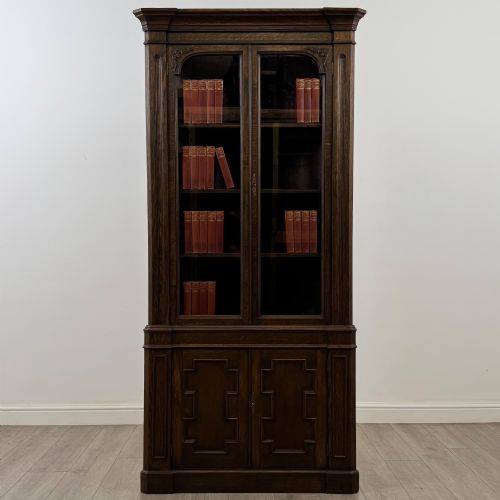
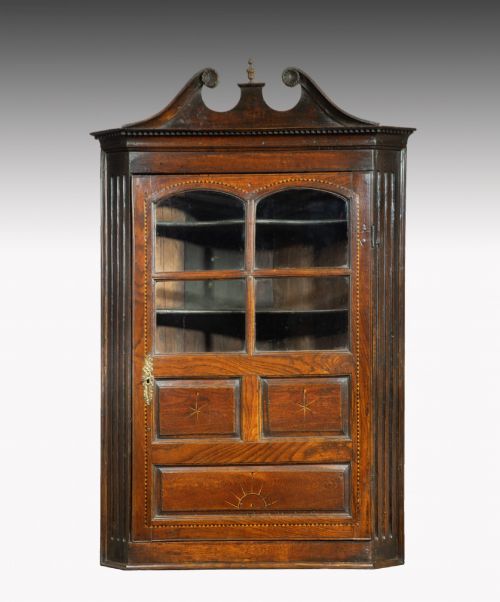
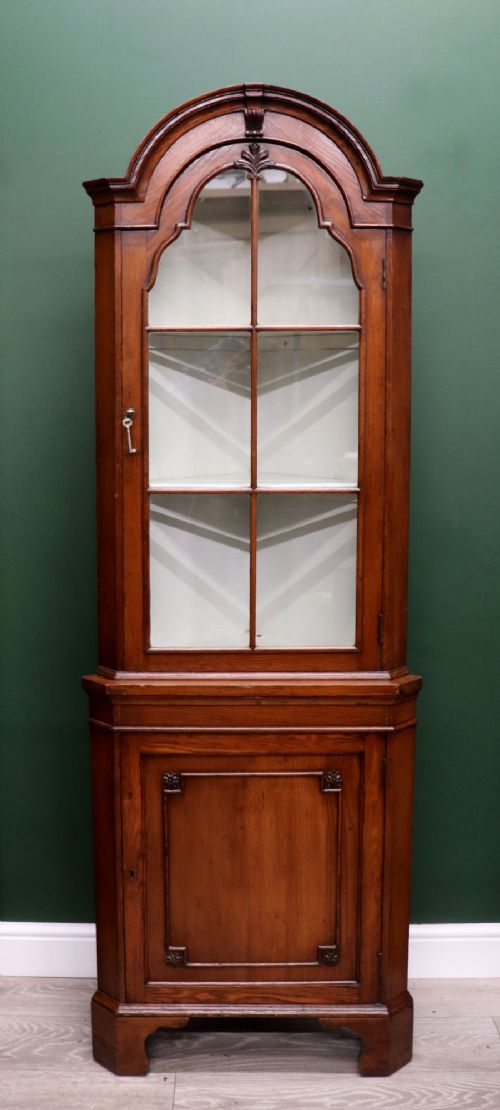
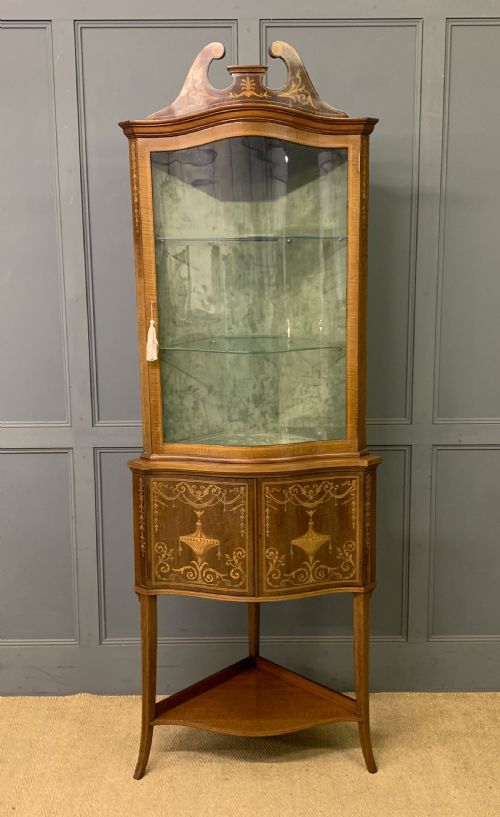
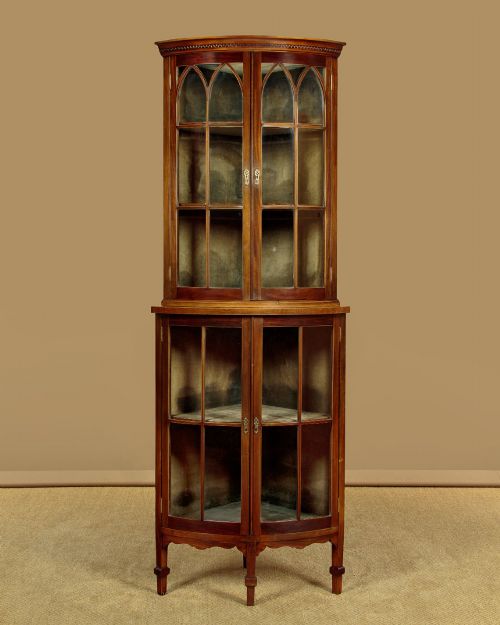


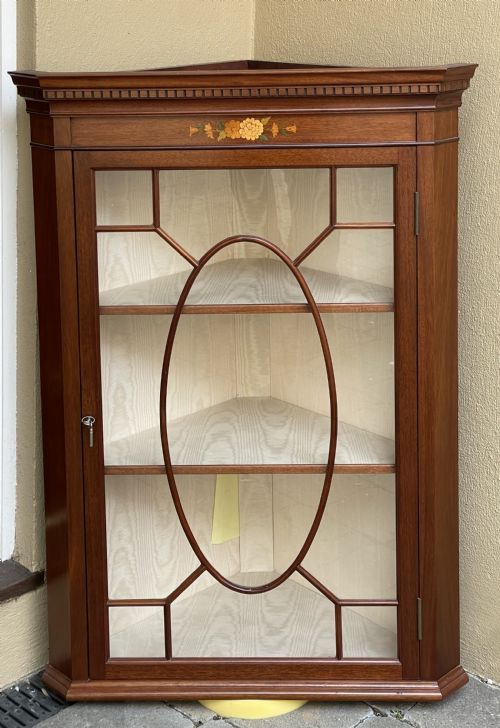


Brown Glazed Corner Cabinet
A brown glazed corner cabinet makes clever use of wasted angles, bringing fitted timber and glass display into the room.
Brown Glazed Corner Cabinet
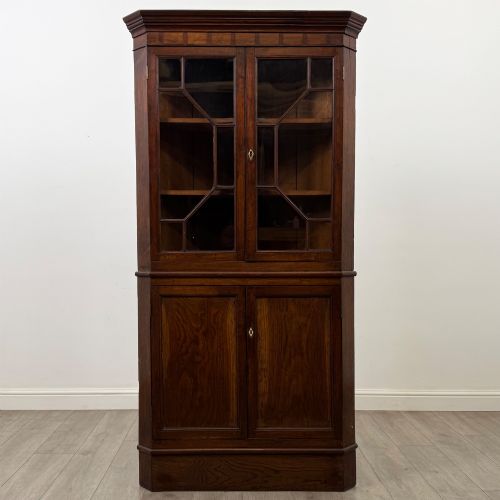
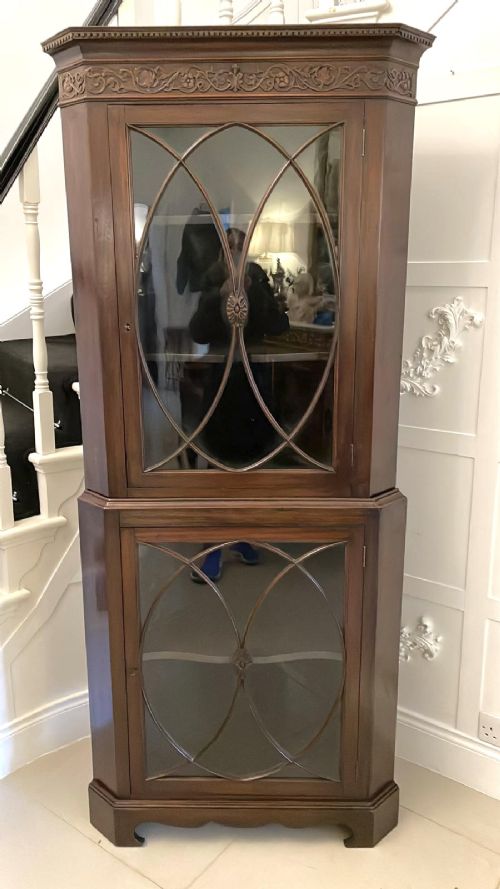
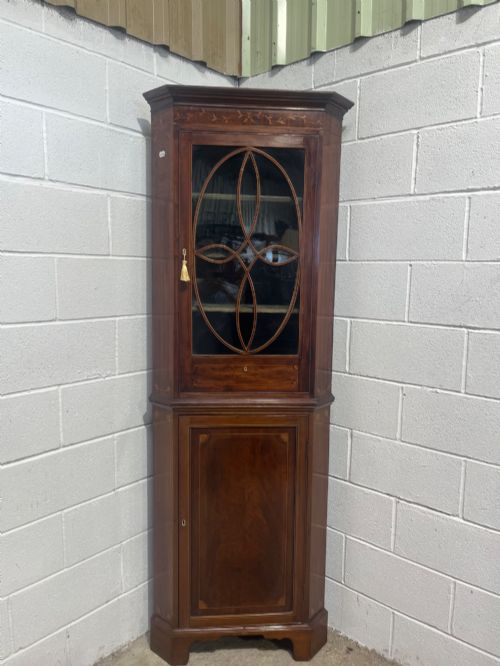
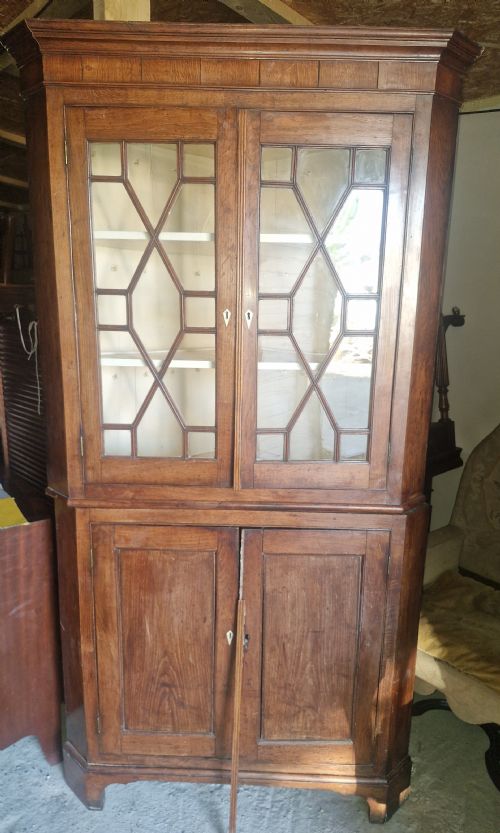
A brown glazed corner cabinet turns awkward room angles into useful display space for china and books. You will find these pieces spanning the Georgian, Victorian, and Edwardian periods, with styles ranging from simple country oak to refined Sheraton Revival inlay.
The layout typically follows two formats: wall-hanging cupboards designed to mount at eye level, and taller floor-standing or two-part pieces that anchor a room. Mahogany, oak, and walnut form the primary timber framework across these historical eras.
Glazing varies from simple multi-pane doors to fine astragal bars holding individual glass segments. Many examples include internal shelving or a small base drawer for supplementary storage.
Materials and construction methods
Cabinet makers relied on solid timbers like oak, mahogany, and walnut, frequently applying decorative veneers and contrasting satinwood inlay to enrich the surface figure. These woods were chosen for structural stability and rich natural tones.
Glass panels were secured within glazed doors using wooden astragal bars, allowing natural light to illuminate the interior display shelves. Brass hardware, including hinges and locking keys, completed the functional fittings.
Joinery methods involved traditional hand-cut joints designed to support the weight of timber bodies and glass doors over centuries of domestic use.
Current listings feature corner cabinets spanning the 18th, 19th, and 20th centuries, constructed primarily from mahogany, oak, and walnut.
Distinguishing quality across periods
Quality rests upon the crispness of the timber carving, the delicacy of inlaid banding, and the selection of figured wood grain. Pieces featuring well-proportioned astragal glazing bars and original brass hardware sit at the upper end of the scale.
Construction depth dictates value, with hand-cut dovetails and solid secondary timbers marking superior workshop production. Simpler country iterations in regional oak offer sturdy utility, whereas refined urban examples showcase meticulous cabinet work.
The Brown Glazed Corner Cabinet Glossary
- Astragal glazed
- A method of framing window or cabinet glass using narrow wooden bars to divide the pane into smaller geometric sections. This technique creates a lighter visual appearance on large cupboard doors.
- Bow front
- A convex curved cabinet facade that projects outward from the corner angles. This shape became popular during the Georgian and Edwardian eras to soften room lines.
- Two-part
- A cabinet constructed in separate upper and lower sections that stack together. This configuration facilitated transport and positioning in domestic interiors.
- Satinwood inlay
- A contrasting golden-yellow timber used for decorative stringing and geometric banding on darker mahogany surfaces. It defines the revival styles of the Edwardian period.
Brown Glazed Corner Cabinet: Frequently Asked Questions
How do I hang a wall cabinet safely?
Wall-hanging models require secure attachment directly into structural wall studs or masonry using appropriate fixings. Given the combined weight of dense timber and glass, professional installation is strongly advised.
Ensure the hanging brackets or internal screw points are sound before loading the shelves with heavy ceramics or glassware.
Were these always meant for corners?
Yes, the 90-degree framing is specifically engineered to fit snugly into room intersections. This clever geometry maximises floor and wall utility in smaller domestic spaces.
Historical examples prioritised this spatial efficiency long before modern fitted furniture existed.
How can I date my cabinet accurately?
Dating relies on observing timber choices, construction methods, and decorative motifs such as inlay styles. Georgian pieces often show hand-sawn secondary woods, while Edwardian versions frequently utilise machine-prepared elements alongside revival details.
Comparing hinge types and glass manufacture provides further clues regarding the period of origin.
Are the locks and keys original?
Many surviving cabinets retain working brass locks and keys, though replacements are common over centuries of use. Functioning locks add practical security for display contents.
Inspect the keyhole escutcheon and internal bolt mechanism for signs of period-appropriate wear and matching patination.