



Walnut Corner Display Cabinet
A walnut corner display cabinet uses dead space to show off china and small objects, combining timber warmth with glass fronts.
Walnut Corner Display Cabinet
A walnut corner display cabinet fits directly into room junctions, turning awkward angles into focal points for storage and display. The form ranges from tall hanging cupboards to two-part units resting on floor plinths.
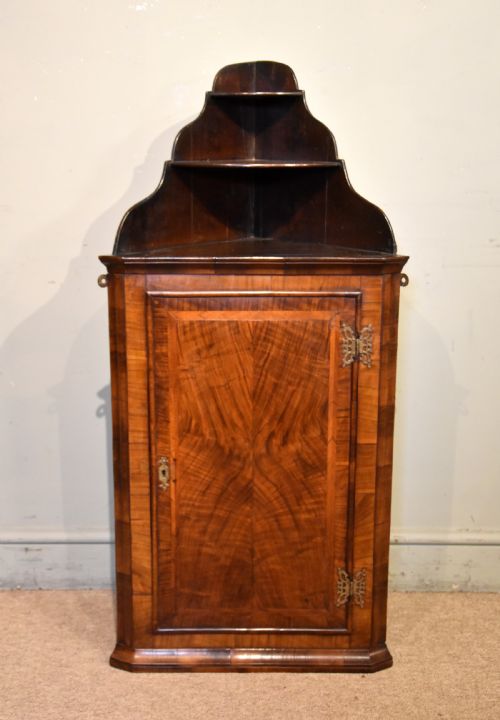
Victorian and 18th-century examples dominate the selections, alongside 1930s Art Deco interpretations and revivals of earlier styles. Buyers frequently encounter burr walnut veneers, glazed doors, and open shelving tiers known as whatnots.
How they were made
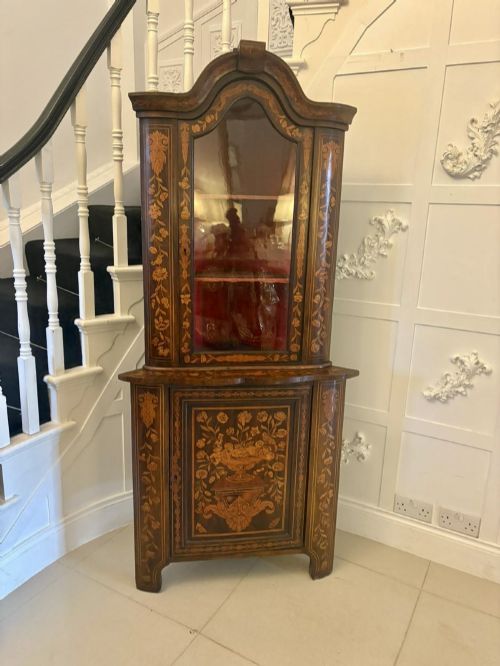
Cabinetmakers used solid walnut and decorative burr veneers over secondary timbers, often embellishing surfaces with boxwood inlay, marquetry, and ormolu mounts. Glass panels are fitted into wooden doors or elaborate interlaced glazing bars.
Structural elements incorporate brass hardware, fabric linings inside display areas, and carved details such as barley twists. Joints and timber selections reflect the prevailing construction standards of periods spanning from the 18th century to the 20th century.
Listings include 18th-century, Victorian, and 1930s periods, utilising walnut, burr walnut, glass, brass, ormolu, and fruitwood.
What varies in quality
The sophistication of the timber grain marks the distinction between standard and superior pieces, particularly where figured burr walnut or intricate Dutch marquetry is involved. Finer cabinets display harmonious veneer matching across the curved or bow fronts.
Construction depth also dictates standing, visible in the precision of boxwood inlay, the delicacy of glazing bar arrangements, and the original integrity of brass fittings and interior fabric linings.
Maurice Adams·Liberty and Co.
The Walnut Corner Display Cabinet Glossary
- Burr walnut
- A figured wood grain derived from tree growths, highly prized for its swirling pattern on cabinet doors.
- Whatnot
- An open set of tiered shelves designed for displaying ornaments, frequently adapted to fit room corners.
- Marquetry
- Decorative veneer work forming pictures or patterns using various tinted woods.
- Glazing bar
- A wooden strip holding individual panes of glass within a cabinet door.
- Ormolu
- Gilded bronze used for decorative mounts and accents on furniture.
Walnut Corner Display Cabinet: Frequently Asked Questions
How do I clean the glass?
Use a soft cloth and mild glass cleaner, taking care to avoid spraying liquid directly onto the surrounding walnut timber or veneer.
Keep moisture away from any inlaid boxwood or delicate brass fittings to preserve the historic surface.
Are these cabinets secure on walls?
Hanging models require proper wall fixings to support the combined weight of the solid timber construction and stored items.
Two-part floor units balance their weight on a base plinth, though tall or top-heavy designs still benefit from stability checks.
What items fit inside?
Glass-fronted cupboards and open shelves accommodate small china collections, glassware, and decorative ornaments.
Fabric-lined interiors provide a soft background that highlights porcelain and silverware placed behind the glazed doors.
How do I date a piece?
Examine the cabinet style, construction methods, and hardware against known periods like the 18th century, Victorian era, or Art Deco.
Revival pieces often copy earlier Queen Anne or George I aesthetics, so look at timber ageing and joinery to confirm the actual era.