



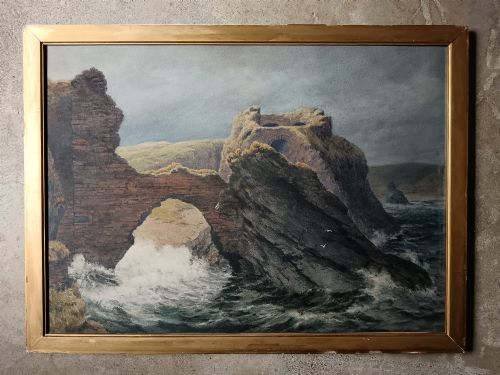


Brown Coastal Landscape
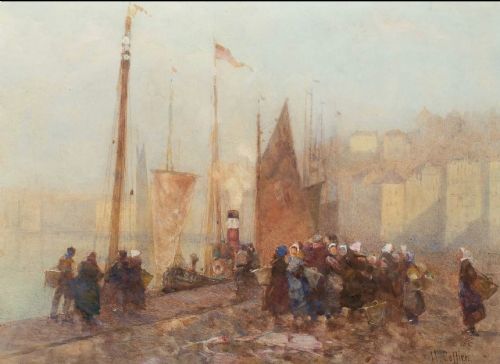
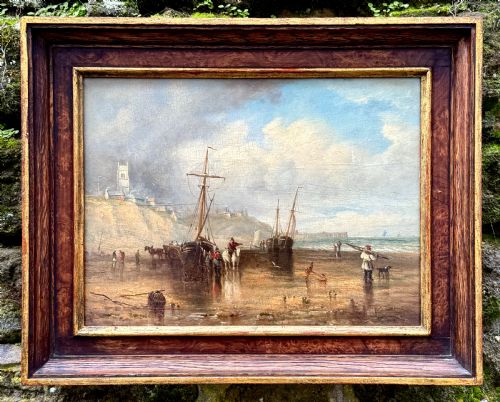
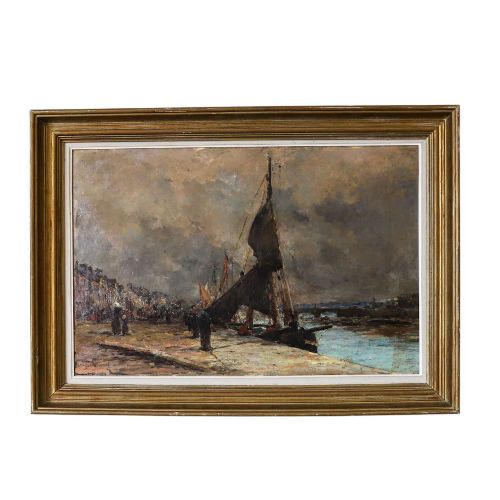
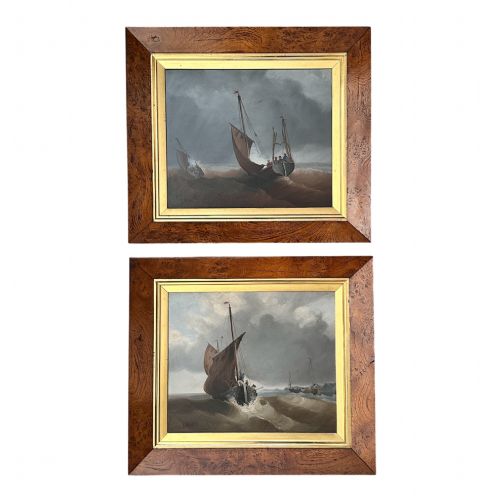
These brown coastal landscape works capture shorelines and harbours through traditional oils and watercolours.
Brown Coastal Landscape
A brown coastal landscape brings together maritime views, sandy shores, and harbour scenes dominated by earthy tones. These works capture the maritime heritage of British and European coastlines through the eyes of nineteenth and twentieth-century painters.
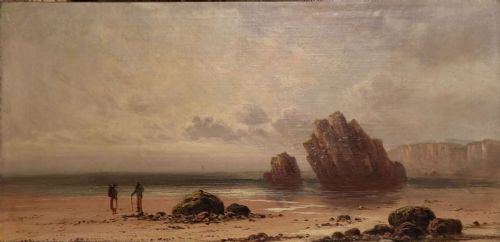
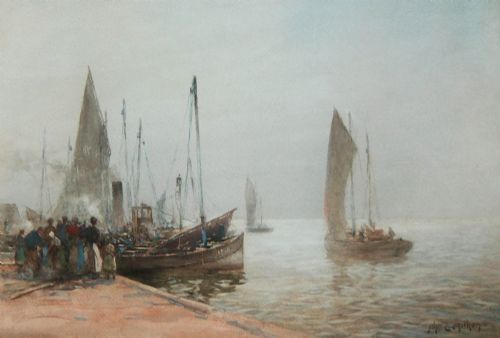
The selections available here rely heavily on traditional mediums, presenting sea views, fishing docks, and rocky shorelines through surviving period works. Collectors encounter depictions ranging from bustling Yorkshire harbours to quiet estuaries rendered in oil and watercolour.
Materials and technique
Artists captured these coastal scenes using oil paint on canvas, wood panels, or board, allowing for rich textures and deep earthy pigments. Alternatively, watercolour pigment applied to paper created lighter, more luminous atmospheric effects for harbour and beach views.
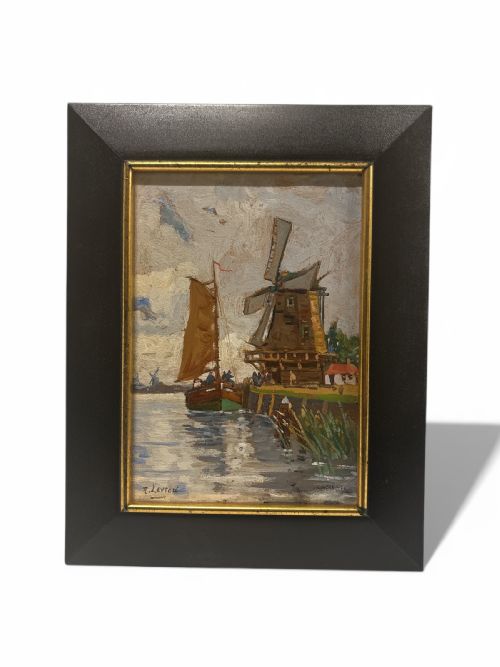
Framing played an essential part in presentation, with many period works housed in gilt frames that complemented the restrained palette of the painting. Brushwork varied from tight, illustrative recording of dockyards to looser impressionistic applications of paint representing moving water and sky.
Submissions feature both works on paper utilising watercolour pigment and substantial oil paintings executed on canvas, wood, and board.
Markers of distinction
Quality rests in the fidelity of atmospheric observation and the confidence of the brushwork across the canvas or paper. Stronger examples demonstrate a sure command of light upon the water and accurate rendering of maritime architecture or shipping.
The distinction between standard decorative works and finer pieces lies in the artist's ability to convey movement in the sea and atmosphere in the sky using a muted palette. Condition and the presence of original framing further elevate the standing of an individual painting.
Kenneth Cozens·James Orrock·Thomas Creswick·John Moore of Ipswich·Thomas Bush Hardy·Sir David Murray·Sam Bough
The Brown Coastal Landscape Glossary
- Seascape
- A work of art depicting the sea, coastal views, or marine subjects. These differ from inland landscapes by placing water and maritime activity at the centre of the composition.
- Gilt frame
- A wooden picture frame coated with gold leaf or metallic gilt paint. Period examples often feature intricate moulded plaster ornamentation.
- Watercolour
- A painting method in which the paints are made of pigments suspended in a water-based solution. Artists typically apply these onto absorbent paper to create transparent washes of colour.
- Oil on canvas
- A traditional painting medium utilising pigments bound with drying oils applied to stretched fabric. This combination allows for rich blending and deep surface textures.
- Estuary
- The tidal mouth of a large river, where the tide meets the stream. Painters frequently recorded these areas for their combination of shipping vessels and shifting shorelines.
Brown Coastal Landscape: Frequently Asked Questions
How do I date a coastal landscape painting?
Dating relies heavily on stylistic clues, framing methods, and the types of vessels or clothing depicted in the scene. Nineteenth-century works often feature specific rigging on sailing ships and heavier, ornate gilt frames.
Examining the canvas backing, stretcher bars, and any handwritten signatures or labels on the reverse provides further confirmation of the period. Comparing the technique to known dated works by the same artist narrows the timeframe even further.
Are watercolours as durable as oil paintings?
Watercolour paintings require careful conservation because paper and pigments are sensitive to prolonged exposure to direct sunlight. Proper framing behind protective glass prevents atmospheric damage and fading.
Oil paintings on canvas or wood panel offer greater physical resilience against environmental factors. However, both mediums benefit from stable indoor humidity and distance from direct heat sources.
What subjects appear most often in these views?
Common subjects include active fishing ports, quiet estuaries, rocky sea stacks, and sandy beaches with figures hauling catch. Many artists focused on specific regional landmarks such as Whitby, the Yorkshire coast, or Dutch harbours.
These depictions reflect the economic and social importance of maritime industries during the Victorian and Edwardian eras. Painters recorded daily harbour life alongside dramatic coastal weather.
How should I display a vintage maritime painting?
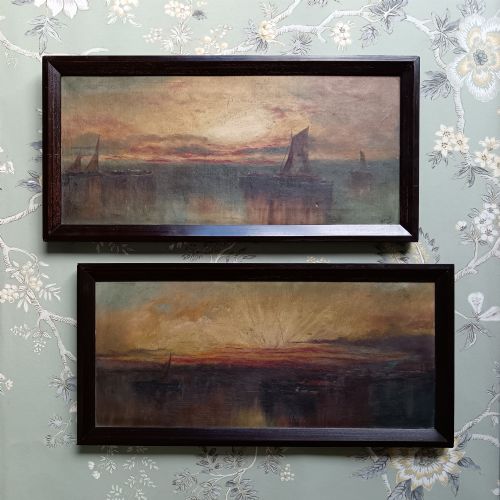
Display these works on interior walls away from direct sunlight, high moisture areas, and fluctuating heat sources like radiators. Proper placement protects both the paper or canvas and the traditional wooden framing.
Matching the weight of the frame to your interior space ensures the artwork commands the right presence. Many collectors group smaller watercolours together while allowing larger oil paintings to serve as focal points.