


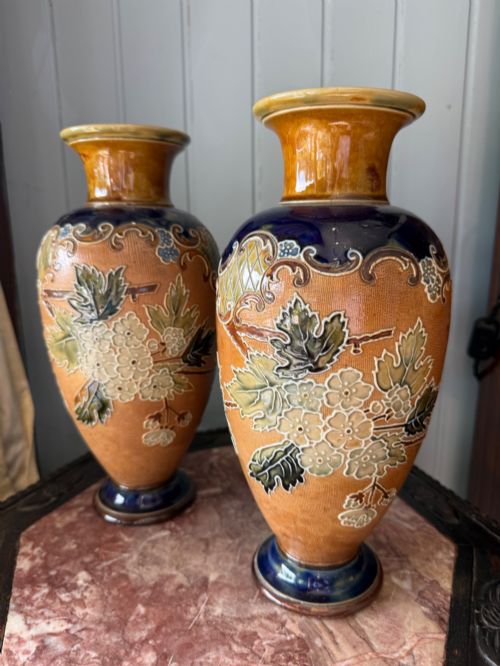
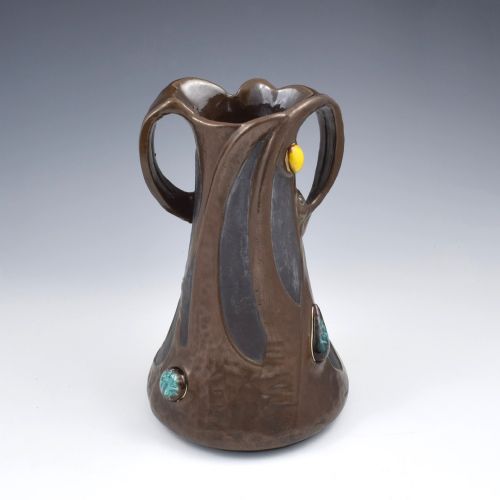
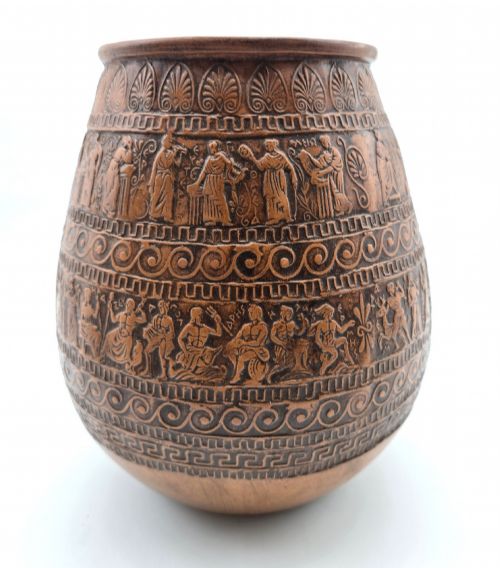
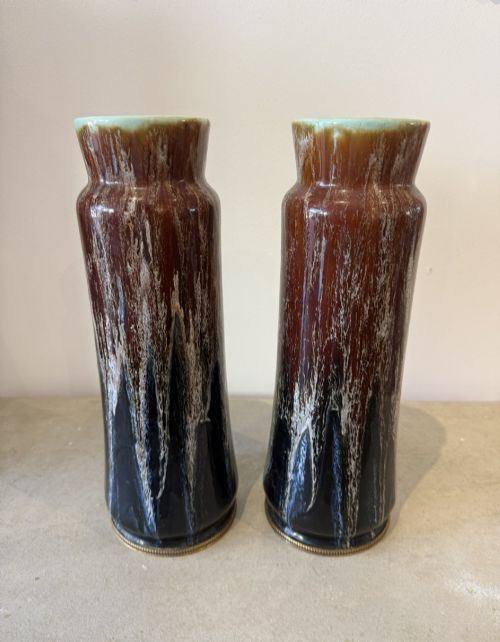

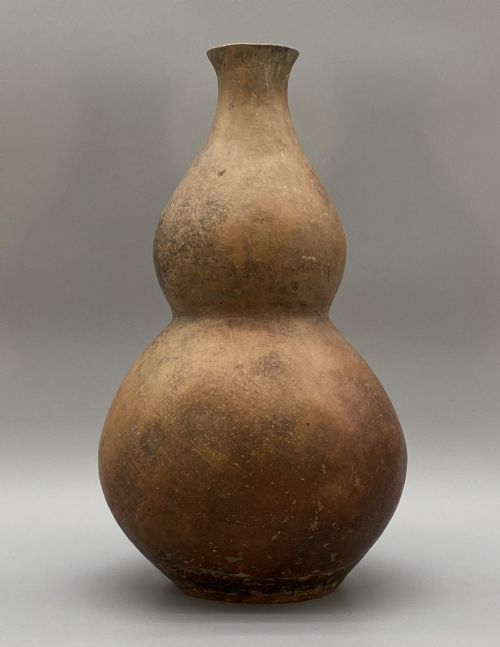

Brown Ceramic Urn
These brown ceramic urn pieces bring tactile presence and historic utility into a room, spanning rustic oil jars to ornate art pottery.
Brown Ceramic Urn
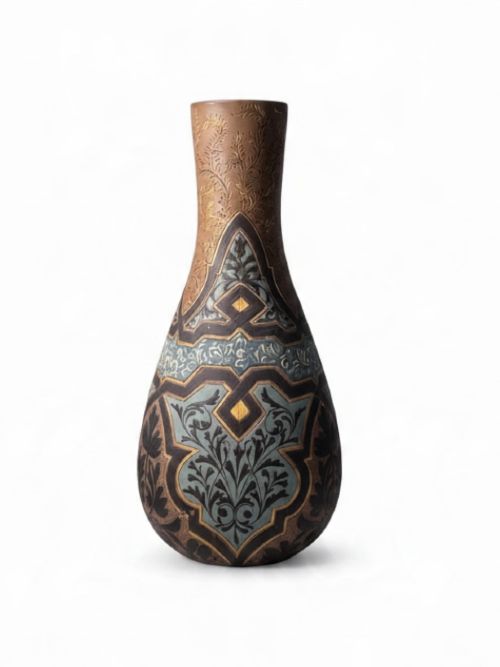
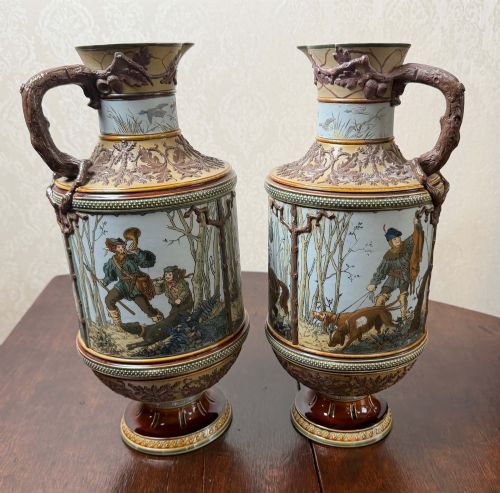
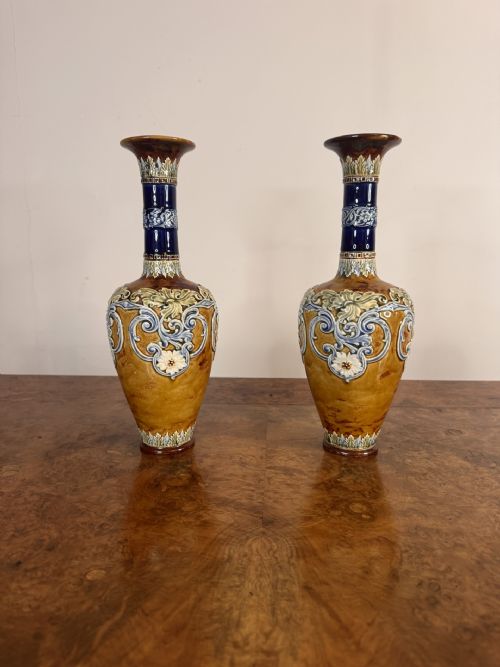
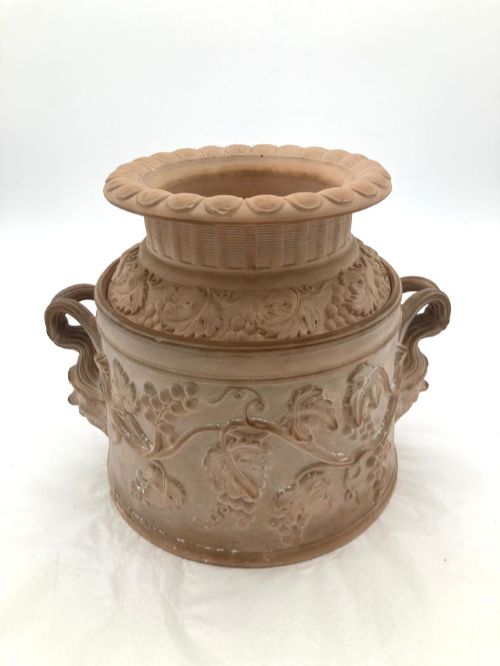
A brown ceramic urn encompasses a diverse range of utilitarian vessels, garden planters, and decorative art pottery objects shaped from clay. Collectors searching this phrase encounter substantial salt-glazed troughs, grand terracotta wine jars, and glazed earthenware vessels spanning the nineteenth and early twentieth centuries.
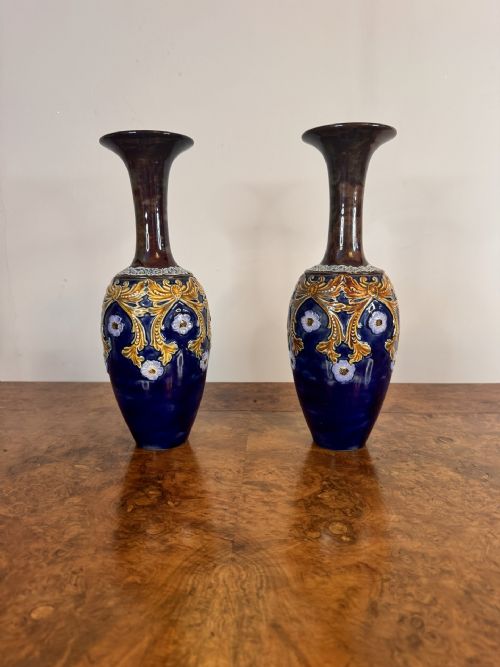
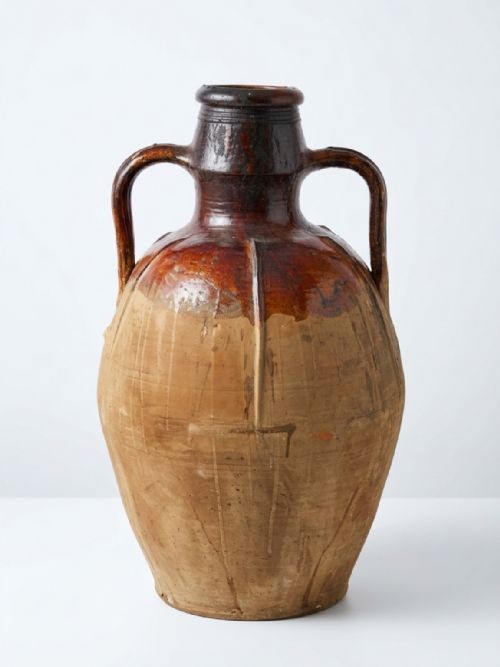
The selections on this page lean heavily towards nineteenth-century production, featuring robust stoneware water filters, heavy oil jars from the Mediterranean, and intricate studio pottery from makers influenced by Arts and Crafts and Art Nouveau ideals.
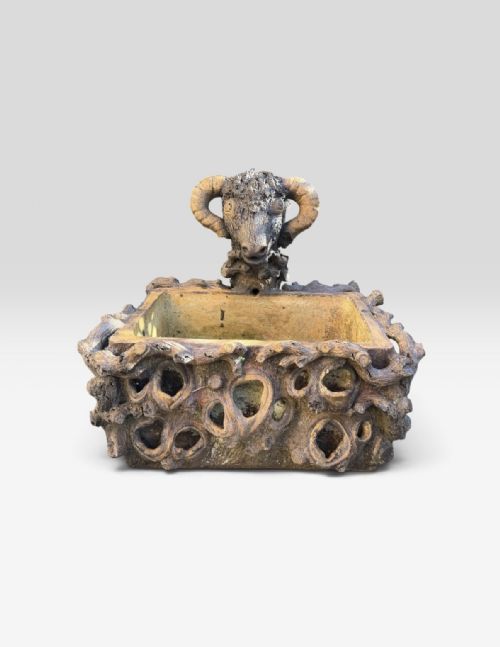
Forms vary considerably from classical amphora shapes and double-gourd silhouettes to rustic faux bois planters and large twin-handled garden vases. These objects bridge the gap between practical domestic storage and ornamental interior display.
Materials and construction
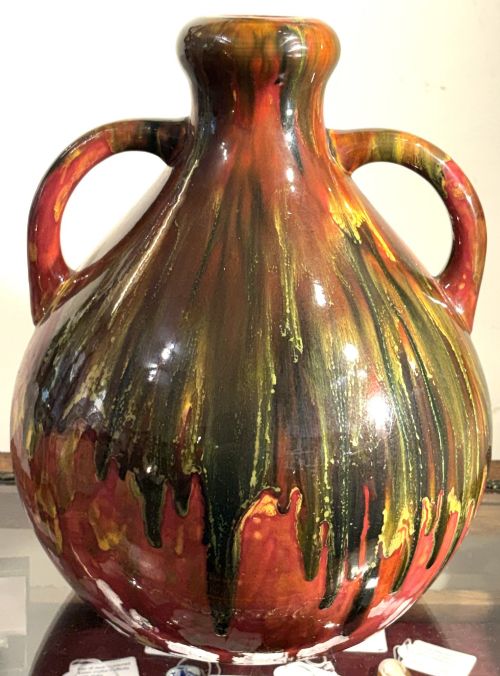
Makers utilised dense earthenware, heavy stoneware, and porous terracotta as the fundamental bodies for these vessels, often shaping them on the potter's wheel or pressing them into moulds. Salt glazing and rich coloured enamel finishes provided both waterproofing and decorative surface texture.
Art pottery pieces incorporate applied decorative elements such as jewelled cabochons, raised leaf patterns, and intricate slip work. Firing techniques ranged from open kilns yielding varied terracotta tones to controlled high-temperature salt firing that produced durable, textured stoneware skins.
Brown Ceramic Urn Retail Price Guide 2026
Typical asking prices for brown ceramic urn among the pieces listed under this phrase on Sellingantiques today, from the lower quarter to the upper quarter. They describe what is for sale here now, not the wider market.
Several nineteenth-century pieces disguise themselves as timber, bringing faux bois strawberry planters into the garden.
Assessing quality and execution
Quality rests upon the crispness of the modelled detail, the depth and stability of the glaze, and the structural integrity of large-scale thrown or moulded bodies. Superior examples display confident handling by known potteries or named artists, where decorative motifs integrate seamlessly with the vessel form.
Provenance and original condition also separate standard utilitarian wares from exceptional exhibition pieces. The preservation of original stands, crisp impressed factory marks, and undamaged applied ornamentation distinguish the finest pieces in this category.
Burmantofts Pottery·Royal Doulton·Boch Freres·Bretby Pottery·Mettlach Pottery·Doulton Lambeth·Julius Dressler·Goldscheider·Royal Worcester
The Brown Ceramic Urn Glossary
- Terracotta
- A porous, unglazed or glazed fired clay body ranging in colour from pale orange to deep reddish-brown. It was widely utilised for large garden jars, amphorae, and architectural planters.
- Stoneware
- A heavy, impermeable ceramic fired at high temperatures until the clay vitrifies into a dense, stone-like material. Salt glazes are frequently applied to this body during the firing process.
- Majolica
- A type of earthenware coated with an opaque tin-glaze and painted with brightly coloured metal oxides. It became exceptionally popular during the Victorian period for ornamental jardinieres and vases.
- Faux bois
- A decorative technique mimicking the texture, grain, and knots of natural wood upon a ceramic or cement surface. Nineteenth-century planters often employed this style for rustic garden settings.
- Earthenware
- Porous pottery fired at lower temperatures than stoneware or porcelain, requiring a glaze to hold liquids. It forms the foundation of much nineteenth-century art pottery and utilitarian domestic vessels.
Brown Ceramic Urn: Frequently Asked Questions
How were these large ceramic vessels used originally?
Many of these large vessels served strictly utilitarian roles in agricultural and domestic settings, holding olive oil, wine, or filtered drinking water. Others functioned as substantial garden planters, troughs, and interior jardinieres for large estate homes.
Over time, the role shifted as makers produced ornate decorative versions intended purely for interior display in Victorian and Edwardian reception rooms. Today, they transition easily between functional garden planters and sculptural interior focal points.
Are these antique jars suitable for outdoor garden use?
Many heavy terracotta and stoneware jars tolerate outdoor placement well, provided they are emptied and protected during severe freezing weather. Porous earthenwaters can crack if trapped moisture expands inside the clay body during a frost.
Unglazed terracotta benefits from elevation off damp ground to prevent salt spalling at the base. Sturdier salt-glazed stoneware pieces handle damp environments with greater resilience.
How can I identify the period of a brown ceramic urn?
Dating relies on observing stylistic markers such as the flowing organic lines of Art Nouveau, the rustic naturalism of Victorian garden ware, or classical Grand Tour motifs. Impressed maker marks, registry numbers, and artist signatures stamped into the base provide precise chronological anchors.
The weight, glaze composition, and manufacturing technique also offer strong clues, as nineteenth-century industrial methods differed significantly from earlier hand-thrown traditions.
What is the difference between earthenware and stoneware urns?
Earthenware is fired at lower temperatures, leaving the clay body relatively porous and requiring a glaze to hold water. Stoneware is fired much hotter until the clay vitrifies, creating a dense, non-porous material that resists chipping and moisture absorption.
Stoneware typically presents a heavier, highly durable structure often finished with a distinctive salt glaze. Earthenware allows for brighter surface colours and more delicate moulded decorative details.