

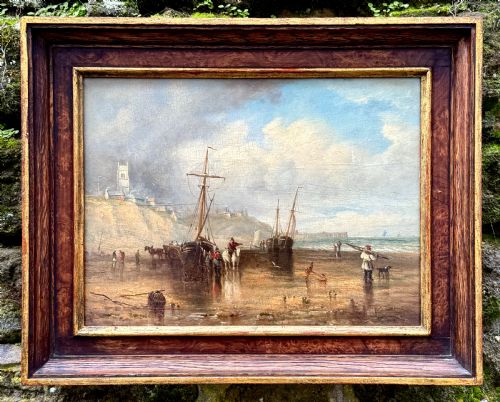
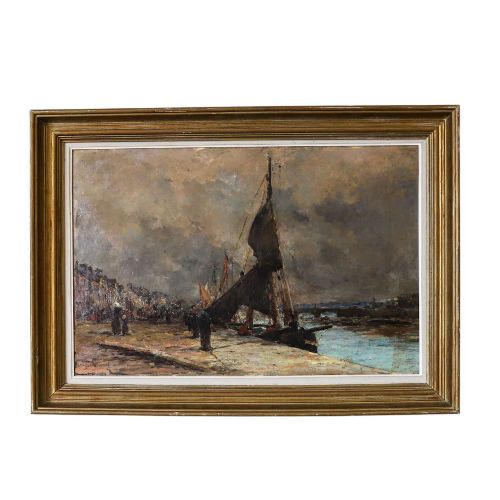


Brown Canvas Seascape Painting
A brown canvas seascape painting brings the moody power of coastal waters and maritime history directly onto your wall.
Brown Canvas Seascape Painting
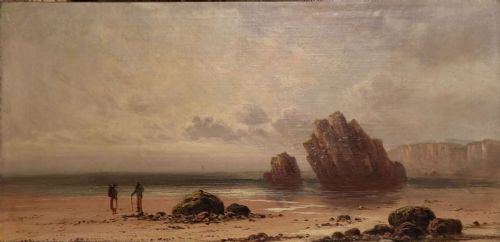
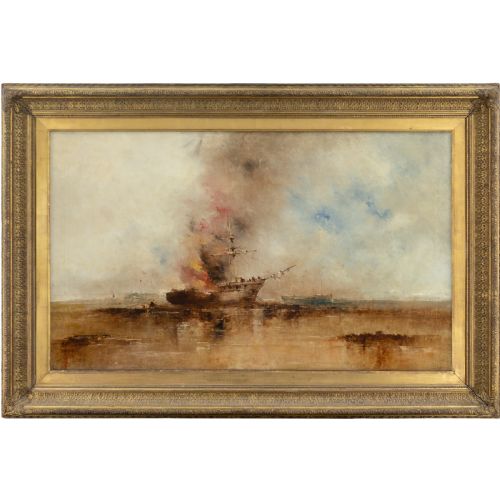
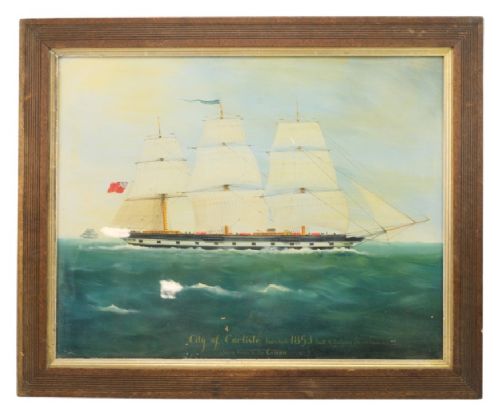
A brown canvas seascape painting captures maritime subjects, coastal views, and naval engagements executed in oil mediums. These works frequently depict rocky shores, busy harbours, and historic vessels tossed upon restless waves.
The selections available here span from the 18th century through the Victorian era and into the mid-20th century. Works by named artists sit alongside pieces produced by skilled English and continental schools.
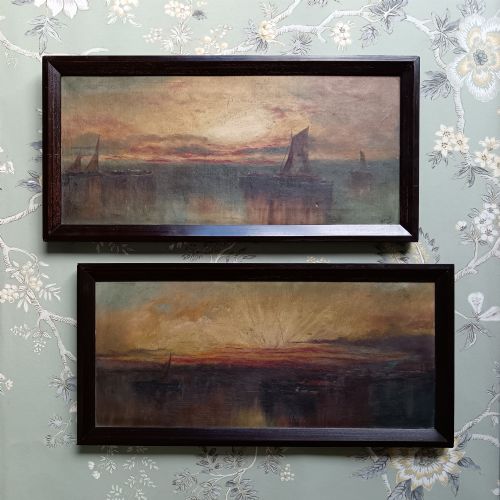
Most examples rely on deep earth tones, muted browns, and natural ochres to render the sea, sky, and coastal terrain. Buyers encounter framed canvases that showcase both dramatic weather and quiet harbour scenes.
Materials and technique
Artists painted primarily with oil paint applied to stretched woven canvas or occasionally board. The slow-drying nature of oil allowed painters to blend pigments smoothly, building up rich atmospheric effects for murky waters and stormy skies.
Many of these works retain their original gilt wooden frames, which complement the darker palettes typical of maritime art. Layers of varnish protected the oil pigments over decades, sometimes deepening the natural amber and brown tones of the composition.
Materials recorded include oil paint, stretched canvas, wood, and gilt frames.
Distinguishing fine examples
Quality rests in the handling of light, shadow, and movement within the water and sky. A superior canvas communicates the heavy swell of the sea and the precise rigging of ships with confident, deliberate brushstrokes.
The integrity of the original canvas and the stability of the paint layer determine the preservation state. Works that retain their period gilt frames and show minimal past restoration hold greater historical fidelity for a collector.
Kenneth Cozens·William McAlpine·B. Nash·Thomas Creswick·Gyrth Russell·Gustave De Bréanski·Edward Henry Eugene Fletcher·T.S. Wallis·George Henry Knight·John Callow·Owen Bowen·Paul Jean Clays·Hendrik Yan Wolter·Ludwig Hermann·Johan Jens Neumann·Alec Caruthers Gould·Bertram Priestman·Donald McIntyre
The Brown Canvas Seascape Painting Glossary
- Canvas
- A heavy woven fabric used as a surface for oil painting. It is typically stretched tightly over a wooden frame before application of the ground and pigments.
- Gilt
- A thin layer of gold leaf or gold paint applied to wooden frames. This finish was widely utilised in the 19th century to enhance the visual weight of oil paintings.
- Seascape
- A genre of art depicting the sea, ships, coastal views, and maritime activities. These works focus heavily on weather effects and marine environments.
- Sea Stack
- A geological landform consisting of a steep and often vertical column or columns of rock in the sea. They frequently appear as dramatic focal points in 19th-century coastal paintings.
Brown Canvas Seascape Painting: Frequently Asked Questions
How do I date a maritime oil painting?
Examining the style of the vessels, clothing of figures, and stretcher construction helps establish an approximate date. Frame design and canvas preparation also offer clear clues to the period.
Signatures, inscriptions on the reverse, and artist records narrow down the decade of creation.
Where should I hang a dark seascape?
These works require wall space with balanced ambient light to prevent the dark brown tones from disappearing into shadows. Placing them away from direct sunlight protects the oil pigments and gilt frames.
Pairing them with neutral walls allows the earthy palette and maritime subject to stand out.
Are these paintings cleaned or restored?
Many antique canvases have undergone conservation to remove accumulated soot and aged varnish. Professional cleaning revives the original depth of the brown and blue pigments.
Documentation of past restoration work helps verify the physical history of the canvas.
What defines a Victorian marine painting?
Victorian works often focus on naval might, coastal trade, and dramatic sea rescues. Painters of this era emphasised narrative detail and realistic weather conditions.
The use of rich oil paint on canvas captured the churning movement of water and the imposing scale of sailing ships.