



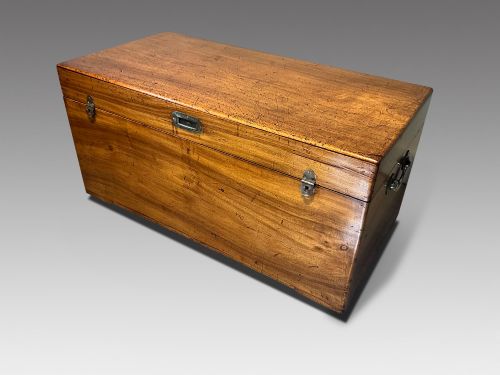
Brown Camphor Chest
A brown camphor chest brings the scent of distant trade routes and solid travel construction straight into a modern room.
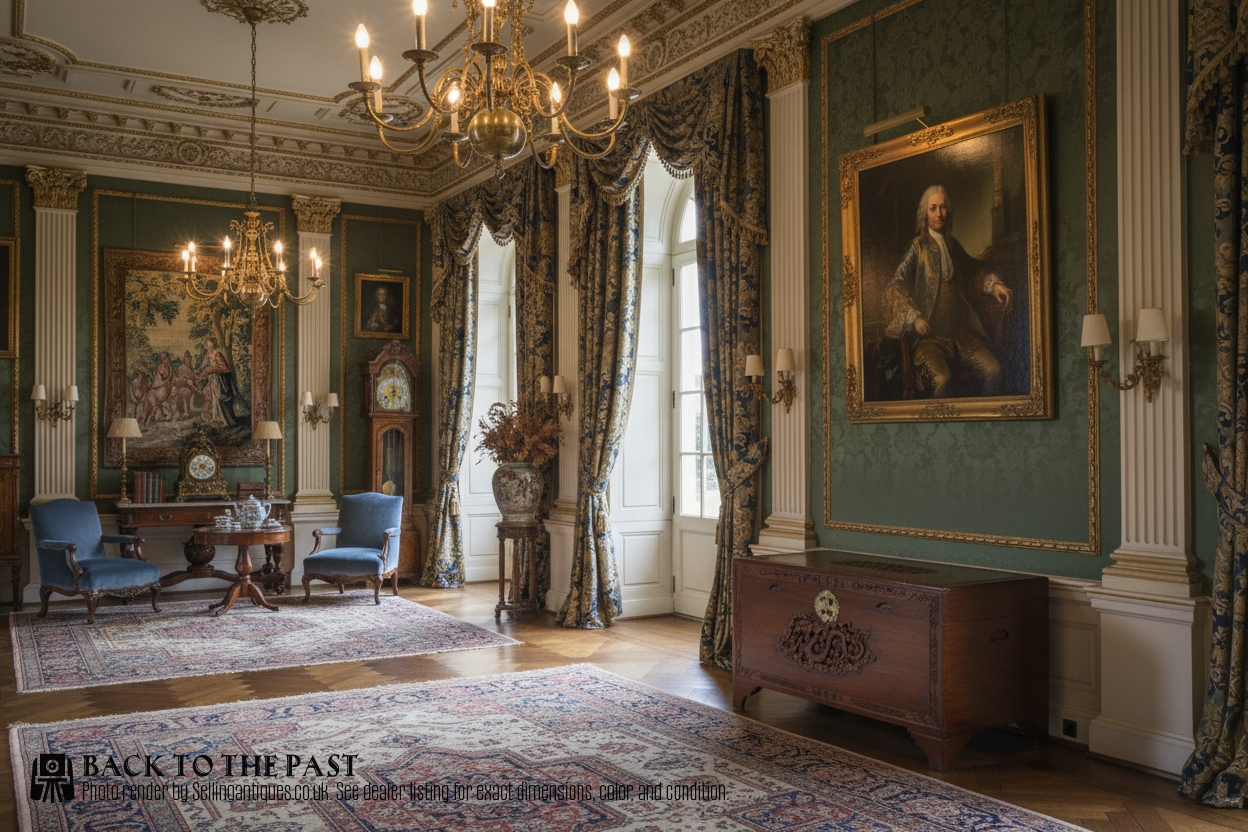
Brown Camphor Chest
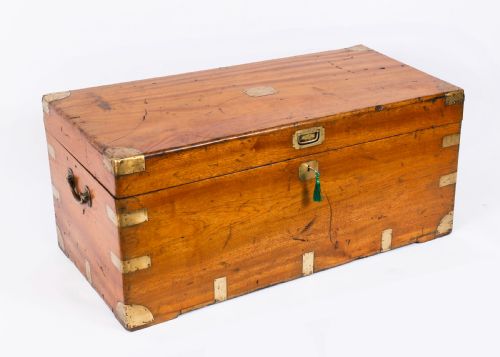
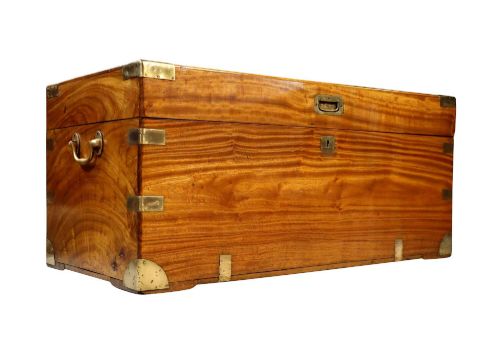
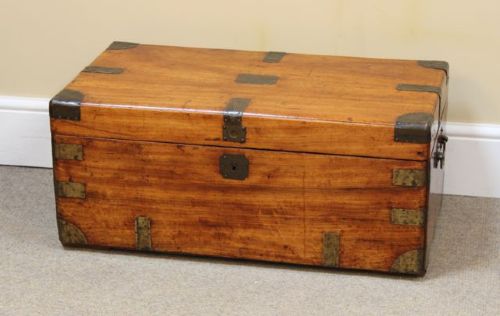
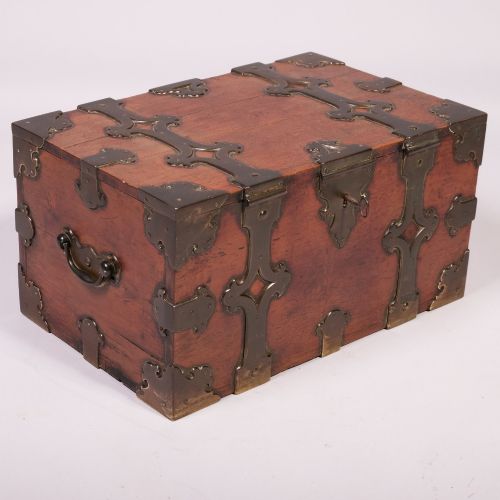
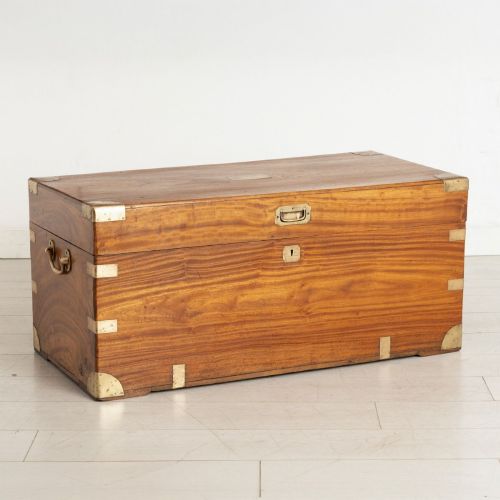
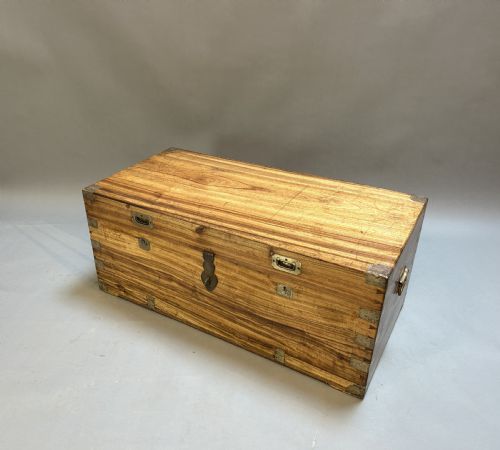
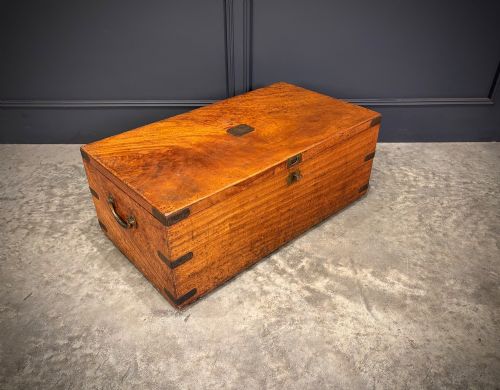
A brown camphor chest is a sturdy box built for travel or storage, most commonly encountered here in nineteenth century campaign forms. These pieces originated to serve officers and merchants on the move, constructed in solid camphorwood and designed to withstand long journeys across the sea.
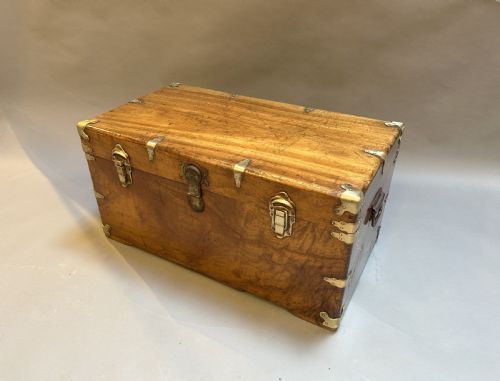
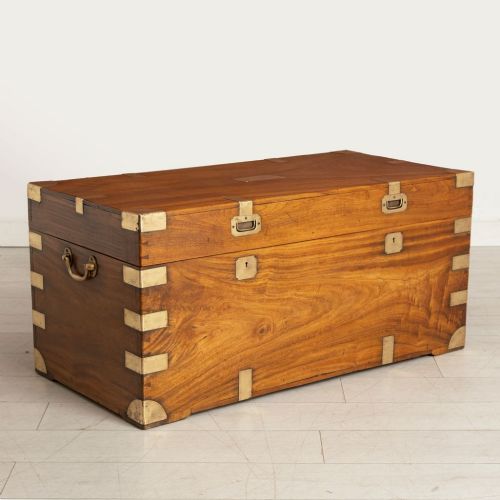
The selection ranges from simple blanket boxes and sea chests to elaborate two-section military chests of drawers fitted with secretaire compartments. Buyers often find pieces bearing brass corners, straps and flush handles intended for practical packing.
Origins span British colonial contexts and Chinese export workshops, linking utilitarian military service with decorative craftsmanship. Such items function today as coffee tables, blanket boxes or primary storage in domestic spaces.
Materials and construction
Construction relies heavily on solid camphorwood, a dense and aromatic timber valued for repelling insects and enduring humid climates. Cabinetmakers joined panels using robust joints capable of absorbing the shocks of travel without splitting.
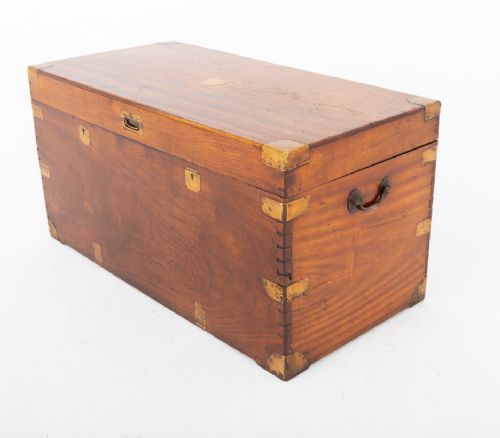
Metal hardware plays a structural role, with brass bindings, corners and recessed handles protecting vulnerable edges and allowing multiple chests to stack securely. Iron, ebony, rope and leather also appear in handles and fastenings on specific campaign forms.
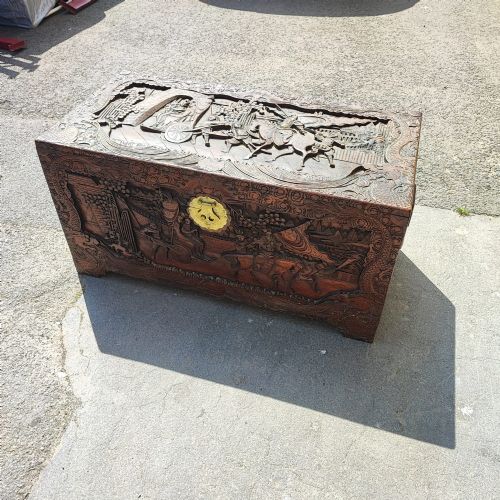
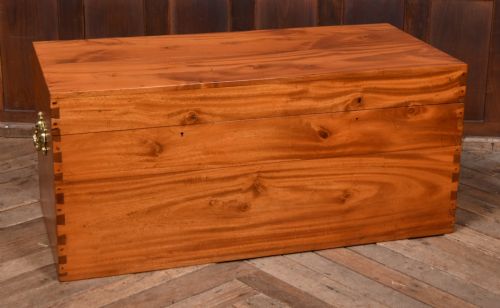
Surface treatments vary from plain waxed timber showing the natural grain to deeply carved surfaces depicting traditional Chinese scenes. Interiors sometimes contain fitted compartments, small drawers and occasionally original keys.
Listings span periods from the eighteenth century through the 1930s, with a strong concentration of nineteenth-century Victorian campaign items.
Variations in quality
Quality rests primarily on the integrity of the timber and the precision of the brass hardware. Pieces retaining their original flush-fitting brass mounts, working locks and fitted internal drawers stand apart from those altered or repaired later.
The complexity of the form dictates the standard of execution, separating basic storage trunks from sophisticated two-section secretaire chests of drawers. Well-executed corner braces and dovetail joints indicate skilled workshop production rather than hurried output.
The Brown Camphor Chest Glossary
- Campaign chest
- A modular piece of furniture made in two or more stacking sections for easy transport on military expeditions. These items typically feature recessed brass handles to prevent snagging during transit.
- Secretaire chest
- A cabinet incorporating a pull-down writing drawer fitted with small internal compartments and pigeonholes. This form allowed travelling officers to manage correspondence on the move.
- Chinese export
- Goods manufactured in China specifically for western markets, often combining traditional eastern materials with European furniture forms. These pieces frequently display detailed hand-carved motifs.
- Camphorwood
- An aromatic hardwood native to Asia, prized for its distinctive scent and natural resistance to pests. The timber provides stability and strength for travel trunks.
- Brass bound
- Furniture reinforced with brass corners, straps and plates to protect edges from heavy impact. This technique defines the military campaign aesthetic.
Brown Camphor Chest: Frequently Asked Questions
What is a brown camphor chest?
A brown camphor chest is a storage box or trunk constructed from aromatic camphorwood, often reinforced with brass hardware for travel. They are closely linked to nineteenth-century military campaign furniture and Chinese export trade.
These pieces were originally built to protect uniforms and belongings during long sea voyages. Today, they serve as decorative storage furniture in homes.
How were campaign chests used?
Campaign chests were designed for British officers and officials on active service abroad, allowing personal possessions to be packed and transported efficiently. They were built in modular sections that could be stacked and locked for transit.
Their practical design included flush handles and reinforced corners so the trunks could withstand rough handling on ships and wagons. This utility translates well to modern interiors needing robust storage.
Does camphor wood smell forever?
The distinct aromatic scent of camphorwood tends to soften over decades but often remains present when the chest is opened. This natural fragrance helps keep stored textiles fresh and protected from moths.
Placing items inside does not generally harm fabrics, though sensitive garments can absorb the aroma over time. Airing the interior can reduce the strength of the scent if desired.
How do I date a campaign chest?
Dating relies on construction methods, timber characteristics and the style of brass hardware used on the box. Nineteenth-century examples often feature hand-cut dovetails, specific brass corner designs and integrated locking mechanisms.
Later pieces from the early twentieth century may show machine-made elements or different surface finishes. Examining internal drawers and labels helps clarify the period of origin.