


Oriental Storage Coffer
An oriental storage coffer is a sturdy wooden chest designed for keeping garments and valuables, prized for aromatic wood and ornate lacquer finishes.
Oriental Storage Coffer
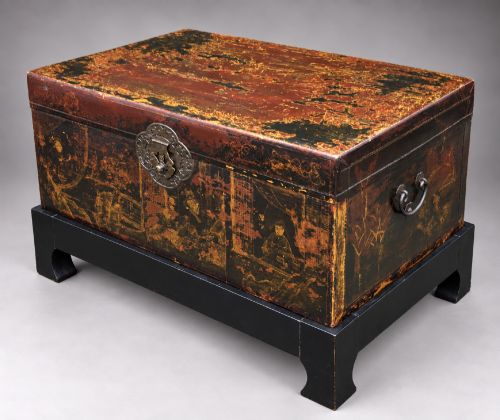
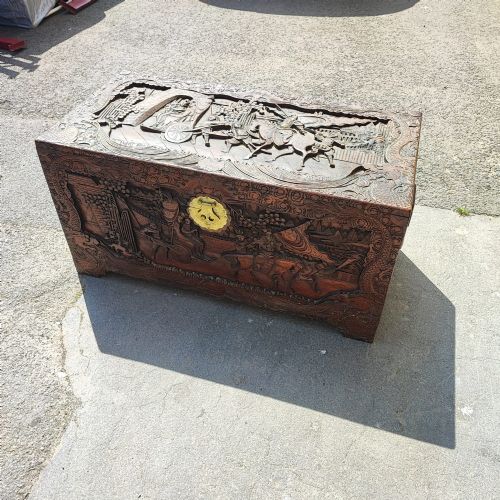
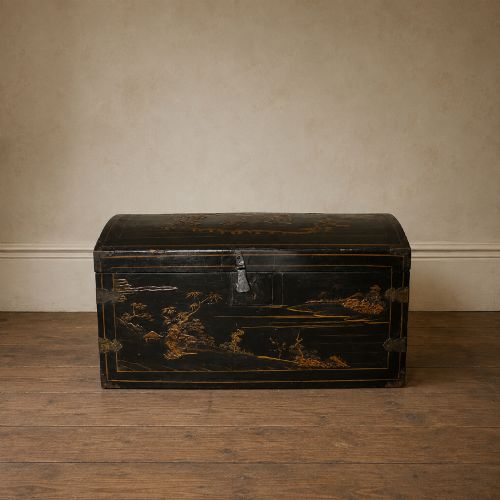
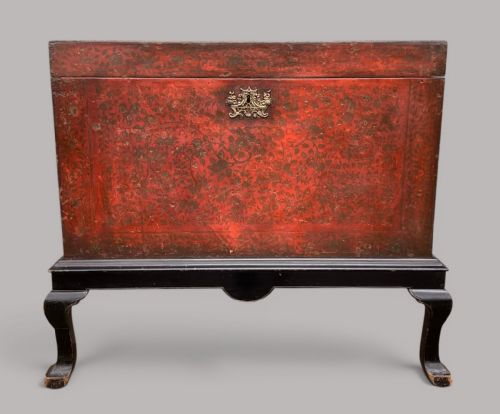
An oriental storage coffer encompasses camphor wood blanket boxes, leather China trade trunks, and lacquered chests originating from Chinese, Indian, and other Asian workshops. The selections here span the eighteenth, nineteenth, and early twentieth centuries, capturing traditional domestic furniture alongside export pieces made for Western markets.
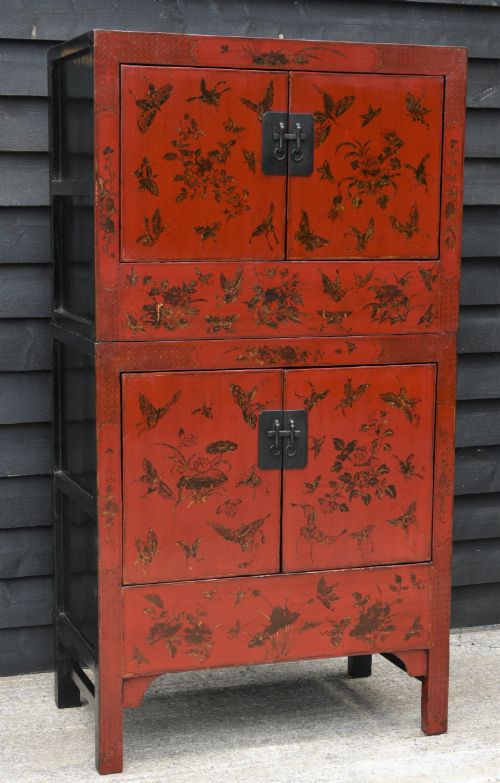
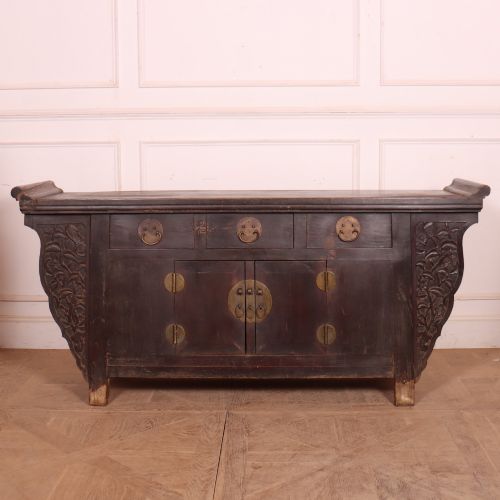
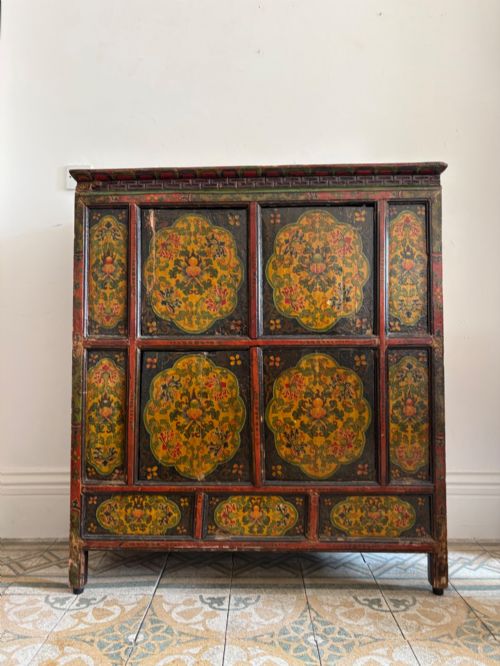
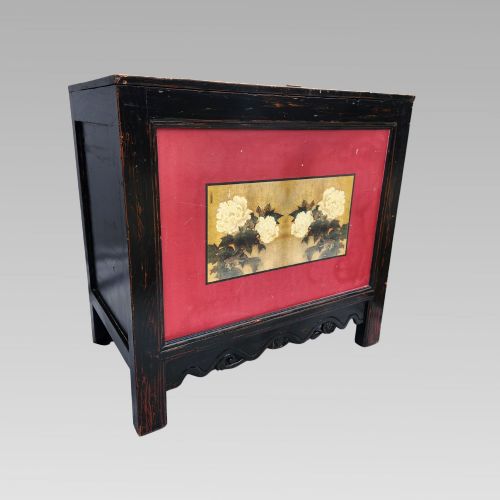
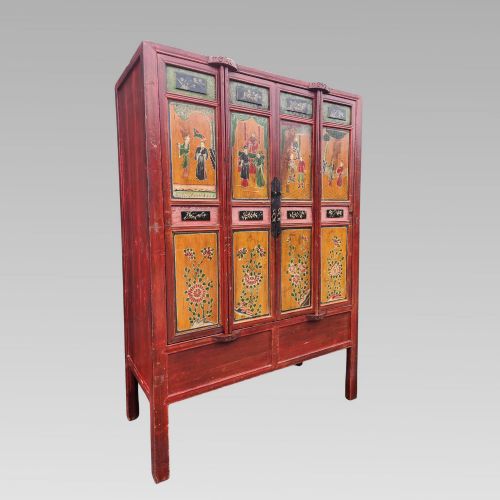
Most examples found on this page take the form of heavy timber trunks or carved camphor chests, often fitted with brass hardware. Alongside these sit sideboards, cabinets, and painted marriage chests reflecting Chinese export and regional traditions.
Dated pieces typically cluster around the nineteenth century and the decades leading up to 1930, utilising traditional forms designed to protect contents from dampness and insects.
Materials and Construction
Makers relied heavily on aromatic camphor wood, elm, teak, rosewood, and general hardwoods to build the primary carcass of each coffer. Camphor wood served particularly well for blanket boxes due to its natural insect-repellent properties.
Surfaces frequently feature red or black lacquer, polychrome paint, or hand-carved relief work depicting floral and figurative scenes. Brass hardware, including corner brackets, hinges, and heavy padlocks, reinforces the structural joints while providing decorative contrast against the dark wood or leather.
Listings feature woods such as camphor, teak, elm, and rosewood alongside leather and brass elements across the nineteenth and early twentieth centuries.
Assessing Quality
Quality rests upon the depth and crispness of the hand-carving, the integrity of the original lacquering, and the substance of the metal mounts. Pieces retaining their original brass hardware and untouched painted finishes command greater interest than those stripped or heavily restored.
The choice of timber dictates durability, with dense camphor wood and seasoned hardwoods outlasting softer utility woods. Superior examples display precise joinery and balanced proportions, whether in a simple blanket box or an elaborate export chest.
The Oriental Storage Coffer Glossary
- Camphor wood
- An aromatic timber prized for storage furniture because its natural scent deters moths and silverfish. It is commonly found in nineteenth-century chests.
- Chinese Export
- Goods manufactured in China specifically for Western markets, blending traditional Eastern forms with tastes popular in Europe and America.
- Lacquer
- A durable resin finish applied in multiple layers to wood, often polished and decorated with gilt or painted motifs.
- Zanzibar chest
- A heavy hardwood storage trunk featuring brass studding, strapwork, and compartments, reflecting trade routes between India and East Africa.
- Tansu
- A traditional Japanese mobile storage cabinet constructed from wood with iron hardware, designed for domestic organisation.
Oriental Storage Coffer: Frequently Asked Questions
What were oriental storage coffers used for originally?
These chests served primarily for storing garments, silks, and valuable household goods in domestic settings. Their dense wood and tight lids protected textiles from humidity and pests.
Export versions also functioned as durable luggage for merchants and travellers journeying by ship during the nineteenth century.
How do I care for a camphor wood chest?
Keep the timber away from direct heat sources and sudden temperature shifts to prevent the wood from splitting. Dust regularly with a dry cloth and avoid harsh chemical polishes.
Light sanding of the interior can occasionally revive the natural camphor scent if it fades over time.
How can I tell an export piece from a domestic one?
Export pieces often combine traditional Asian construction methods with decorative motifs specifically tailored to appeal to European or American buyers. They frequently incorporate robust brass mounts and leather coverings suited for long sea voyages.
Domestic items usually reflect regional preferences in joinery and decoration, such as specific provincial Shanxi styles or marriage cabinet formats.
What is the difference between a coffer and a blanket box?
A coffer generally denotes a heavier, more secure chest with a hinged lid, historically used for valuables as well as textiles. A blanket box specifically refers to lower, rectangular chests dedicated to bedding and linens.
Both terms often overlap in antique listings depending on the proportions and internal fittings of the specific piece.