

Brown Burr Walnut Drawers
Brown burr walnut drawers bring rich timber figure and deep colour into a room, offering practical storage through centuries of cabinet-making.
Brown Burr Walnut Drawers
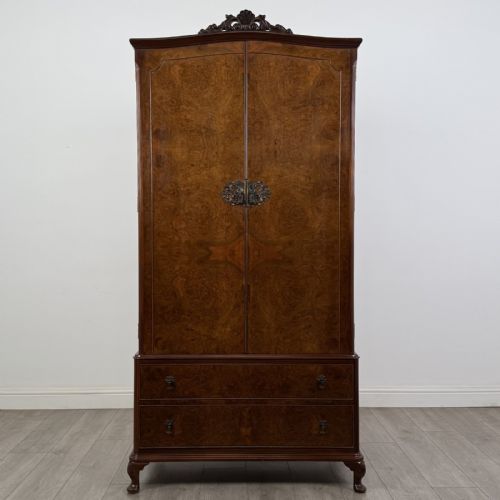
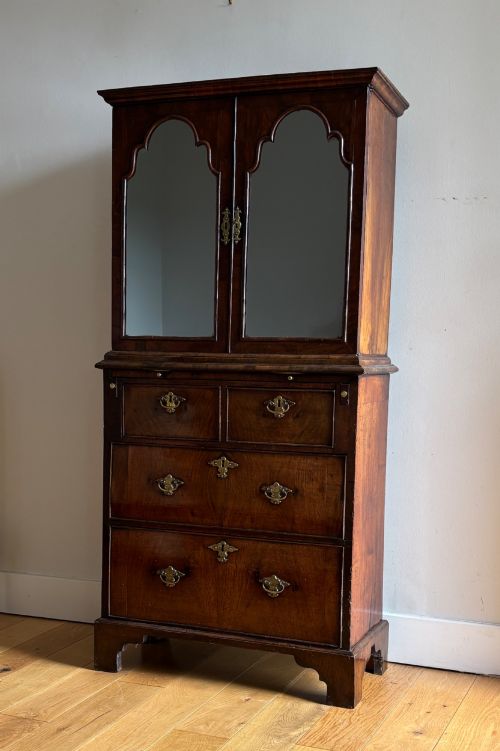
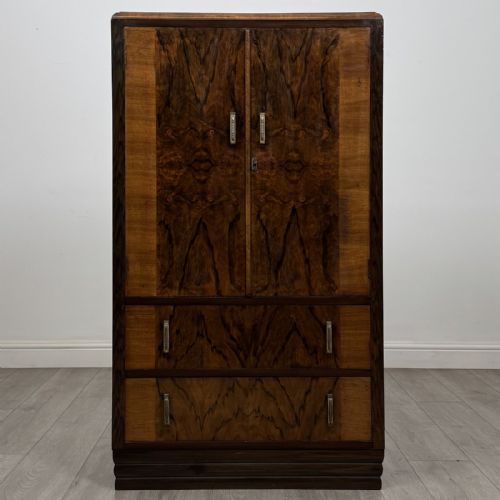
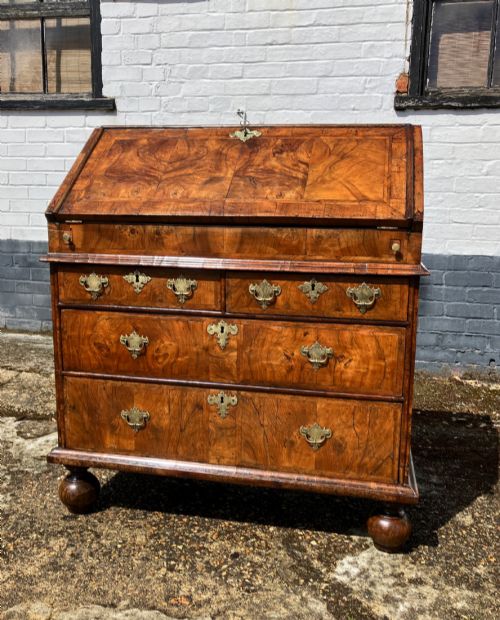
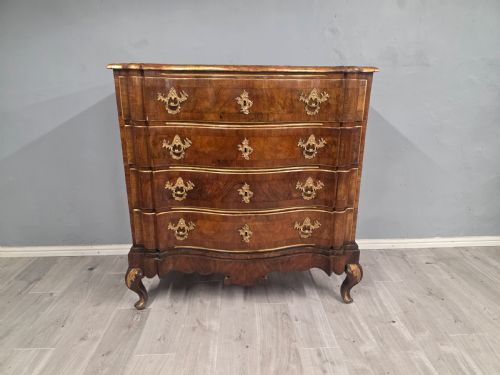
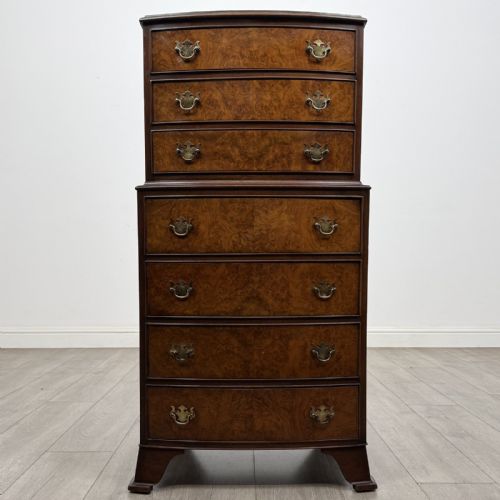
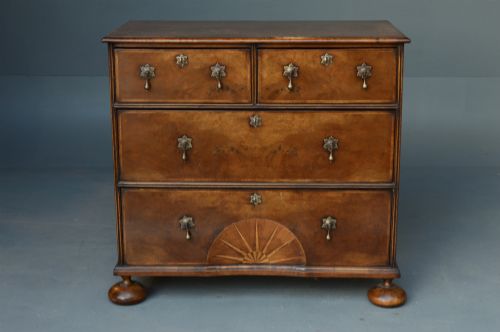
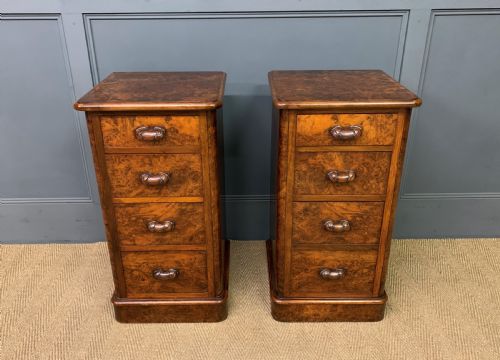
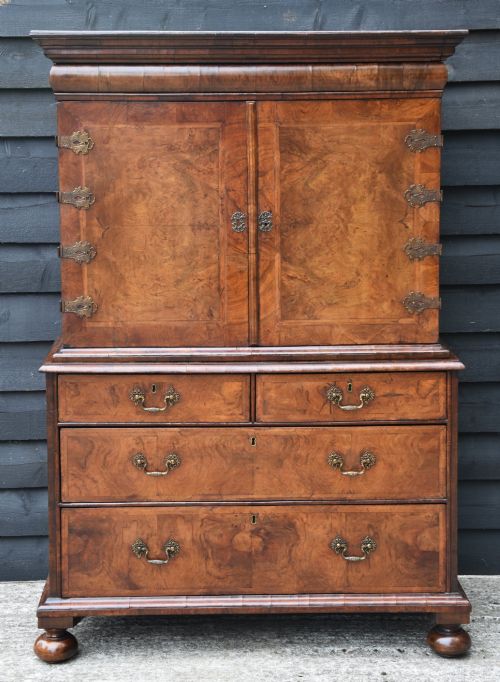
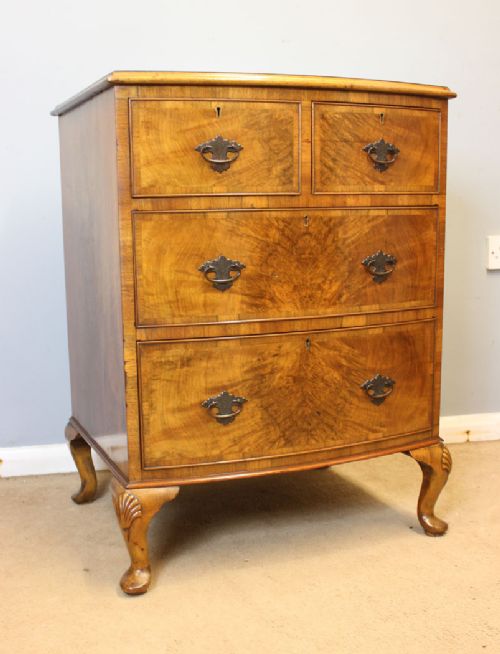
Brown burr walnut drawers span centuries of craftsmanship, ranging from early Georgian tallboys and Queen Anne chests to later Victorian bedside pieces and Art Deco cabinets. These items bring warm timber tones and complex grain patterns into domestic spaces, serving as functional storage furniture.
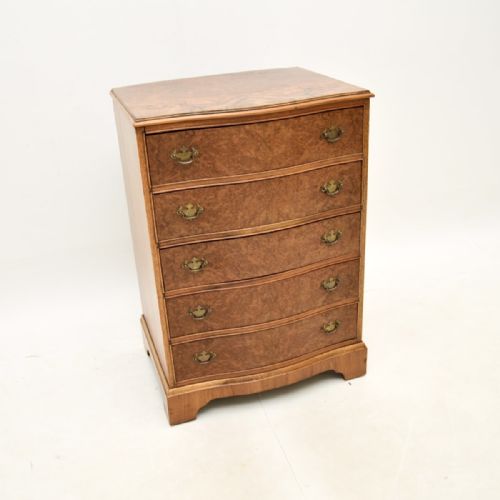
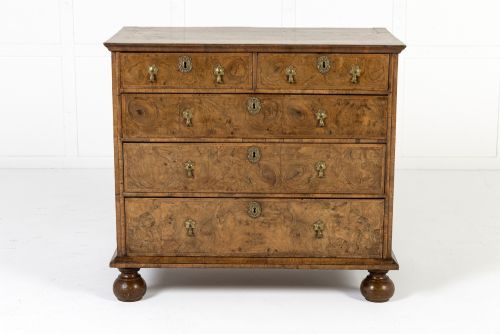
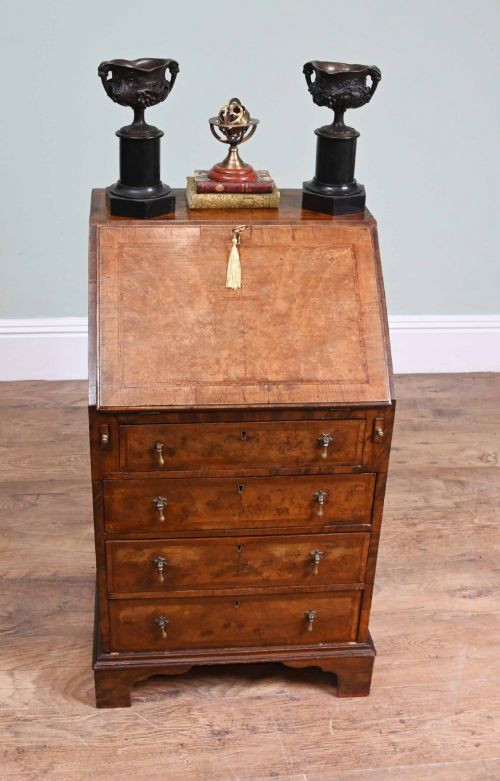
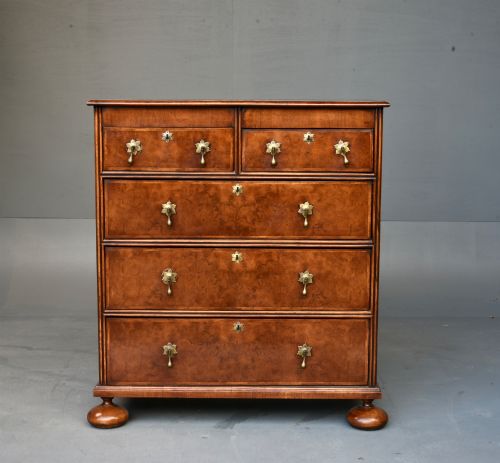
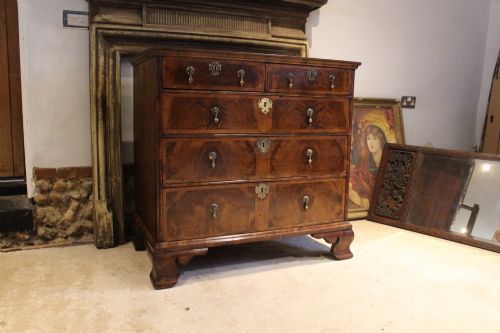
The chests of drawers on this page appear in various configurations, including bow-fronted designs, tall two-part chests, and compact bedside tables. Alongside standard drawer units, the selection encompasses bureaux, writing desks, and linen presses incorporating the same characteristic timber figure.
How they were made
Cabinet-makers constructed these pieces using solid timbers like oak and pine for internal carcases and drawer linings, applying thin veneers of burr walnut to external surfaces. This technique allowed craftsmen to display the swirling, knotty patterns of the burr wood across large drawer fronts and tabletops without warping the underlying structure.
Details such as brass handles, escutcheons, and herringbone stringing complemented the timber figure. In some examples, floral marquetry or crossbanding framed the burr walnut panels, adding geometric or decorative borders to the polished surfaces.
Brown Burr Walnut Drawers Retail Price Guide 2026
Typical asking prices for brown burr walnut drawers among the pieces listed under this phrase on Sellingantiques today, from the lower quarter to the upper quarter. They describe what is for sale here now, not the wider market.
Materials appearing across the inventory include burr walnut, walnut veneer, oak, pine, brass, and glass.
What varies in quality
Quality rests in the selection and matching of the burr walnut veneer across the drawer fronts, where harmonious grain patterns demonstrate superior craftsmanship. The crispness of inlaid crossbanding, the retention of original brass hardware, and the stability of the secondary timber carcase also distinguish finer examples.
Proportion and execution define the standing of each piece, from restrained early styles to later revival forms. Pieces exhibiting clean lines, intact veneers, and well-fitted drawer construction occupy the upper tier of the range.
The Brown Burr Walnut Drawers Glossary
- Burr walnut
- A figured timber obtained from the knotty growths of walnut trees, prized for its swirling grain patterns and rich brown tones. It is typically sliced into thin veneers for application onto cabinet furniture.
- Chest-on-chest
- A tall storage unit comprising two sections, where a smaller set of drawers sits directly on top of a wider base chest. This form originated in the late seventeenth century and maximised vertical storage space.
- Crossbanding
- A decorative border technique where strips of veneer are laid perpendicular to the main grain of the surface. This method frames drawer fronts and tabletops with a contrasting border.
- Herringbone
- A pattern formed by laying small strips of veneer in a V-shaped zig-zag arrangement. It frequently borders larger burr walnut panels on period bureau and chest surfaces.
- Tallboy
- A tall chest of drawers or chest-on-chest standing on a base frame or short legs. The design provides substantial drawer capacity within a compact floor footprint.
Brown Burr Walnut Drawers: Frequently Asked Questions
How do I care for burr walnut furniture?
Keep wooden furniture away from direct sunlight and sudden temperature shifts to protect the delicate veneer and polish. Regular dusting with a soft, dry cloth preserves the finish.
Apply occasional microcrystalline wax to nourish the timber surface without building up residue. Avoid placing damp items or heavy heat sources directly onto the wood.
Are these drawers suitable for daily use?
Period chests and cabinets provide sturdy storage that functions well in modern bedrooms, hallways, and studies. The interior construction handles everyday clothing and paperwork effectively.
Ensure drawers slide smoothly and avoid overloading older timber structures. Placing felt pads beneath heavy items protects internal drawer bases.
How do I distinguish eighteenth-century pieces from later revivals?
Early pieces display hand-cut dovetails, oak or pine secondary timbers, and patination acquired over centuries of use. Construction methods and hardware fixings often reveal the period of origin.
Revival pieces from the Victorian and Edwardian eras utilise machine-sawn elements while adopting earlier styles like Queen Anne. Comparing timber thickness and internal construction helps clarify the date.
What is a bureau bookcase?
A bureau bookcase combines a sloping desk flap that opens for writing with shelving enclosed behind upper doors. This multi-functional furniture piece serves both workspace and display needs.
Lower sections typically incorporate multiple drawers for stationery or linen storage. These architectural units integrate extensive burr walnut veneers across their primary facades.