


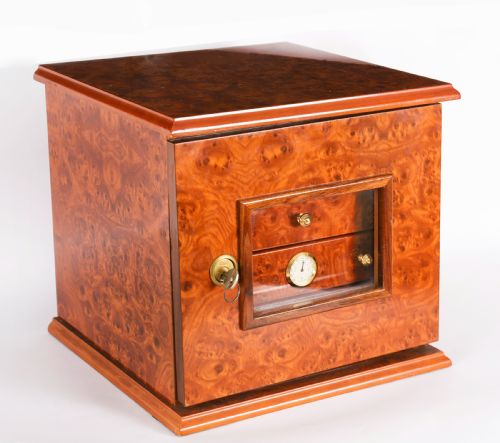
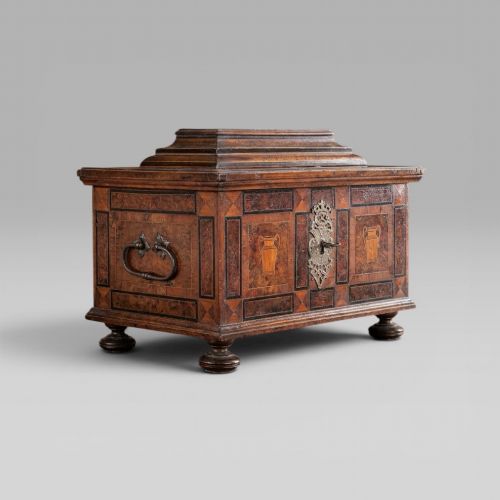
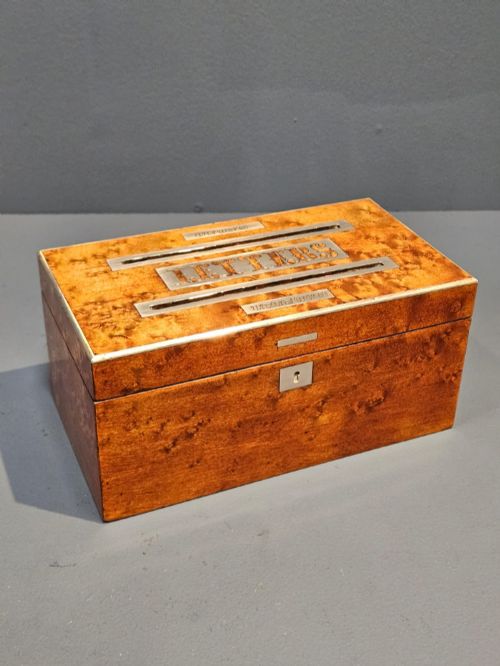
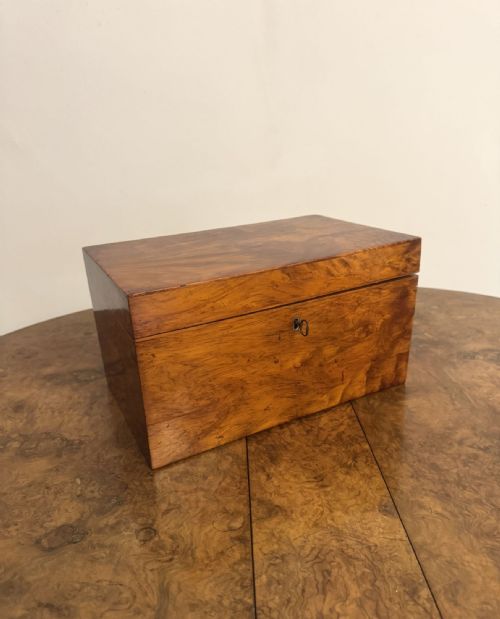



Brown Burr Box
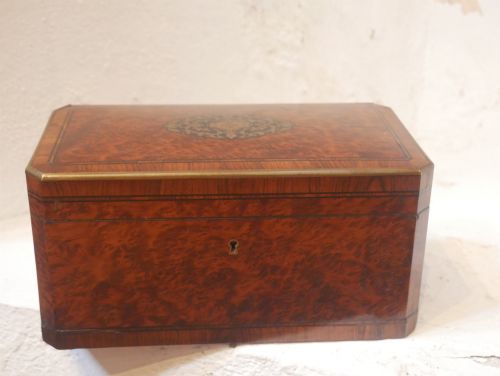
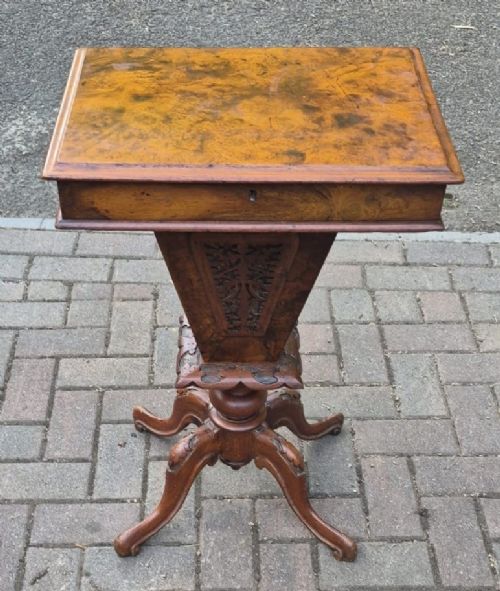
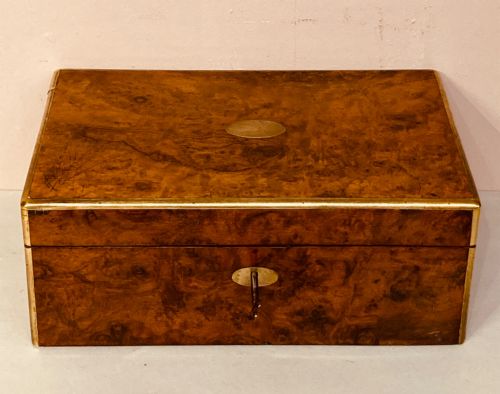
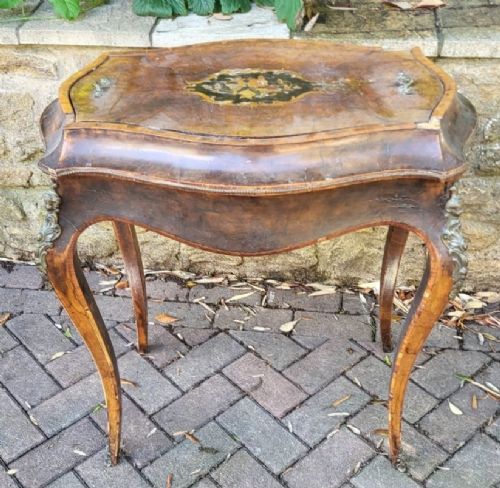
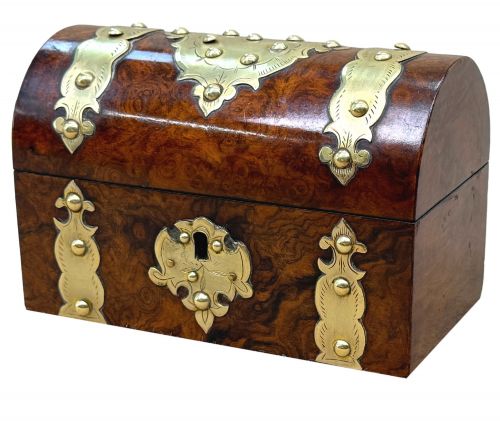
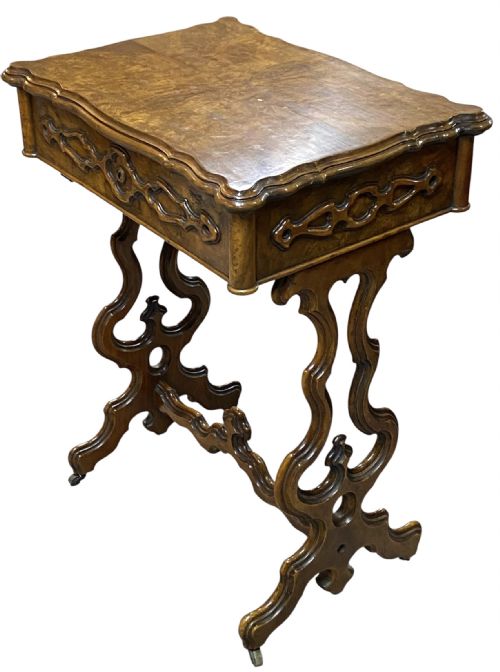
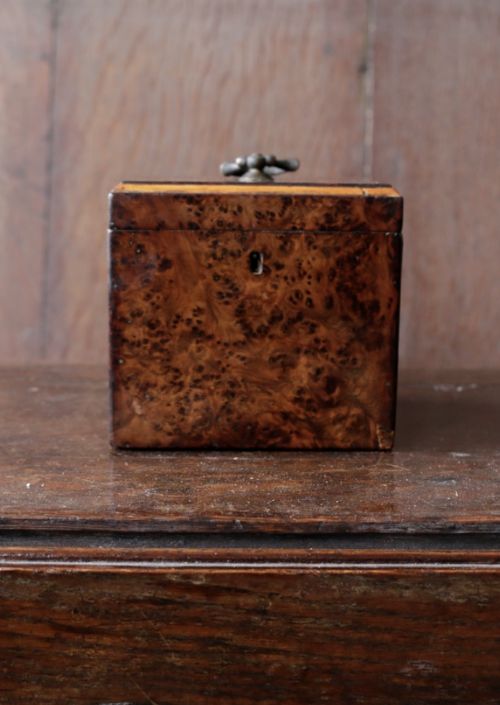
These brown burr box pieces showcase intricate wood figures and practical compartments designed to store valuables, tea, or correspondence.
Brown Burr Box
When you search for a brown burr box, you are looking at small tabletop containers and occasional pieces fashioned from richly figured timbers. The selection spans tea caddies, writing slopes, and stationery boxes alongside larger work tables.
Most examples you meet on this page date from the Victorian and Georgian periods. These items served functional roles in domestic interiors, holding letters, sewing implements, or precious leaf tea.
How they were made
Cabinet makers utilised burr walnut, burr yew, and amboyna veneers laid over solid secondary woods to create swirling patterns. These surfaces often incorporated brass mounts, glass inserts, and fabric linings.
Joiners constructed tea caddies, boxes, and tables using precise dovetail joints and marquetry inlay techniques. Workshops frequently integrated lock mechanisms and hinged lids into the timber frames.
Object forms include tea caddies, writing slopes, cigar humidors, music cabinets, and work tables.
What varies in quality
The density and movement of the burr grain pattern determine much of the visual appeal. Richer, more symmetrical timber figuring elevates the appearance of a box or table.
Precision in brass mounting, inlay work, and the original functionality of locks and hinges separate standard pieces from superior examples.
Tahan Paris·B A Bremond
The Brown Burr Box Glossary
- Burr
- A tree growth deformity that produces highly figured, swirling wood grain patterns. Cabinet makers prized these sections for decorative veneer work on boxes and tables.
- Tea caddy
- A container designed to store loose tea leaves securely. These boxes often featured internal compartments and locking lids.
- Writing slope
- A portable slant-topped desk used for correspondence. They typically opened to reveal a writing surface, inkwells, and storage compartments.
- Marquetry
- The art of applying pieces of veneer to a structure to form decorative patterns. Artisans used contrasting woods to create geometric or floral designs.
- Sarcophagus
- A box shape featuring a sloping lid profile reminiscent of ancient stone coffins. This silhouette appeared frequently on Regency and Victorian tea caddies.
Brown Burr Box: Frequently Asked Questions
What did people store in a brown burr box?
These containers held valuable personal items including tea leaves, letters, and sewing tools. Owners kept them in reception rooms and parlours for daily convenience.
Larger variations functioned as writing desks or smoking cabinets for cigars and tobacco.
How do I date a brown burr box?
Stylistic cues such as brass mounts, inlay techniques, and overall form indicate the period of manufacture. Georgian pieces often display simpler lines while Victorian items feature heavier ornamentation.
Construction methods like dovetailing and the choice of secondary woods also help determine the age.
Are these boxes made of solid burr timber?
Cabinet makers typically applied thin slices of burr veneer over a stable core of solid wood. This technique prevented the highly figured timber from warping.
Using veneers allowed workshops to display dramatic grain patterns across larger surface areas economically.
Where were these pieces used in the home?
Tea caddies and stationery boxes sat on side tables, desks, and credenzas in main living areas. Work tables and sewing stands stood beside chairs in sitting rooms.
Their decorative burr surfaces ensured they contributed to the interior decor while remaining functional.