




Inlaid Burr Wood Box
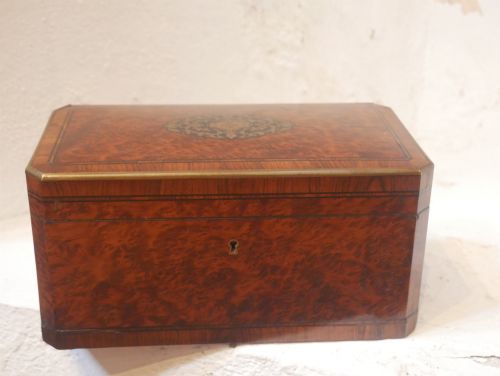
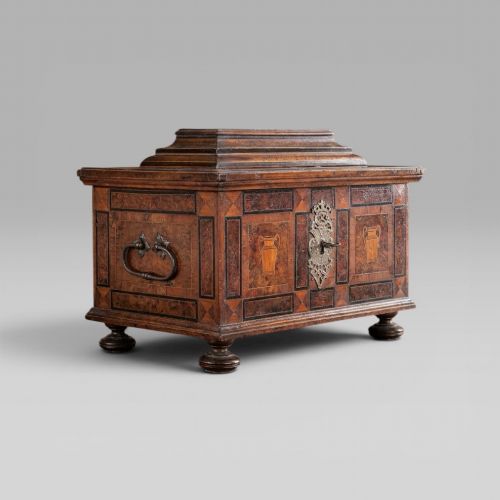
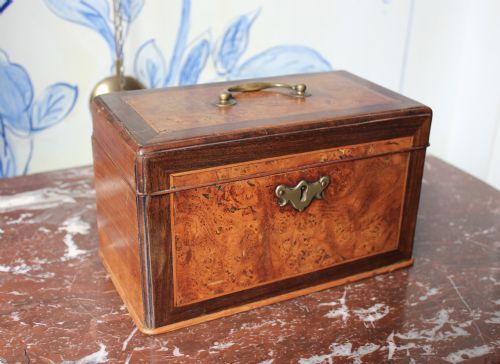
An inlaid burr wood box is a small timber chest surfaced in knotty veneers and decorated with contrasting lines, offering portable storage for tea, writing gear, or jewellery.
Inlaid Burr Wood Box
An inlaid burr wood box combines the swirling, knot-heavy grain of burr timber with precise contrasting borders of lighter or darker woods. The selection ranges from compact tea caddies and jewellery cases to larger writing slopes and work tables.
Most examples found in this range belong to the Georgian, Regency, and Victorian eras, spanning from the seventeenth century through the late nineteenth century. Forms include hexagonal and oval tea caddies, caskets, and fitted desk boxes.
Makers utilised various exotic and native timbers such as burr walnut, burr yew, and burr elm, frequently accentuating the primary wood with boxwood, ebony, and bone stringing or marquetry.
Materials and Construction
Cabinetmakers sliced thin sheets of burr veneer from the knotted growths of walnut, yew, elm, or cedar, laying them over a stable secondary wood core to display the intricate, swirling grain patterns. These wooden surfaces were then cut to recess contrasting lines of boxwood, ebony, or bone.
Many boxes incorporated brass hinges, escutcheons, and occasional ormolu mounts to secure the corners and lids, while interior fittings included compartments for tea canisters, writing surfaces, or lift-out trays lined for jewellery.
Listings feature burr walnut, burr yew, burr elm, and burr cedar alongside contrasting stringing in boxwood, ebony, and bone across eighteenth and nineteenth century periods.
Assessing Quality and Craftsmanship
The finest pieces demonstrate exceptional selection in the burr veneer, displaying dense, symmetrical knot formations that cover the surface evenly without awkward joins. The precision of the inlay work, where contrasting strings and marquetry meet tight mitres, distinguishes superior cabinetmaking from standard production.
Internal complexity and completeness also define the upper tier, noting fitted compartments, original locks with functioning keys, and intact interior linings rather than stripped carcasses. The fluidity of the form, whether an oval tea caddy or a sarcophagus-shaped workbox, completes the evaluation.
Tahan Paris·Waring & Gillow
The Inlaid Burr Wood Box Glossary
- Burr wood
- Timber harvested from tree growths where the grain has grown in a deformed, swirling pattern. This produces rich, highly figured surfaces prized for decorative veneer.
- Inlay
- A technique where small pieces of contrasting material are set into recessed cavities flush with the surrounding surface. It frequently outlines panels or creates geometric patterns.
- Tea caddy
- A small container originally designed to store dry tea leaves securely. They often featured internal lidded compartments and lockable lids.
- Writing slope
- A portable desk featuring a hinged, slanted writing surface that folds down. Lifting the slope typically reveals storage for paper, pens, and inkwells.
- Marquetry
- The art of applying pieces of veneer to a structure to form decorative patterns and pictures. It utilises various coloured woods and bone.
Inlaid Burr Wood Box: Frequently Asked Questions
What were inlaid burr wood boxes used for originally?
These boxes served domestic storage functions for valuable or perishable household goods. Tea caddies protected expensive imported leaves, while writing slopes and work tables managed correspondence and sewing supplies.
Jewellery boxes and caskets secured personal trinkets and keepsakes within private chambers. Their portable nature allowed owners to carry their necessities between rooms or residences.
How do I identify a Georgian tea caddy?
Georgian tea caddies typically display restrained proportions with architectural or geometric outlines, relying on figured veneers and simple stringing rather than heavy relief carving. Common shapes include oval, hexagonal, and rectangular chests.
Interior arrangements usually feature one or two lidded compartments designed to keep green and black tea separate. The construction generally employs solid secondary timbers beneath thin burr veneers.
What is the difference between a tea caddy and a work table?
A tea caddy is a small tabletop or portable container built exclusively for storing tea leaves and sugar. It sits independently on a surface and is easily lifted by hand.
A work table is a freestanding piece of furniture incorporating a box or basket compartment beneath the top for sewing and needlework. These tables stand on legs and include fitted interior trays for threads and tools.
How should I care for burr wood furniture?
Burr wood requires stable environmental conditions away from direct sunlight and extreme humidity fluctuations to prevent the delicate veneers from lifting or cracking. Dusting with a soft, dry cloth maintains the polished finish.
Occasional application of appropriate furniture wax nourishes the timber without building up heavy residues. Avoid placing wet items or direct heat sources on the veneered surfaces.