
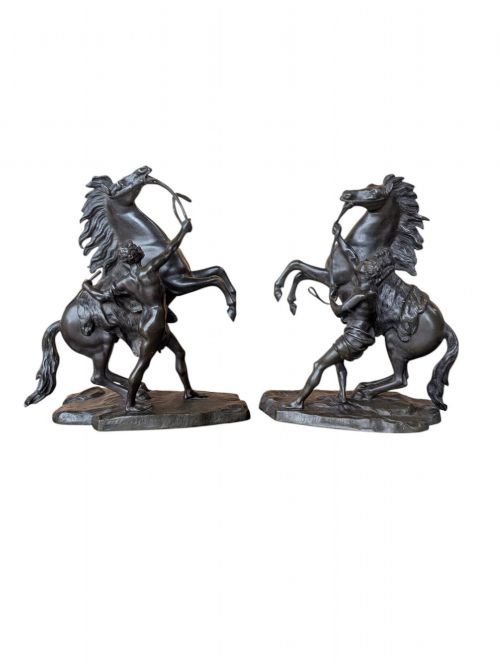


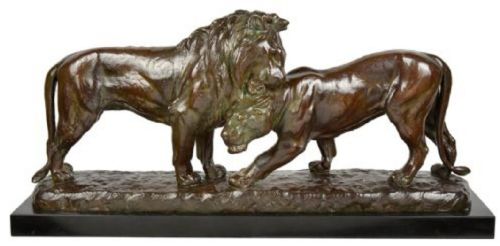


Brown Bronze Mantel Statues
Brown bronze mantel statues bring substantial weight and character to a room, offering finely cast animal and human figures from the nineteenth and early twentieth centuries.
Brown Bronze Mantel Statues
When you search for brown bronze mantel statues, you encounter sculptural works designed to sit on mantelpieces, featuring subjects that range from majestic animals to classical figures. These pieces originate predominantly from French workshops and span the nineteenth century into the Art Deco and Art Nouveau periods.
The selections on this page are most frequently cast in rich patinated bronze, often mounted on marble bases or ebonised wood plinths to provide stability and visual contrast on a shelf or mantel. Animalier subjects dominate the offerings, depicting lions, eagles, stags and foxes with keen anatomical observation.
Beyond wildlife, the figures include human subjects such as young women in costume, literary characters like the Pied Piper, and classical scenes including Europa and the bull. Busts also appear among the offerings, providing a vertical presence suitable for traditional mantel displays.
What varies in quality
Quality in these sculptures rests in the sharpness of the casting and the sensitivity of the chiselling and finishing work after the metal cools. Superior examples retain crisp textures in animal coats and human drapery without losing definition in the softer contours.
The depth and consistency of the bronze patina significantly influence the character of each piece, alongside the quality and integration of the supporting marble or wooden base. Recognised signatures and foundry marks further distinguish exceptional works from standard studio output.
Materials appearing across these catalogue entries include patinated bronze, cold-painted bronze, white marble, and ebonised wood.
Sylvain Kinsburger·Antoine Louis Barye·Barbedienne·Clovis Masson·G. GARDET·P J Mêne·Albert Hussmann·Isidore Jules Bonheur·Emmanuel Villanis·Franz Bergman·Louis Riche·I. Rochard·Eutrope Bouret·E. Drouot
The Brown Bronze Mantel Statues Glossary
- Animalier
- A nineteenth-century movement dedicated to the realistic portrayal of animals, particularly wild beasts in motion or repose. Sculptors in this style studied anatomy closely through observation at menageries.
- Patina
- The surface coloration and sheen developed on bronze over time or applied intentionally through chemical treatments. A rich brown patina defines the primary aesthetic of these mantel sculptures.
- Cold-painted bronze
- A technique where paint is applied to the cold metal surface rather than fired in a kiln. This method allows for delicate polychrome details on figures and animal studies.
- Ebonised wood
- Timber treated to resemble ebony, providing a dark, polished plinth for bronze sculptures. This material offers a stable and understated base that complements the metalwork.
- Art Nouveau
- A decorative style characterised by flowing, organic lines and floral motifs that flourished around the turn of the twentieth century. Busts and figures from this era reflect a distinct sinuous grace.
Brown Bronze Mantel Statues: Frequently Asked Questions
Where should I place a bronze mantel statue?
These sculptures suit prominent horizontal surfaces such as fireplace mantels, heavy sideboards and bookcase tops where their weight and height can be appreciated.
Ensure the supporting surface is sturdy enough to hold dense metal and stone without risk of tipping or scratching.
How do I clean a brown bronze statue?
Dust the surface gently with a soft, dry cloth to prevent the accumulation of particles in the recesses of the casting. Avoid liquid cleaners, polishes or abrasive cloths that can strip the original patination from the metal.
Apply a very light coat of microcrystalline wax periodically if you wish to protect the bronze surface from atmospheric moisture.
What does Animalier mean in these sculptures?
Animalier refers to the nineteenth-century artistic focus on realistic animal subjects, capturing predators and prey in dynamic or naturalistic poses. Artists observed creatures directly to render musculature and movement accurately.
These pieces often feature lions, stags, birds of prey and hunting dogs mounted on solid bases for display.
Are marble bases original to the bronzes?
Many nineteenth and early twentieth-century bronzes were cast with integrated or fitted marble plinths to provide a stable, decorative foundation. The stone type and edge profile generally match the period aesthetic of the sculpture.
Inspect the junction between the metal feet and the stone to understand how the sculpture is secured to its base.