
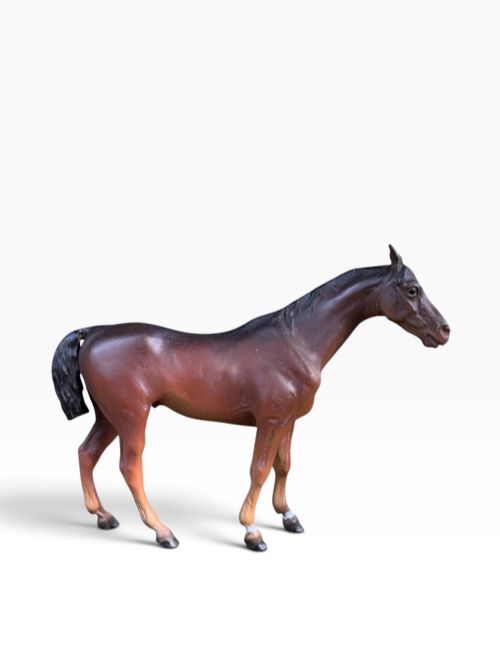
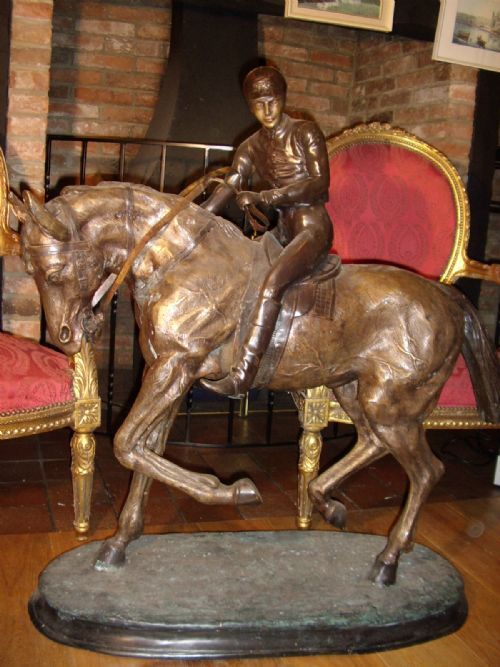
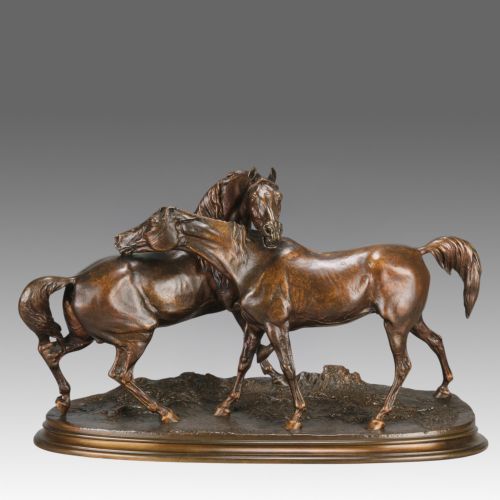
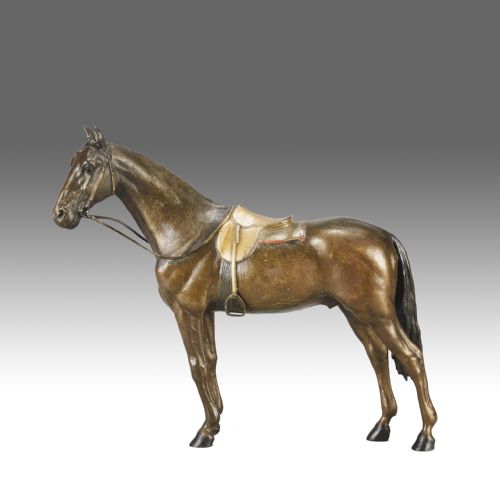


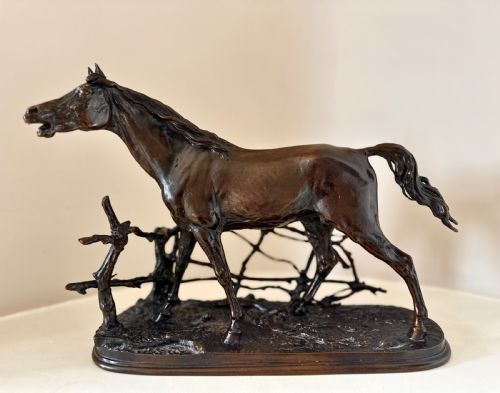


Brown Bronze Horse Sculptures
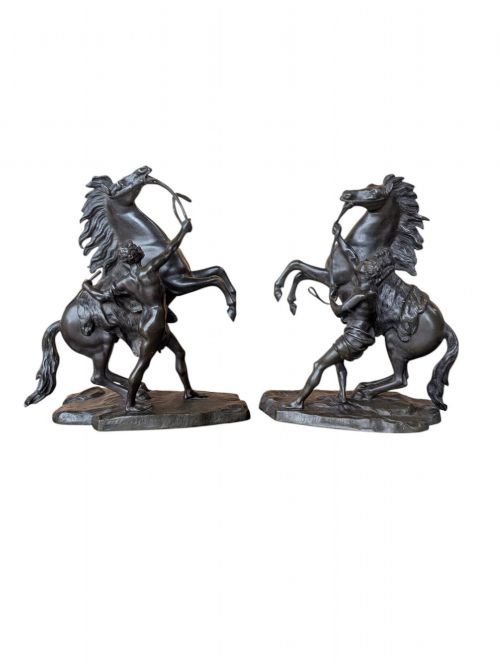
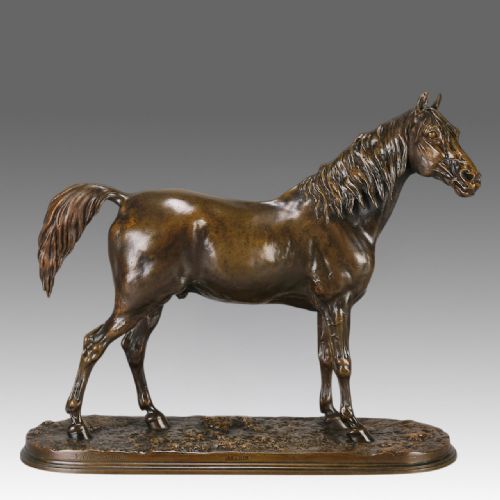
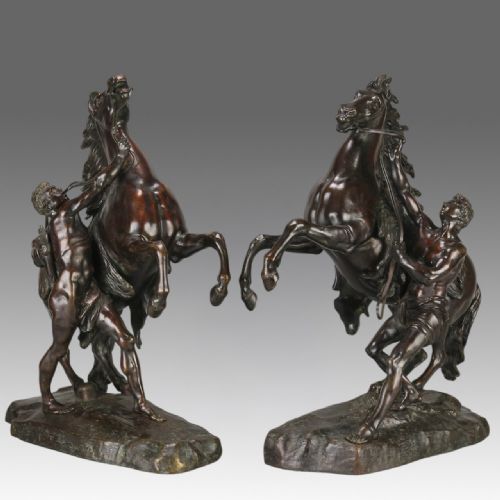
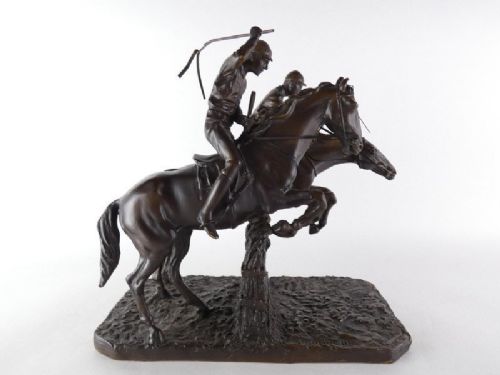
These brown bronze horse sculptures capture the power and movement of horses through the skilled work of nineteenth and twentieth century animalier makers.
Brown Bronze Horse Sculptures
These brown bronze horse sculptures span periods from the mid nineteenth century through to the mid twentieth century, drawing on French animalier and Viennese traditions. Buyers looking for brown bronze horse sculptures will find subjects ranging from single race horses and hunters to complex multi figure groups.
The objects take several forms, including large freestanding sculptures, table lighters, and detailed figurines. Pieces frequently represent specific works by notable sculptors, depicting animals in motion, at rest, or with jockeys and grooms.
Materials and casting methods
The primary material used is bronze, often enhanced with patination or cold painted finishes that create distinct brown tones across the surfaces. Some pieces incorporate marble bases or painted elements to accentuate the detail of the figures.
Makers utilised traditional casting techniques to capture fine textures in the musculature, harnesses, and human figures accompanying the animals. Cold painted metal and wood also appear among the materials supporting these sculptures.
Among the stately horses and jockeys, one maker turned the notorious highwayman Dick Turpin into a functional table cigarette lighter.
Factors determining quality
Quality rests upon the precision of the casting and the fidelity of the surface detail in rendering the anatomy of the horse and the handler. Pieces that retain crisp definition in the cold painted or patinated finishes stand apart.
The presence of clear signatures, foundry marks, and attribution to recognised sculptors or workshops elevates specific examples within the range of available works.
Pierre Jules Meme·Franz Bergman·Isidore Jules Bonheur·Charles Crozatier·Xavier Raphanel·Nikolai Lieberich
The Brown Bronze Horse Sculptures Glossary
- Animalier
- A nineteenth century artistic movement focused on the realistic portrayal of animals, particularly in bronze. Sculptors in this tradition studied anatomy closely.
- Cold painted bronze
- A technique where bronze objects are painted with oil or enamel paints without firing in a kiln. This finish is characteristic of Viennese workshops.
- Patination
- The chemical treatment applied to the surface of bronze to create specific colours and tones. It protects the metal while defining the visual depth.
- Marly Horses
- Large sculptural groups depicting rearing horses and their grooms, originally created by Guillaume Coustou. Subsequent castings reproduce these famous monuments.
Brown Bronze Horse Sculptures: Frequently Asked Questions
How do I identify a cold painted bronze?
Cold painted pieces show layers of applied paint over the bronze surface rather than a chemical patina. Look for areas where handling has caused natural wear to the paint layer.
Examine the recessed details under good light to spot original pigment remaining in the protected areas of the horse's harness or coat.
What is an animalier sculpture?
Animalier refers to nineteenth century works dedicated to accurate depictions of animals in action or repose. These pieces prioritise anatomical realism and dynamic movement.
French and Austrian workshops produced many of the finest examples, often casting horses, hounds, and wildlife with great precision.
Where should I display a bronze sculpture?
Place your sculpture on a stable surface away from direct heat sources and strong moisture fluctuations. Marble bases help isolate the metal from humidity.
Ensure the piece sits at a height where the details of the casting and any signature can be easily seen and appreciated.