
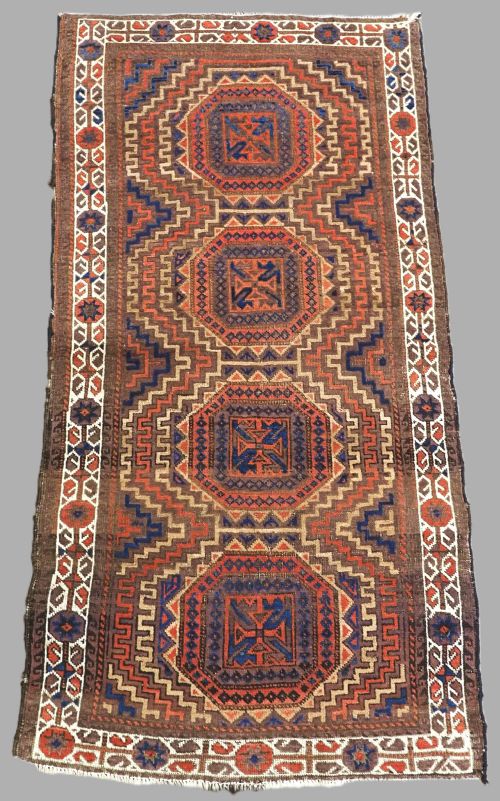
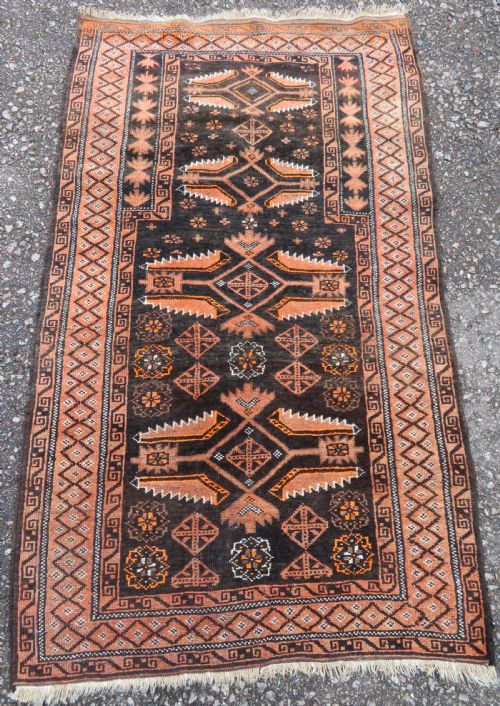


Brown Baluch Runner
A brown baluch runner brings tribal character and rich wool texture into a hallway.
Brown Baluch Runner
A brown baluch runner is a tribal textile woven in nomadic or village communities across regions spanning Afghanistan, Persia, and Khorasan. These elongated floor coverings bring authentic tribal motifs into domestic spaces, often displaying traditional patterns such as guls, shrubs, or lattice designs.
Runners of this type date from periods spanning the late nineteenth century through the early twentieth century, specifically between eighteen eighty and nineteen thirty. Buyers encounter various sub-groups named after specific tribal affiliations like Taimani, Timuri, Salar Khani, and Mahdad Khani.
The format typically serves narrow spaces such as corridors and passageways, utilising formats distinct from square rugs or small prayer formats. Each piece reflects the particular weaving traditions of its specific origin and tribal maker.
Assessing Quality and Merit
Quality rests in the fineness of the hand-spinning, the clarity of the natural dyes, and the crispness of the tribal motifs such as guls or calyx lattices. Tighter knot density and well-preserved structural integrity elevate certain examples above standard domestic pieces.
The choice of materials also influences distinction, particularly where soft camel wool or exceptionally lustrous hand-spun wool is employed. The precision of tribal designs and the coherence of regional patterns distinguish exceptional specimens.
Nomadic weavers frequently incorporated small asymmetry quirks into their patterns to ward off the evil eye.
The Brown Baluch Runner Glossary
- Gul
- A medallion motif commonly found in tribal weavings. This repeating octagonal design often identifies specific regional origins.
- Prayer Rug
- A textile featuring a mihrab or niche design used historically for devotional placement. These formats typically measure smaller than full carpets and runners.
- Kilim
- A flatweave textile produced without pile by tightly interweaving warp and weft strands. These structures appear both independently and as border bands on pile rugs.
- Pushti
- A small mat format intended for sitting or placement on furniture rather than floor deployment. The term describes diminutive dimensions within a broader tribal grouping.
Brown Baluch Runner: Frequently Asked Questions
Where should I place a runner?
A runner suits narrow corridors, hallways, and bedside placements where length matters more than width. The elongated format guides movement through interior spaces while adding warmth to wooden floors.
Traditional tribal carpets handle regular foot traffic well when constructed from durable wool and goat hair fibres. Proper underlay helps keep the textile stable on smooth surfaces.
How do I identify a tribal rug?
Tribal rugs display geometric patterns, repeating guls, and motifs inspired by regional nomadic heritage rather than court designs. Specific structures often include goat hair selvedges and mixed-technique flatweave ends.
Sub-groups like Timuri or Taimani exhibit distinct colour palettes dominated by deep browns and reds sourced from natural dyes. Examining the hand-spun wool reveals slight irregularities typical of traditional village production.
What age are these pieces?
Examples listed generally date from the late nineteenth century through the early decades of the twentieth century. Specific attribution spans the period from eighteen eighty up to nineteen thirty.
Dates are estimated based on structural wear, dye types, and traditional design markers characteristic of those decades. Pieces from eighteen eighty often display different wool qualities compared to those made in nineteen thirty.
How do I care for antique wool?
Gentle vacuuming without a rotating brush prevents damage to the hand-spun pile and flatweave ends. Professional cleaning suited to antique textiles preserves the natural dyes and wool fibres.
Keeping the textile away from direct, harsh sunlight protects the brown and ivory tones from fading over time. Allowing air circulation beneath the runner prevents moisture accumulation.