

Brown Art Deco Bookcase
A brown art deco bookcase brings geometric warmth and practical storage to a room through rich timber grains and stepped silhouettes.
Brown Art Deco Bookcase
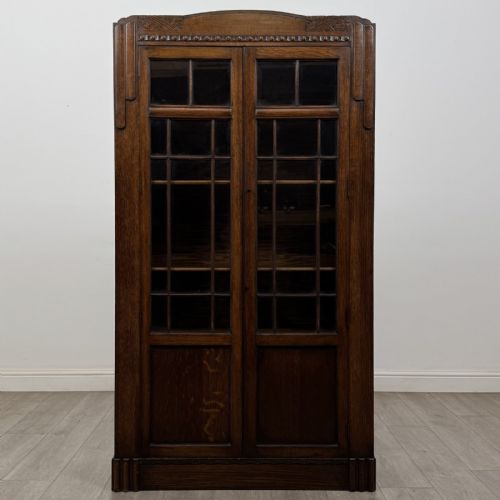
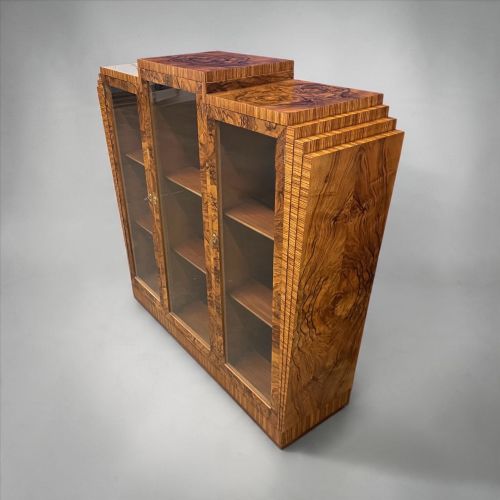
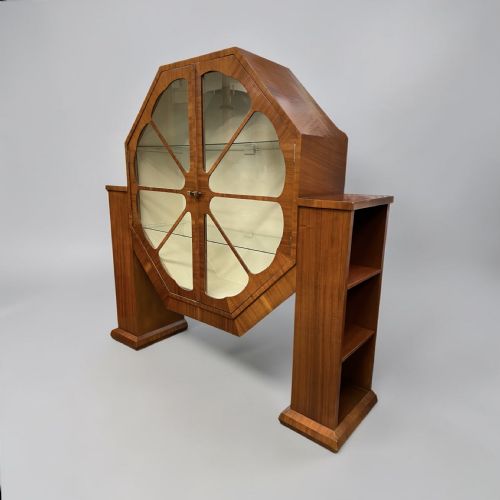
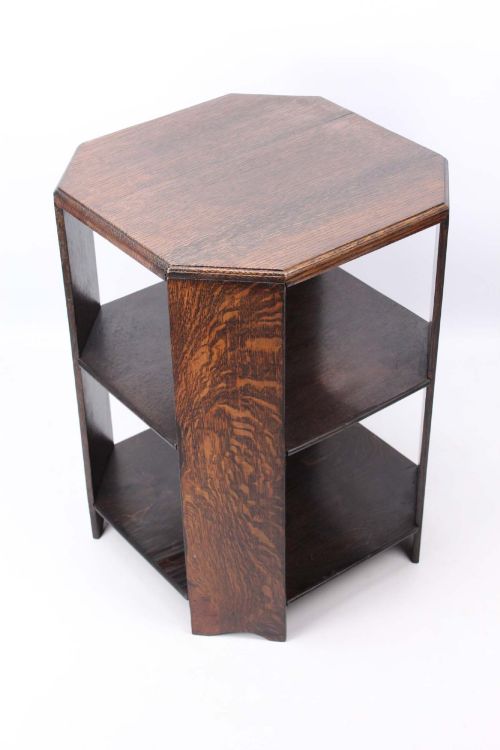
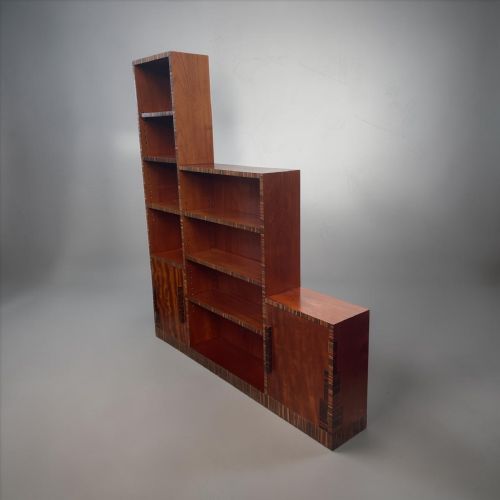
A brown art deco bookcase combines the linear architectural forms of the interwar period with the deep tones of walnut, oak, and mahogany. These pieces span from upright glazed display cabinets to stepped shelving units and bureau bookcases.
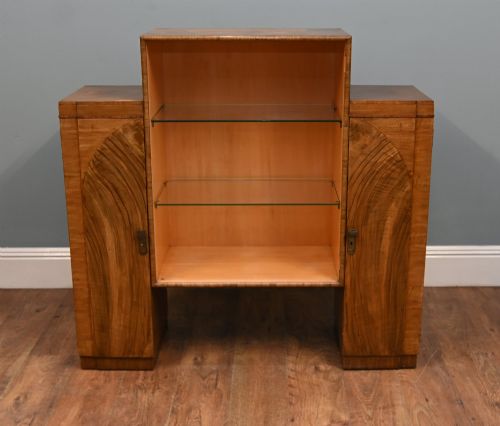
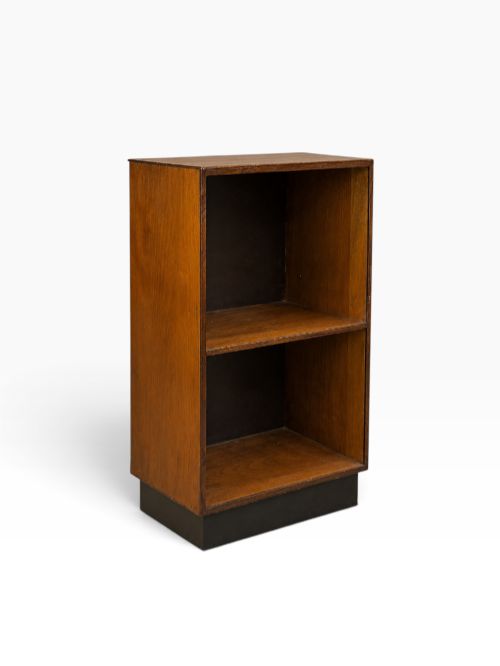
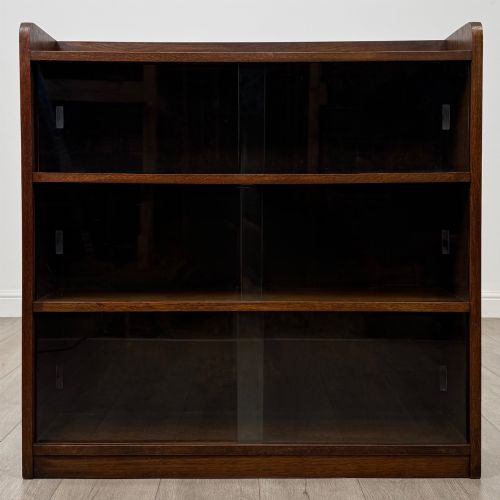
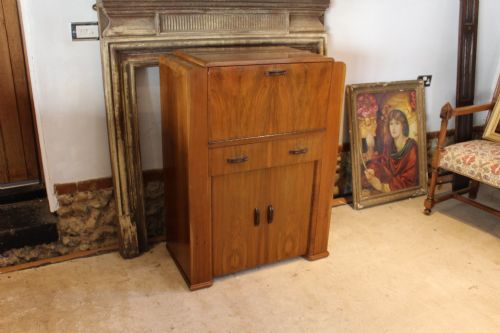
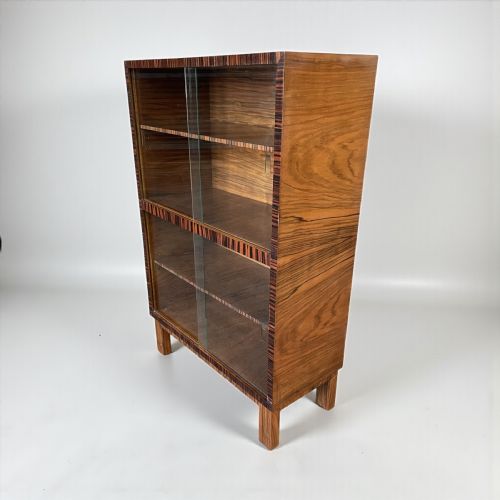
The version most commonly met on this page is the walnut or oak bookcase dating from the 1930s, often featuring glazed doors or tiered compartments. Many examples integrate display cabinets, side tables, or writing bureaus into their robust wooden structures.
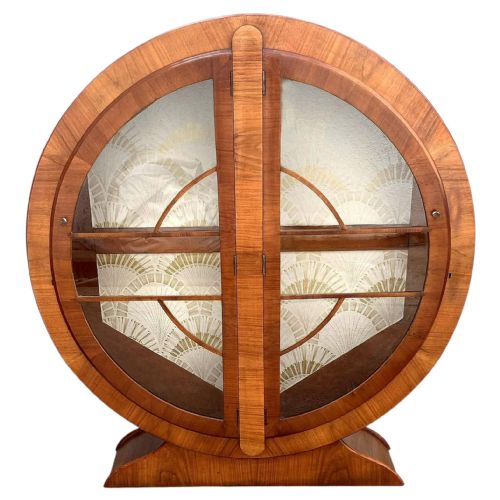
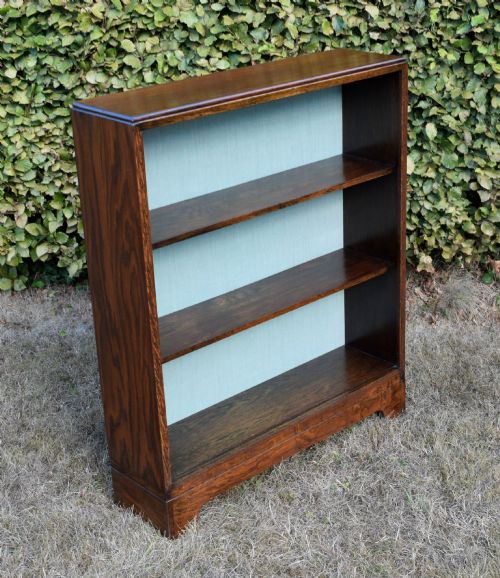
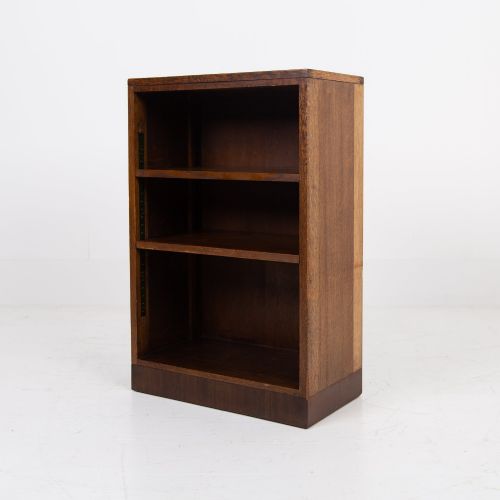
Originating largely from British workshops and European makers, these furnishings reflect a shift towards streamlined functionality combined with traditional cabinet-making skills. Buyers encounter everything from compact open bookcases to large circular display cabinets.
Materials and construction methods
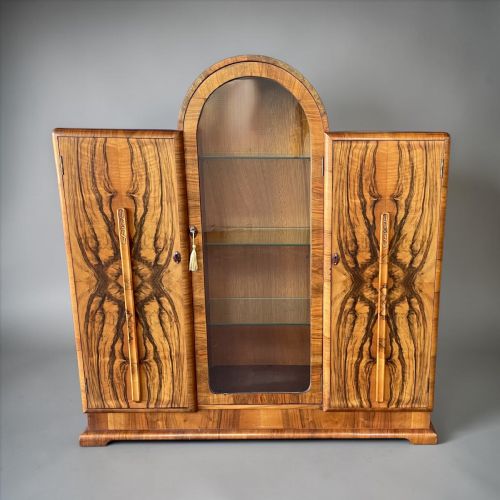
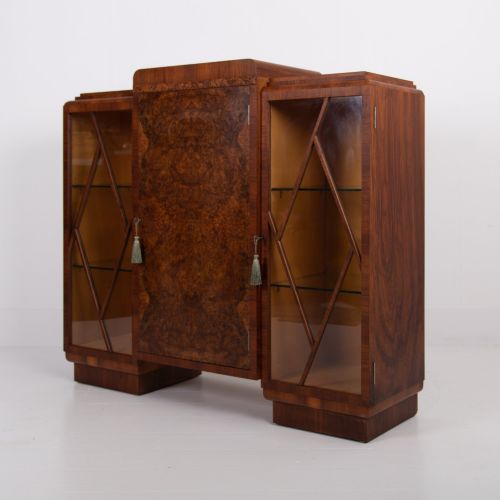
Makers utilised solid timbers such as oak and mahogany alongside decorative veneers like burr walnut to achieve striking grain patterns across the front facades. These woods were chosen for durability as well as their warm, natural brown colour.
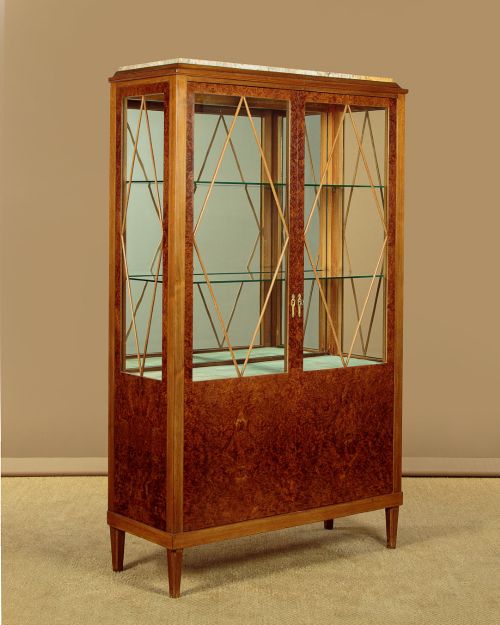
Glass panels, leaded lights, and brass fittings appear frequently on glazed cabinet doors and drop-down bureau fronts. Structural details rely on stepped mouldings, curved circular frames, and geometric overlays typical of the 1930s style.
Brown Art Deco Bookcase Retail Price Guide 2026
Typical asking prices for brown art deco bookcase among the pieces listed under this phrase on Sellingantiques today, from the lower quarter to the upper quarter. They describe what is for sale here now, not the wider market.
Listings span multiple materials including glass, walnut, brass, oak, burr walnut, veneer, walnut veneer, and mahogany across various decades.
Markers of construction quality
Quality rests upon the selection of timber veneers, where book-matched burr walnut or figured mahogany creates a balanced, symmetrical pattern across the doors and drawers. Superior pieces display seamless integration of curved edges and crisp geometric mouldings.
The integrity of the internal shelving, the smoothness of bureau mechanisms, and the clarity of leaded or plain glass distinguish finer examples from standard production. Cabinetwork that remains sturdy without loose joints or warped panels demonstrates superior original manufacture.
Epstein·F.H. Marshall & Co Glasgow
The Brown Art Deco Bookcase Glossary
- Burr walnut
- A prized timber cut from walnut tree growths, producing swirling, intricate grain patterns used for decorative veneer panels on cabinet doors.
- Bureau bookcase
- A hybrid furniture form combining a slant-front writing desk with enclosed shelving or display cabinets above.
- Leaded glass
- Small panes of glass held together by narrow strips of lead, forming geometric or linear patterns within cabinet doors.
- Stepped bookcase
- A shelving unit featuring diminishing tiers or cascading horizontal planes that echo architectural skyscrapers of the period.
- Veneer
- A thin layer of superior wood glued over a secondary timber base to provide a decorative exterior surface.
Brown Art Deco Bookcase: Frequently Asked Questions
What defines an art deco bookcase?
An art deco bookcase is characterised by geometric lines, stepped forms, and symmetrical arrangement. These pieces embrace the modernism of the 1930s while retaining traditional wooden craftsmanship.
Woods like walnut and oak dominate the construction, often enhanced by figured veneers and contrasting brass or glass elements.
How do I identify a 1930s bookcase?
Look for architectural motifs, stepped pediments, and rounded waterfall edges that distinguish interwar design from earlier Edwardian or Victorian furniture. The use of walnut veneer and leaded glass panels points directly to this era.
Maker details, structural proportions, and specific hardware styles also help confirm the manufacturing period.
Can these bookcases hold heavy books?
Most solid oak and mahogany variants provide sturdy structural support for heavy volumes, particularly open bookcase configurations. Glazed display cabinets may have lighter internal shelving intended for lighter decorative items.
Assessing the thickness of the timber shelves and the condition of their supports will determine their load-bearing capacity.
Where should I place a circular display cabinet?
Circular display cabinets work well in corners or as freestanding centrepieces where their curved walnut or oak grain can be viewed from multiple angles. Their unique footprint adds architectural interest to a room.
Ensure placement avoids direct sunlight to protect the polished wood surfaces and delicate veneer finishes.