
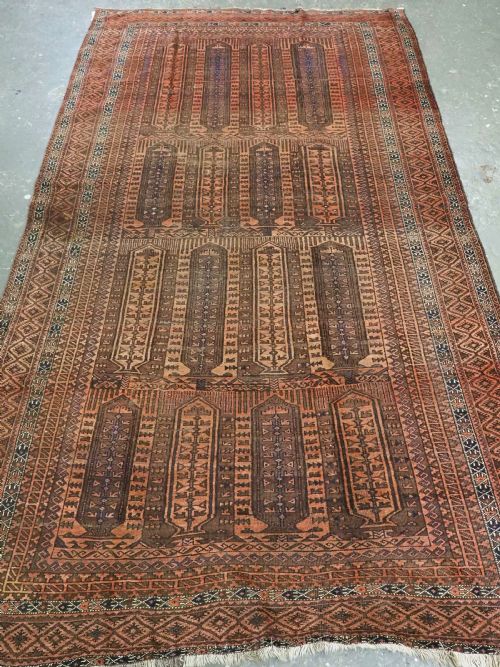
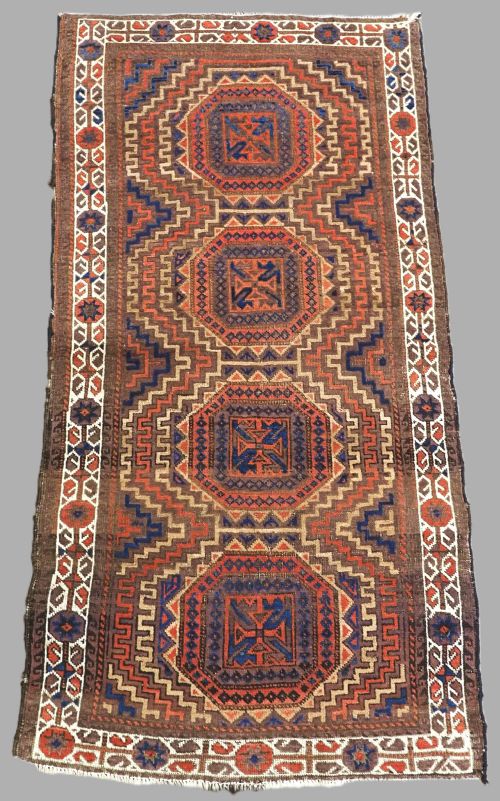
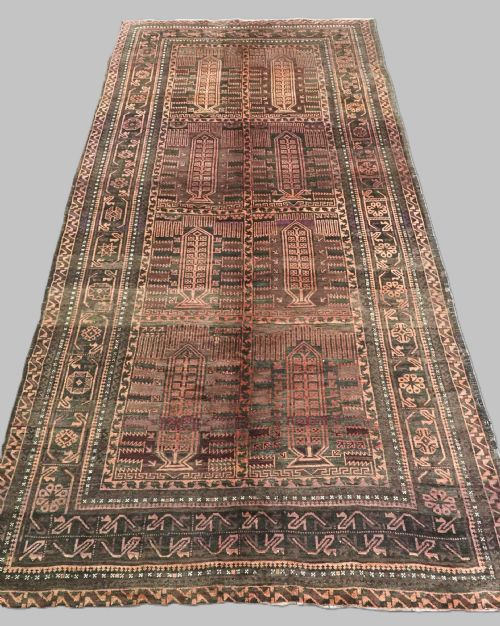
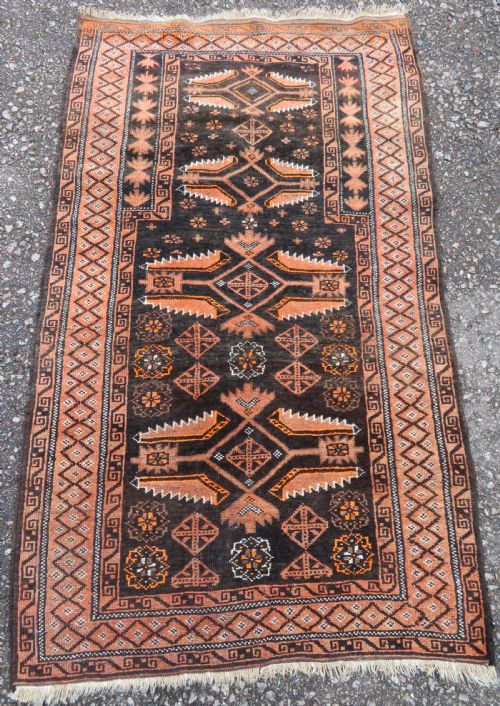


Brown Area Rug
When you search for a brown antique area rug, you enter a diverse world of tribal carpets, kilims and nomadic weaves.
Brown Area Rug
A brown antique area rug encompasses tribal and village floor coverings originating from Central Asia, Persia, the Caucasus and Afghanistan. These pieces include formats such as main carpets, long rugs, prayer rugs and flatwoven kilims produced across the nineteenth and early twentieth centuries. When searching for this description, buyers encounter deep earth tones, warm walnut shades and camel hair grounds shaped by nomadic and village weavers.
The selections on this page draw heavily from Baluch, Afghan, Turkmen, Kurdish and Caucasian traditions. They feature distinct structural motifs, including guls, mihrabs, repeating shrub designs and geometric medallions. Each textile reflects the regional aesthetic of its makers, capturing practical floor coverings designed for nomadic tents and village homes.
How they were made
Weavers relied on locally sourced materials, predominantly utilising wool for pile foundations alongside hand-spun wool, cotton, camel hair, goat hair and camel wool. These natural fibres provided durability and insulation for daily use in harsh climates. Foundations frequently combined wool warps andwefts with tightly packed knots.
Dyeing methods depended on natural dyes derived from plants, roots and insects, producing rich brown, red and indigo hues that mellow gracefully over decades. Kilims and flatweaves employed interlocking tapestry techniques, whereas pile rugs involved hand-knotting individual tufts onto vertical or horizontal looms.
Several nomadic weavers tucked tiny superstitious protective amulets directly into the pile knots to ward off the evil eye.
What varies in quality
Quality within these tribal carpets rests upon the tightness of the weave, the handling of the wool and the depth of the palette. Finer examples display meticulous knot counts per square inch, resulting in crisp geometric lines and pliable, supple foundations. Coarser pieces trade intricate detail for robust utility.
The integrity of the materials also dictates the standard of a textile. Superior specimens utilise lanolin-rich hand-spun wool and stable natural dyes that retain their resonance. Uneven wear, stiffened foundations or crude structural repairs distinguish standard utility pieces from exceptional village artistry.
The Brown Area Rug Glossary
- Kilim
- A flatwoven carpet or rug produced without a pile by tightly interweaving warp and weft threads. These textiles often serve as lightweight floor coverings or wall hangings.
- Gul
- A medallion or repeating octagonal motif used extensively in Turkmen and Central Asian carpet design. Each tribal group traditionally utilised distinct gul variations.
- Camel hair
- Animal fibre utilised either undyed as a natural brown ground or spun into durable yarns. It provides characteristic warmth and a soft handle.
- Warp
- The vertical foundation threads stretched lengthwise on a loom before knotting begins. Wefts are subsequently passed across these structural strands.
Brown Area Rug: Frequently Asked Questions
How do I clean an antique rug?
Gentle surface brushing and professional specialist washing preserve the natural wool fibres and dyes.
Avoid harsh chemical detergents and mechanical agitation to protect the historic foundation.
Can I use these rugs on heated floors?
Natural fibres tolerate moderate ambient warmth quite well when paired with a breathable underlay.
Excessive heat can dry out traditional wool and animal hair foundations over extended periods.
How do I identify a tribal rug?
Look for geometric motifs, asymmetric designs and earthy palettes rooted in nomadic village traditions.
Structural irregularities often indicate hand-knotted production outside formal urban workshops.
What is a prayer rug used for?
Nomadic weavers traditionally utilised smaller formats featuring architectural niche designs for daily devotion.
These portable textiles defined a clean, sacred space wherever the traveller settled.
Are camel hair rugs durable?
Unyed camel hair provides robust natural strength and resilience against heavy foot traffic.
The unbleached fibres retain natural oils that help resist dirt in domestic settings.