


Wool Tree of Life Rug
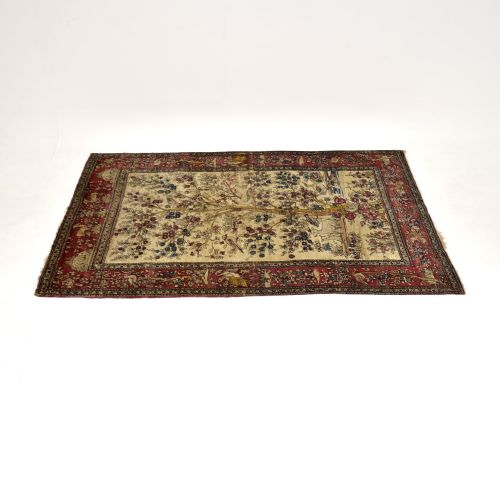
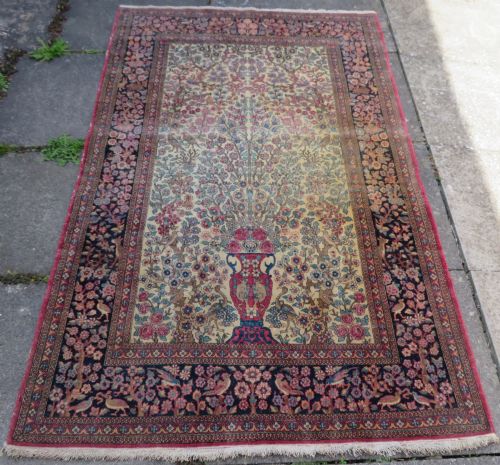
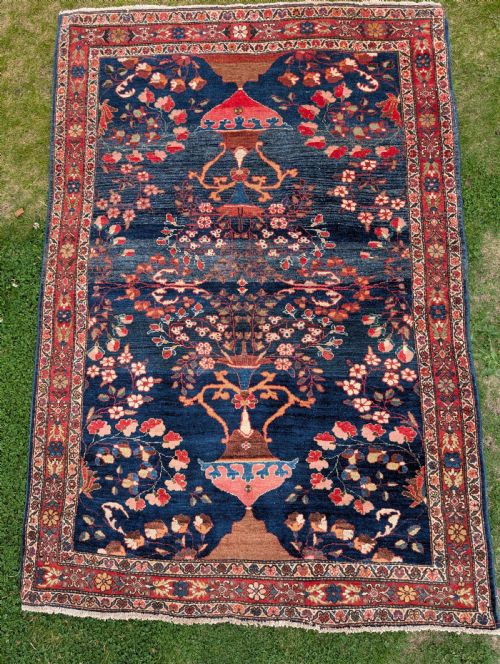
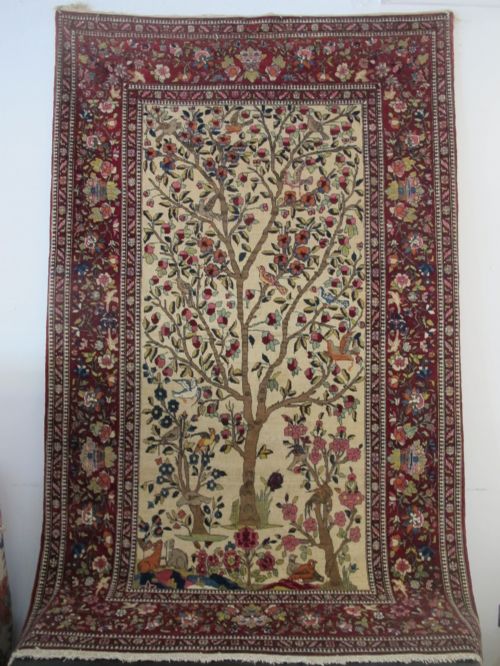
When you handle a wool tree of life rug, you hold a piece of textile artistry that maps centuries of symbolic imagery.
Wool Tree of Life Rug
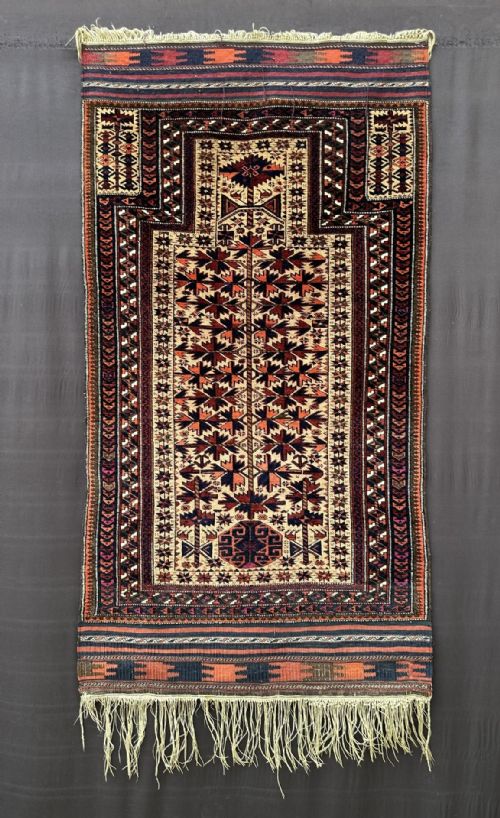
The format ranges from intimate prayer mats to substantial floor carpets and long runners. On this page, you will frequently encounter traditional Persian regional examples spanning from the eighteen-sixties through to the nineteen-twenties.
Tribal pieces from groups such as the Baluch and Qashqai sit alongside finer urban examples from Isfahan, Kirman and Kashan. Each version adapts the enduring arboreal theme through distinct local palettes and knotting densities.
How They Were Made
Makers utilised hand-spun wool for the pile, often pairing it with cotton foundations for stability and durability. Camel hair also appears in the foundations and pile of specific tribal pieces, imparting a natural warmth and variation in tone.
Weavers knotted the wool by hand onto vertical looms, employing symmetrical or asymmetrical knot configurations depending on the regional workshop. Natural dyes derived from plants and minerals provided the rich blue, red and camel grounds seen across the periods.
Listings span from eighteen-sixty to nineteen-thirty, uniting Persian town workshops and tribal regions through wool, cotton and camel hair.
What Varies in Quality
Quality rests upon the fineness of the knotting and the precision with which the arboreal design is rendered. Higher grade pieces demonstrate meticulous execution in the branches, leaves and floral details of the central motif.
The choice of materials dictates durability and handle, with tightly packed hand-spun wool creating a supple yet resilient pile. Superior examples balance balanced proportions with harmonious dye saturation that ages gracefully across the decades.
The Wool Tree of Life Rug Glossary
- Tree of life
- A central symbolic motif depicting a branching tree or floral vine representing creation and eternity. It serves as the primary focal point for prayer rugs and large carpets alike.
- Prayer rug
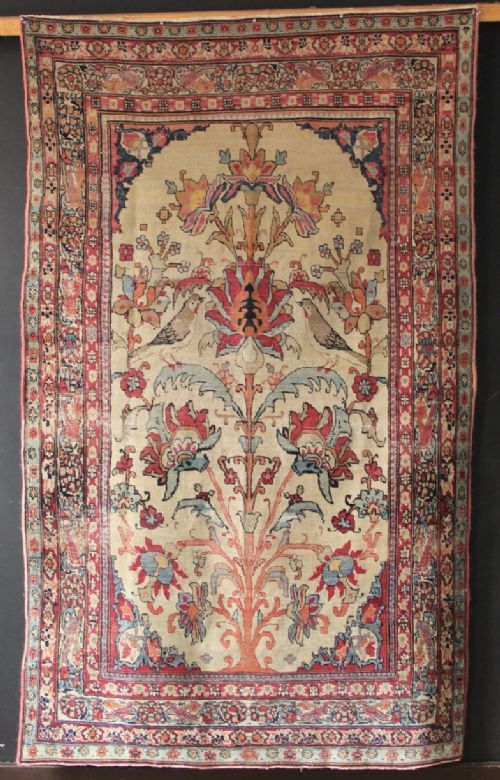
- A smaller format rug featuring a mihrab or arched niche design at one end. Historically used for daily devotion, these pieces direct the worshipper's focus toward the central tree.
- Hand-spun wool
- Yarn spun by hand rather than by industrial machinery, resulting in irregular thickness that absorbs natural dyes with subtle tonal variations. This material gives antique pile its characteristic depth.
- Kelleh
- A large format rectangular carpet, typically longer than it is wide, designed for specific room proportions in Persian domestic architecture.
- Kilim
- A flat-woven carpet or rug produced without a pile by tightly interweaving warp and weft threads. These pieces offer crisp geometric or floral silhouettes.
Wool Tree of Life Rug: Frequently Asked Questions
How do I identify a tree of life design?
The design centres on a prominent vertical tree branching upwards from a vase, hill, or ground line, frequently filled with birds and blossoms.
This distinct iconography distinguishes these pieces from purely geometric or all-over medallion carpets.
Where were these rugs historically woven?
Production spans across urban centres like Isfahan, Kirman and Kashan, as well as rural tribal regions.
Nomadic and village groups such as the Baluch, Qashqai and Bakhtiari adapted the motif to their own local weaving vocabularies.
How should I care for an antique wool rug?
Protect the piece by placing it in areas of low direct sunlight and using a breathable underlay for cushioning.
Vacuum gently with suction only, avoiding beater bars that can damage the antique hand-spun wool pile.
What materials make up the foundation?
Weavers typically used cotton for the warp and weft threads in urban workshop carpets to ensure structural stability.
Tribal pieces often incorporated wool or camel hair into the foundation, yielding a more flexible and tactile handle.