




Brown and Blue Vases
Brown and blue vases bring together rich, earthy tones and cool maritime shades, offering a striking display for any interior.
Brown and Blue Vases
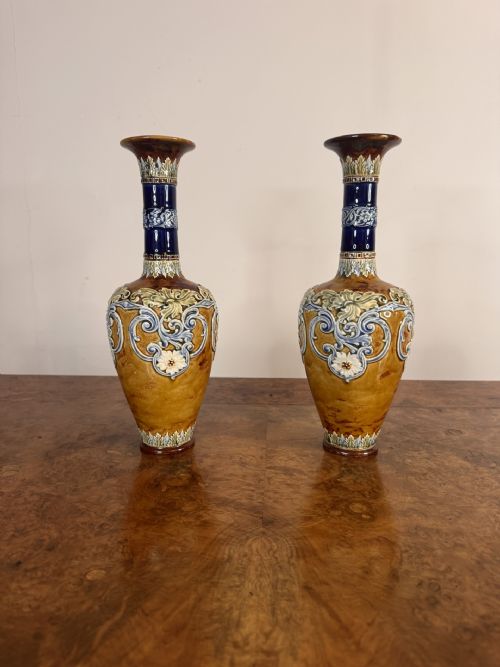
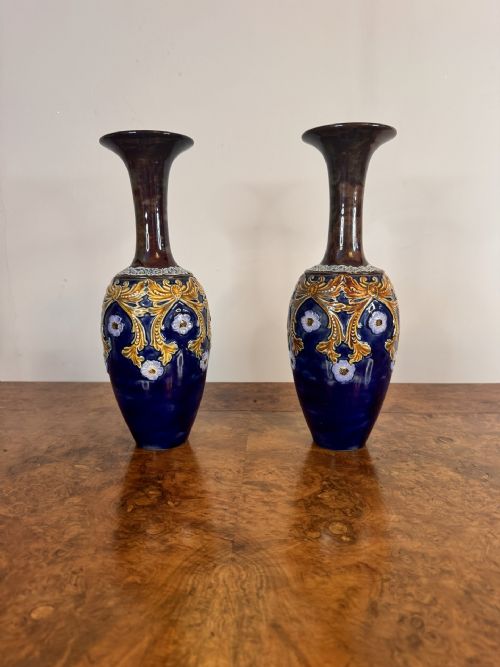
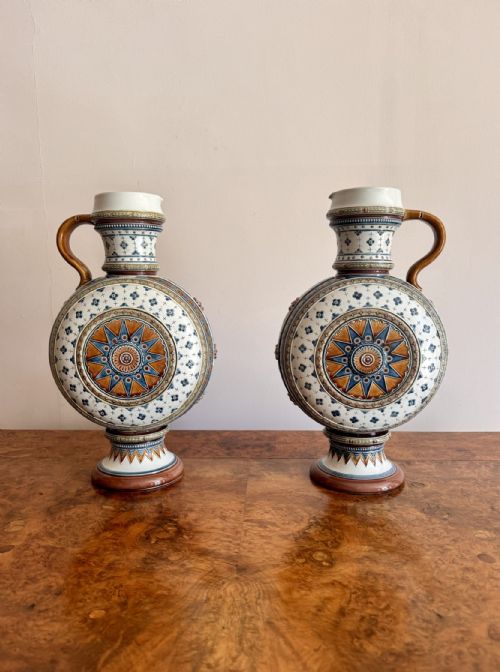
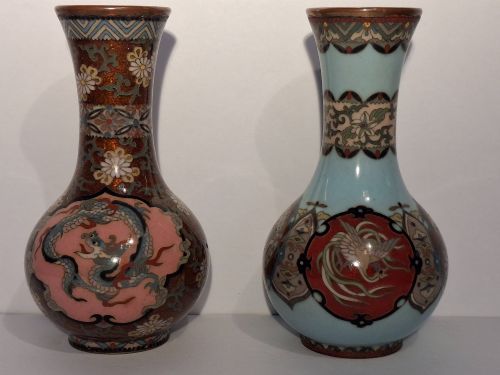
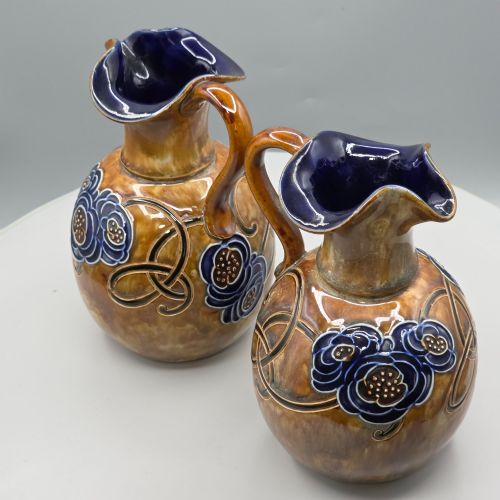
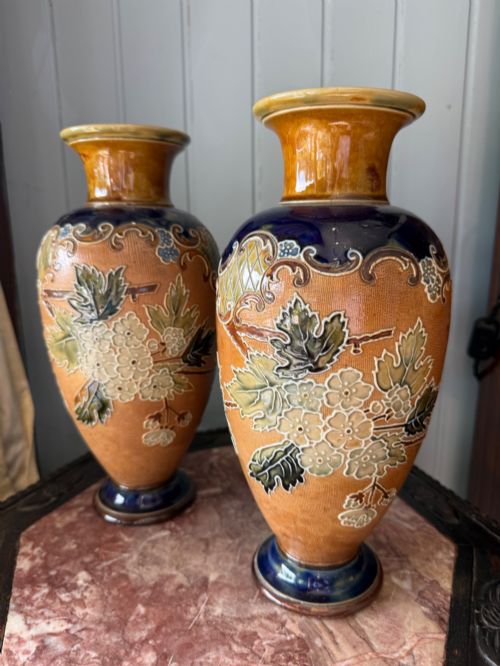
Brown and blue vases encompass ceramics and glass spanning the nineteenth century through the early twentieth century, taking forms such as ewers, jugs, and cabinet vessels. The selection draws heavily on British stoneware alongside Japanese cloisonné enamel and French cameo glass.
Makers represented include Royal Doulton and Doulton Lambeth, often decorated by notable artists such as Florence Barlow, Emma Shute, and Emily Stormer. Pieces from the Arts and Crafts and Art Nouveau periods feature prominently alongside Japanese Meiji period examples.
How they were made
Stoneware vessels are thrown and shaped in clay before receiving salt glaze treatments and hand-applied surface decoration, creating durable bodies with textured finishes. Artists incise or apply slip designs directly onto the damp clay before firing.
Cloisonné enamel utilises fine copper wire soldered to a metal base to form cells, which are then filled with coloured enamel paste and fired multiple times. Cameo glass involves acid-etching layered glass blanks to reveal contrasting coloured designs against a background.
Brown and Blue Vases Retail Price Guide 2026
Typical asking prices for brown and blue vases among the pieces listed under this phrase on Sellingantiques today, from the lower quarter to the upper quarter. They describe what is for sale here now, not the wider market.
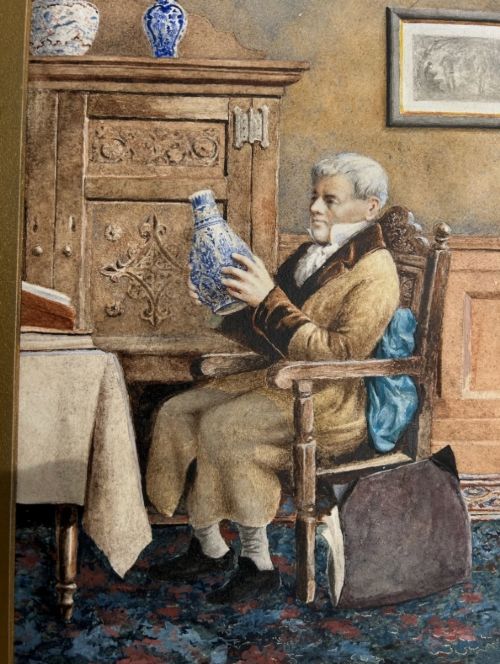
One recorded artwork depicts a gentleman intently examining a blue vase, proving that admiring ceramics has long been a serious pursuit.
What varies in quality
Quality rests upon the crispness of the hand-applied decoration, the skill of the artist, and the complexity of the manufacturing technique. Factory-produced vessels with standard patterns differ significantly from individually signed studio pieces.
The definition of the glaze separation, the depth of the carved or etched relief, and the precision of the enamel work dictate the standing of each piece within its period.
Tsukamoto Hikokichi·Royal Doulton·Doulton Lambeth·Emma Shute·Emily Stormer·Galle·Florence Barlow
The Brown and Blue Vases Glossary
- Stoneware
- A dense, hard ceramic fired at high temperatures until vitrified, making it completely impermeable to liquids even without glaze. This material forms the sturdy body of many nineteenth-century jugs and vessels.
- Cloisonne
- A decorative metalwork technique where thin wires are soldered to a surface to create compartments filled with enamel paste. These are fired and polished smooth to produce intricate patterns.
- Cameo glass
- Glass formed with two or more distinct layers of contrasting colours, where portions of the top layer are carved away. This creates a raised relief design reminiscent of carved stone cameos.
- Slip
- A liquid mixture of clay and water applied to pottery surface before firing for decoration or sealing. Artists use slip to build raised patterns or add contrasting colour beneath the glaze.
- Salt glaze
- A vitreous coating of glossy, slightly textured finish formed by throwing common salt into the kiln during high-temperature firing. This chemical reaction creates the characteristic pebbled texture on stoneware.
Brown and Blue Vases: Frequently Asked Questions
What periods do brown and blue vases come from?
The pieces span the nineteenth century through the early decades of the twentieth century. Examples range from Victorian productions to Arts and Crafts and Art Nouveau items.
Specific dates on these ceramic and glass objects often align with the height of British art potteries and Japanese Meiji period exports.
How do I identify Doulton Lambeth pieces?
Doulton Lambeth wares typically feature dense stoneware bodies decorated with rich brown and blue salt glazes, often incorporating incised foliage or pate-sur-pate designs. Look for impressed factory factory marks on the underside.
Many of these vessels bear the incised monograms or signatures of notable artists such as Florence Barlow and Emily Stormer alongside the studio stamp.
What is Japanese cloisonne enamel?
Japanese cloisonne enamel involves applying fine copper wires to a metal core to map out intricate decorative patterns. The resulting cells are filled with coloured enamel pastes before multiple firings and polishings.
Meiji period examples often display miniature forms with meticulous attention to detail and botanical or geometric motifs.
How should I display these vases?
Position these vessels away from direct sunlight to protect delicate enamel colours and glass finishes. Sturdy surfaces are essential, particularly for heavier stoneware jugs and ewers.
Grouping pieces by colour tones or pairing matching items from the same maker creates a balanced visual arrangement in a room.