







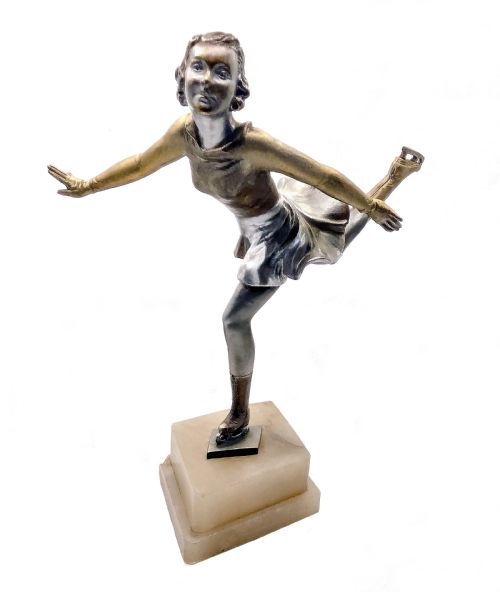

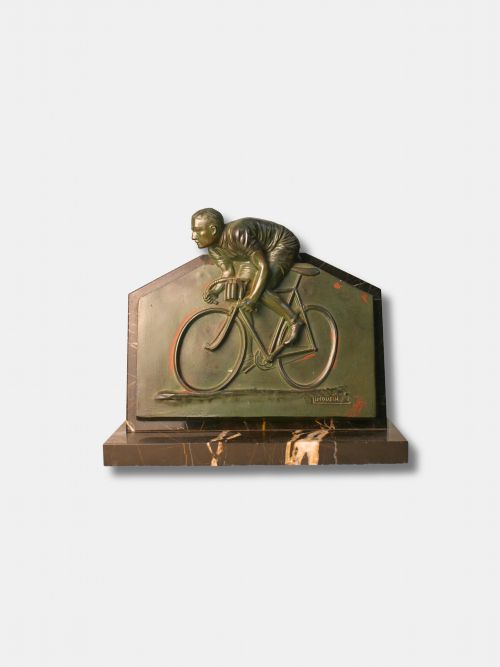


Bronzed Spelter Figurine
A bronzed spelter figurine delivers the decorative presence of solid metal at a domestic scale, combining cast zinc alloy with a dark metallic finish.
Bronzed Spelter Figurine
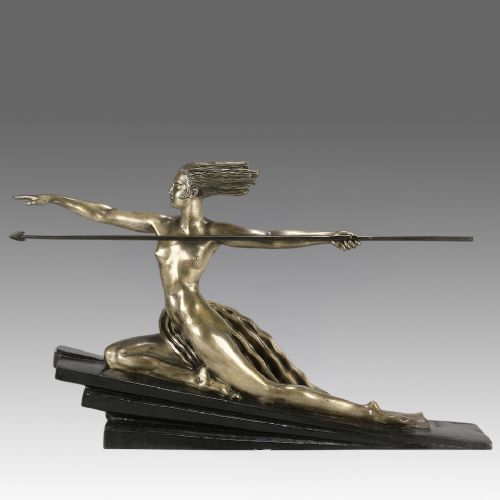
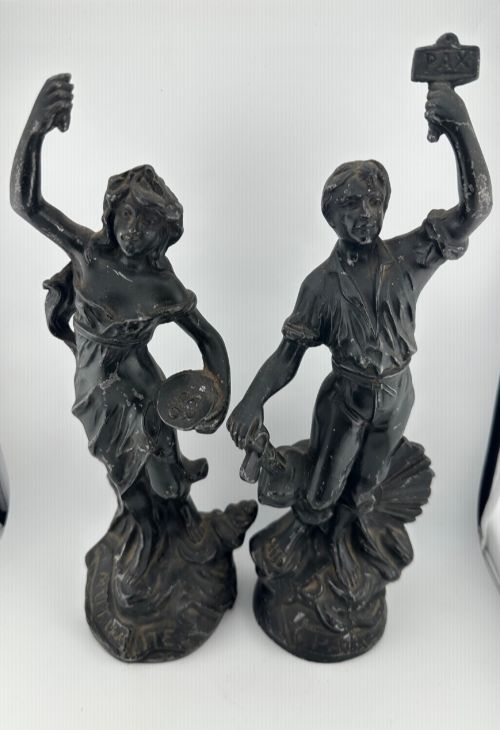
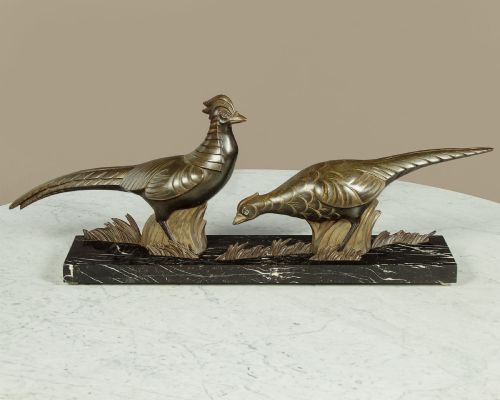
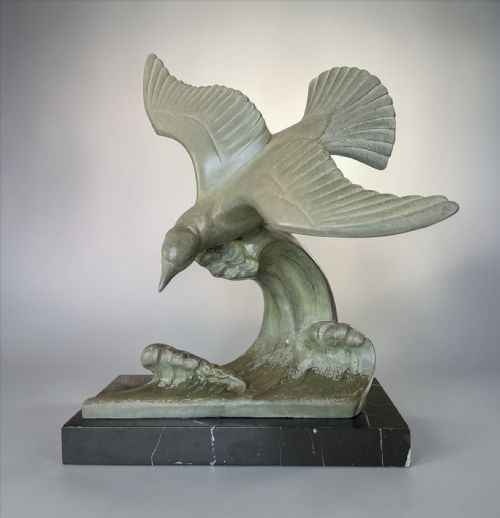
A bronzed spelter figurine represents a sculptural subject cast in a zinc-based alloy and given a surface treatment to simulate genuine bronze. Buyers seeking a bronzed spelter figurine will encounter diverse forms ranging from human figures to animals and functional items.
The selections available lean heavily toward the twentieth century, with Art Deco dancers, athletes, and animals forming a large portion of the items alongside Victorian and Art Nouveau examples. French workshops produced the vast majority of these ornamental sculptures.
Many figures integrate bases made of marble, onyx, or alabaster to add weight and contrast to the metallic body above. Others function as lamps, match strikers, or table lighters rather than purely decorative statues.
What varies in quality
The standard of the casting work dictates the crispness of facial expressions, drapery folds, and surface textures. Finer examples retain sharp details without the smoothing or softening that occurs when moulds are reused excessively.
The integrity of the patinated surface and the quality of the supporting stone base also influence the overall standard. Original surface treatments and well-fitted marble or onyx plinths demonstrate superior manufacture compared to later alterations or heavy repainting.
Bronzed Spelter Figurine Retail Price Guide 2026
Typical asking prices for bronzed spelter figurine among the pieces listed under this phrase on Sellingantiques today, from the lower quarter to the upper quarter. They describe what is for sale here now, not the wider market.
Listings span from Victorian and Art Nouveau periods through to the nineteen-thirties Art Deco era, incorporating glass and wood alongside metal and stone.
Josef Lorenzl·C Masson·Geo Maxim·H Bal·Chiparus
The Bronzed Spelter Figurine Glossary
- Spelter
- A zinc-based alloy commonly utilised for nineteenth and twentieth-century decorative figures. It served as an accessible alternative to bronze.
- Patination
- The surface finish applied to metal to simulate age or create a specific metallic colour. It gives spelter its bronze-like appearance.
- Plinth
- The mounting base, frequently constructed from marble, onyx, or alabaster, that supports the metal figure. It provides stability and visual contrast.
- Art Deco
- A design style prominent around the nineteen-thirties, characterised by stylised geometric forms and streamlined figures. It accounts for a high proportion of listed sculptures.
- Match striker
- A functional object incorporating a textured surface for igniting matches alongside a decorative sculptural figure. These combine utility with ornament.
Bronzed Spelter Figurine: Frequently Asked Questions
How do I clean a bronzed spelter figurine?
Dust the surface gently with a soft, dry cloth to remove accumulation without disturbing the delicate patinated finish. Avoid using water, chemical solvents, or abrasive metal polishes, which can strip away the bronzed coating.
Take care around stone bases such as marble or onyx, wiping them with a damp cloth only when necessary. Ensure the piece remains completely dry after cleaning.
Are these figures made of solid bronze?
No, these pieces utilise spelter, which is a softer zinc-based alloy rather than copper-tin bronze. Spelter is lighter and more brittle, requiring careful handling to prevent breakage at thin points like ankles or limbs.
The bronzed appearance comes from surface patination or paint applied over the metal base. This technique allowed manufacturers to produce decorative sculptures at a lower cost than traditional bronze casting.
Why are many figures mounted on stone bases?
Stone plinths made from marble, onyx, or alabaster provide essential weight to counterbalance the relatively light spelter metal above. This added mass prevents the figures from tipping over easily on tabletops.
These bases also enhance the visual presentation of the sculpture by introducing contrasting colours and polished textures. Different stone types often help indicate the period of manufacture.
How can I tell an Art Deco piece apart?
Art Deco examples typically feature streamlined human figures, dancers, athletes, or animals rendered in a stylised manner. The bases are frequently rectangular or stepped in marble and onyx, reflecting the aesthetic of the nineteen-thirties.
Older Victorian or Art Nouveau items display more ornate, naturalistic, or classical styling. Examining the clothing, hair design, and typography of signatures helps confirm the era.