




Bronze Wildlife Figurine
A bronze wildlife figurine captures the movement and character of animals, ranging from French animalier studies to Austrian cold-painted works.
Bronze Wildlife Figurine
When buyers search for a bronze wildlife figurine, they look at animal subjects cast in metal across several decades. The selections on this page draw predominantly from nineteenth-century French animalier traditions, Japanese Meiji period okimono, and twentieth-century Austrian cold-painted pieces.
The objects take the form of domestic figures, groupings of predators and prey, and mounted studies. Many sit upon integral cast bases, while others are secured to distinct plinths of green onyx, marble, or hardwood.
Materials and technique
These figures rely on bronze as the primary structural metal, often finished with varied patination to create depth in fur, feathers, and hide. Certain Austrian works employ cold-painted enamel techniques applied directly over the metal surface after casting.
Many European casts utilise specialised foundries and bear signatures or foundry marks from makers such as Barbedienne or Siot. Asian examples from the Meiji period and late Qing dynasty apply traditional lost-wax or sectional casting methods to achieve fine detail.
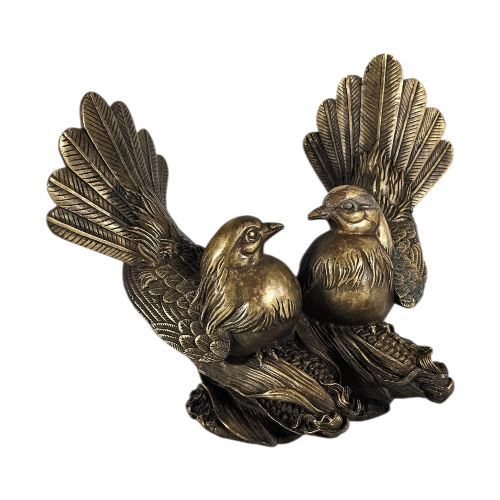
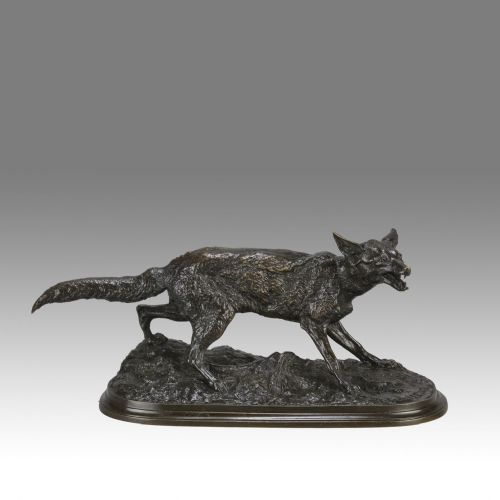
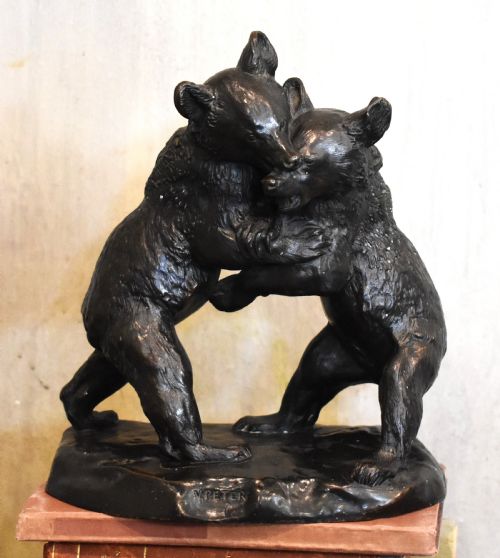
Pigeons, doves, hares, and fighting bear cubs share the metal menagerie alongside lions and tigers.
Variations in quality
Quality rests heavily on the crispness of the chase work, where the metalworker refines the raw cast by hand to define musculature, texture, and expression. Finer pieces retain intricate details in feather and fur without smoothing or softening during finishing.
The sophistication of the casting foundry and the reputation of the sculptor dictate the standing of the piece. A balanced composition with dynamic tension between animal subjects marks the higher tiers of animalier production.
P J Mêne·Franz Bergman·Paul Édouard Delabrièrre·Clovis Masson·A L Barye·Georges Gardet·Alfred Dubucand·Isidore Bonheur·I Rochard·Jules Moigniez·Ferdinand Pautrot
The Bronze Wildlife Figurine Glossary
- Animalier
- A nineteenth-century artistic movement focused on the realistic depiction of animals, particularly predators and game. Sculptors in this genre studied live animals in menageries to capture accurate anatomy and motion.
- Cold-painted bronze
- A technique where bronze figures are painted with cold enamel rather than fired in a kiln. The paint is delicate and requires careful handling to preserve the original surface colours.
- Okimono
- A Japanese decorative statue designed for display in a household setting, often depicting animals or figures in lively poses. These objects were widely produced during the Meiji period for both domestic and export markets.
- Patina
- The surface coloration and sheen developed naturally through age or applied chemically by the foundry. It accentuates the contours of the metal and protects the bronze base.
- Chasing
- The manual finishing process where a metalworker uses hammers and chisels to refine the raw bronze cast. This step removes casting seams and sharpens fine details before patination.
Bronze Wildlife Figurine: Frequently Asked Questions
How do I clean a bronze wildlife figurine?
Dust the surface gently with a soft, dry cloth to prevent the accumulation of grit within the crevices. Avoid using water, soap, or abrasive metal polishes, as these substances can strip away the historic patina.
Apply a microcrystalline wax very sparingly if the metal requires protection against moisture. Buff the wax away immediately with a clean cloth to maintain a subtle, stable sheen.
What is the difference between French animalier and Austrian cold-painted bronzes?
French animalier bronzes focus on anatomical realism in naturalistic poses, finished with chemical patinas that mimic natural fur and skin tones. These works were cast primarily in the nineteenth century by established founders.
Austrian cold-painted pieces from the twentieth century rely on vibrant enamel paints applied directly to the metal surface. They often depict exotic animals or birds mounted on bases like green onyx.
Are these figures solid bronze?
Most sculptural figures of this type are cast using the lost-wax method and are hollow rather than solid metal. This technique reduces weight and prevents cracking during the cooling process after pouring.
Heavier examples may incorporate dense stone bases made of marble or green onyx to provide stability. The weight listed in a description usually accounts for both the metal figure and its mounting.
How can I tell a Meiji period bronze from a European one?
Meiji period Japanese bronzes often depict wildlife subjects such as elephants, tigers, and birds rendered with distinct surface textures and rich patinas. Many carry signature panels or reflect traditional Eastern casting techniques.
European animalier sculptures generally follow Western academic traditions of movement and tension, frequently bearing the signature of a named sculptor or foundry mark.