



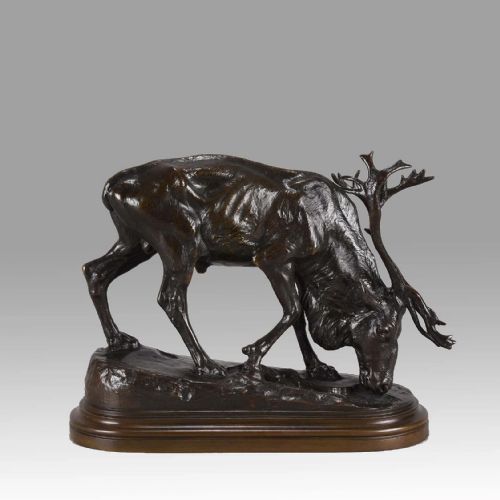
Antique Deer Statue
These antique deer statue works bring the watchful poise of stags, fawns and does straight into your room.
Antique Deer Statue
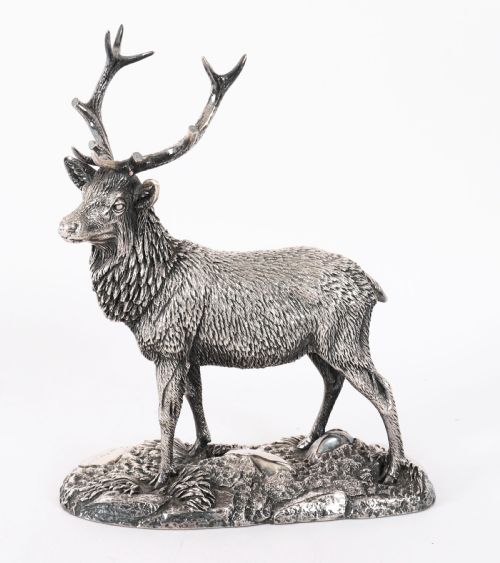
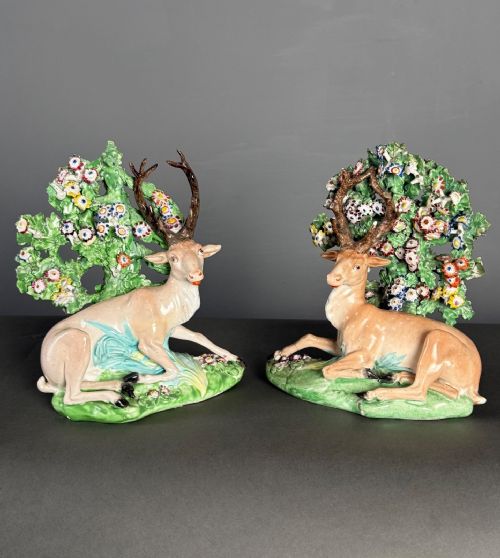
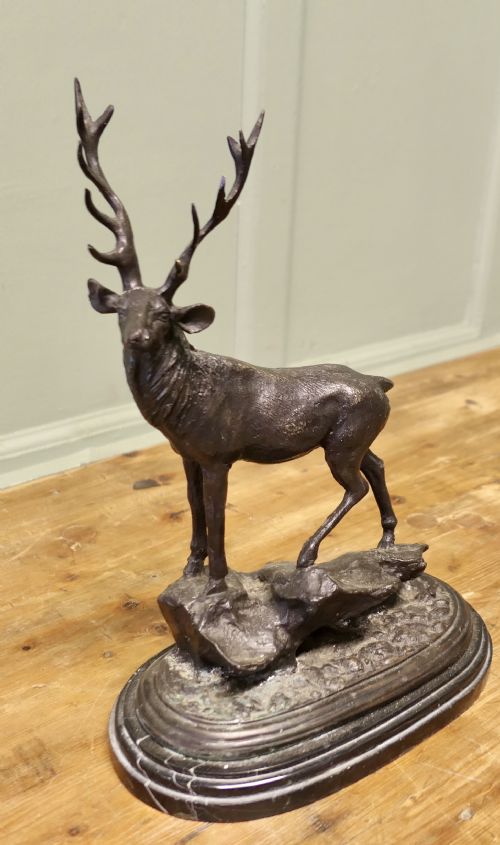
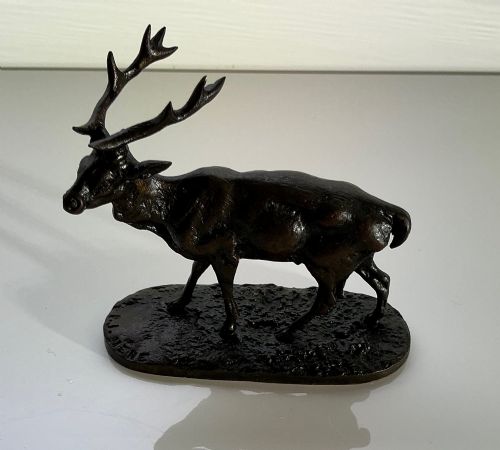
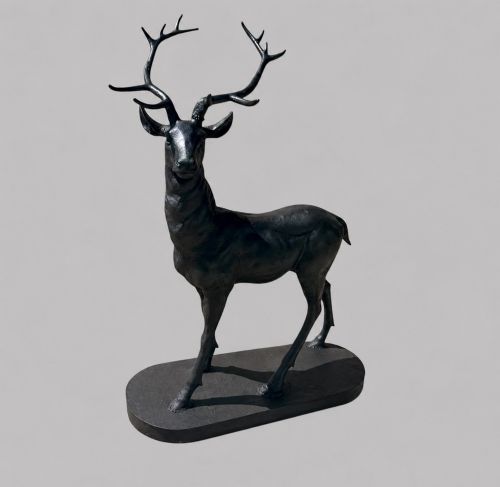
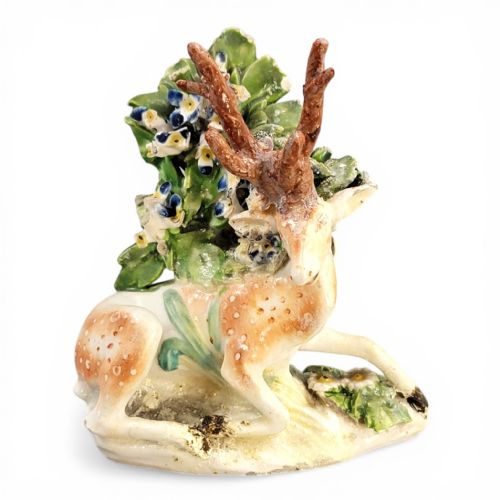
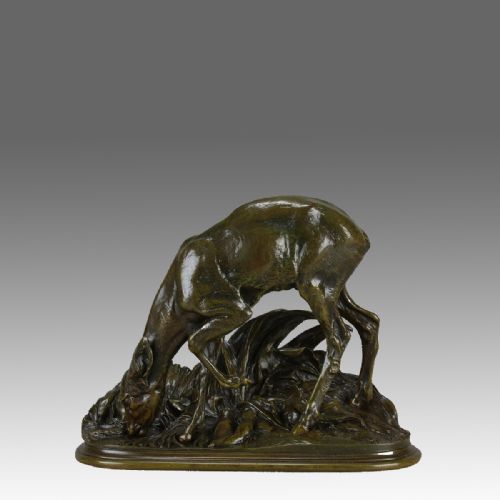
When you search for an antique deer statue, you encounter a broad mix of sculptural forms ranging from cabinet porcelain figures to large animalier studies in bronze and spelter. These pieces capture stags, bucks, fawns, and does in recumbent, standing, or drinking poses across periods from the eighteenth century to the mid-twentieth century.
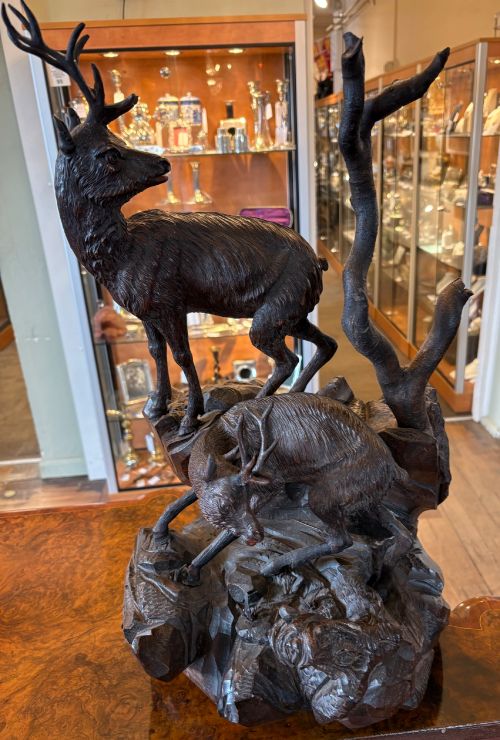
The material vocabulary spans cast metals like bronze and spelter, carved timbers including lime wood from the Black Forest tradition, and soft-paste porcelain from factories such as Derby. Sculptural styles lean heavily towards French Animalier and Art Deco designs, alongside Folk Art and Classical Revival pieces.
You are most likely to meet nineteenth-century bronze animalier studies signed by notable makers, alongside geometric Art Deco metal groups mounted on marble and onyx bases. Smaller porcelain figures from the Georgian period and hand-carved wooden studies also populate the selection.
How they were made
Metal sculptures rely on the lost-wax casting method for bronze or direct casting for spelter, often finished with patination and mounted on shaped marble or onyx plinths. Bronze casts capture fine muscular detail in the animal coats, whereas spelter acts as a lighter, more economical base metal finished with metallic paint or enamel.
Wooden studies from the Black Forest tradition utilise lime wood, carved by hand with gouges to render textured fur and naturalistic terrain. Porcelain figures employ soft-paste ceramic bodies moulded in sections, painted by hand with enamel colours, and glazed before firing.
The selection includes both French animalier bronzes and Swiss Black Forest carved wooden studies of stags, fawns, and does.
What varies in quality
The crispness of the chase work in cast metal separates standard reproductions from superior period castings, where the artist has hand-chiseled the fur and antlers after removal from the mould. In carved wooden examples, depth of undercut and anatomical precision distinguish master carvers from commercial workshops.
The integration of the subject with its base marks another tier of distinction, seen in how seamlessly a bronze animal merges with its rockwork or how squarely a porcelain figure sits on its glazed plinth. Signature clarity and the richness of the original patination or enamel application further elevate the standing of a piece.
Tom Mackie·PJ Mene·A L Barye·Pierre Jules Mêne·Isidore Bonheur·I. Rochard·Jules Moigniez
The Antique Deer Statue Glossary
- Animalier
- A nineteenth-century artistic movement dedicated to the realistic portrayal of animals. Sculptors in this tradition focused heavily on anatomical accuracy and dynamic movement.
- Spelter
- A zinc alloy commonly utilised as a less expensive substitute for bronze in decorative figures. It takes patination well but is softer and lighter than copper-based metals.
- Patina
- The surface sheen and coloration developed through age, handling, or chemical treatment on metal and wood. A rich patina indicates undisturbed historical surfaces.
- Soft-Paste Porcelain
- An early ceramic composition fired at lower temperatures than hard-paste porcelain, yielding a warm, creamy body. It was widely used in eighteenth-century English factories.
- Recumbent
- Posing in a lying or resting position with the legs tucked underneath. This posture is common in porcelain and carved wooden deer figures designed for mantelpieces.
Antique Deer Statue: Frequently Asked Questions
What is an animalier deer sculpture?
An animalier sculpture is a nineteenth-century artwork focusing specifically on the realistic depiction of animals in naturalistic poses. These pieces emphasise accurate anatomy, muscle tension, and behavioural traits observed in the wild.
Artists in this genre studied animals closely in menageries and rural settings to render realistic fur textures and posture. They are typically cast in bronze and bear the signature of the sculptor on the base.
Where should I display a heavy marble base statue?
Place heavy statues on sturdy furniture with a level surface, such as a sturdy sideboard, desk, or dedicated console table. Ensure the weight is supported evenly across the marble or onyx plinth to prevent tipping.
Keep the piece away from direct sunlight and heat sources like radiators to protect any patinated metal finishes or wooden bases from drying out. Adequate clearance prevents accidental knocks in busy walkways.
How do I tell spelter from bronze?
Spelter is significantly lighter than bronze and feels softer or more brittle if tested gently on an unexposed underside. It also tends to show a dull grey metal beneath chips in the paint rather than the warm copper tone of bronze.
Bronze rings with a deeper, more resonant sound when tapped lightly, whereas spelter produces a duller thud. Magnification often reveals the granular texture typical of zinc alloy castings.