


Bronze Urns on Pedestals
These bronze urns on pedestals channel classical antiquity through nineteenth-century European craftsmanship, offering an imposing focal point for interiors.
Bronze Urns on Pedestals
When you search for bronze urns on pedestals, you encounter monumental decorative vessels rooted in nineteenth-century interpretations of classical antiquity. These pieces draw heavily on Regency, French Empire, and Grand Tour aesthetics, channelling archaeological discoveries into domestic display objects.
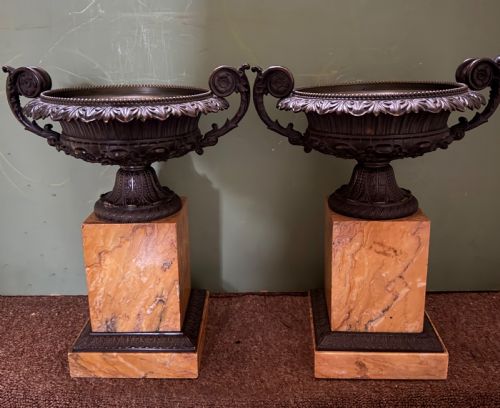
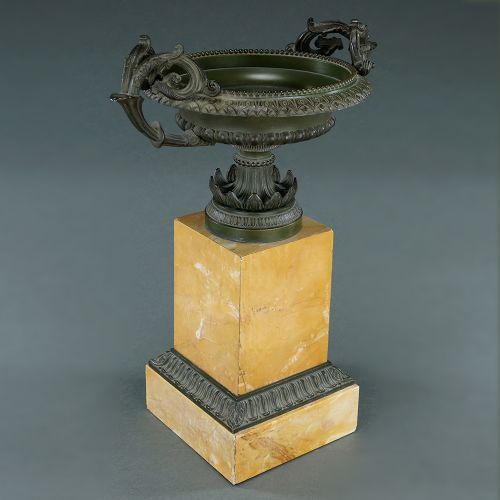
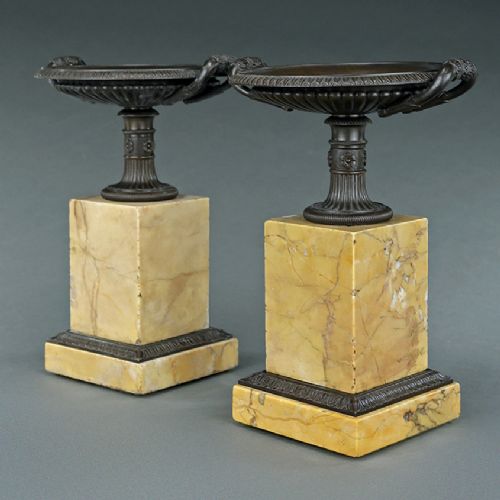
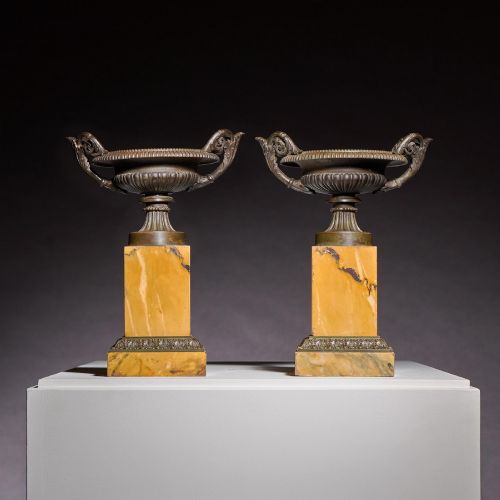
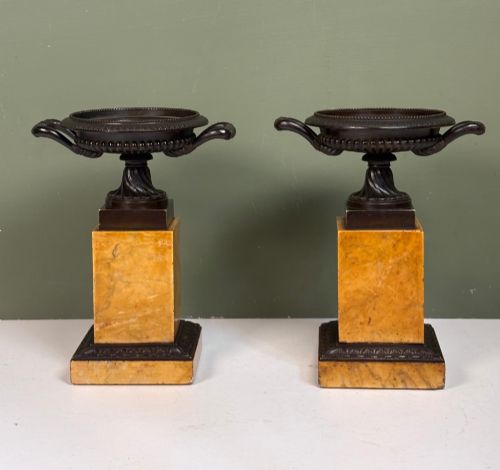
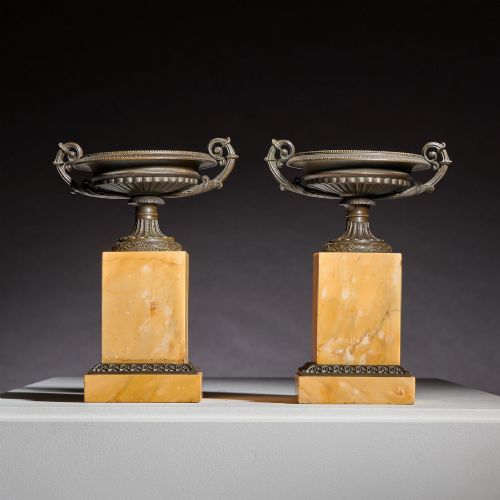
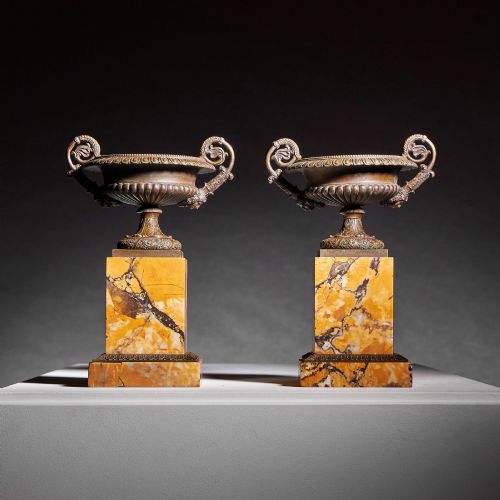
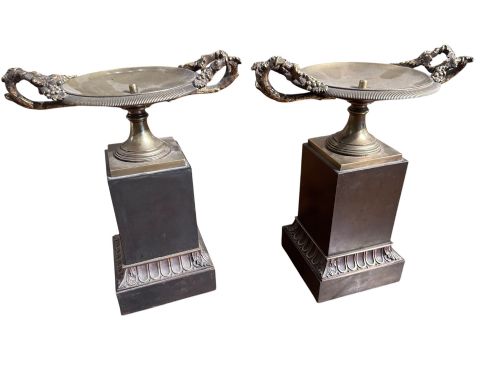
The version you meet most frequently on this page is the nineteenth-century tazza or campana urn raised on a stone or marble plinth. These forms often appear in matched pairs, combining classical proportions with the decorative ambitions of French and Italian workshops.
Materials and Construction
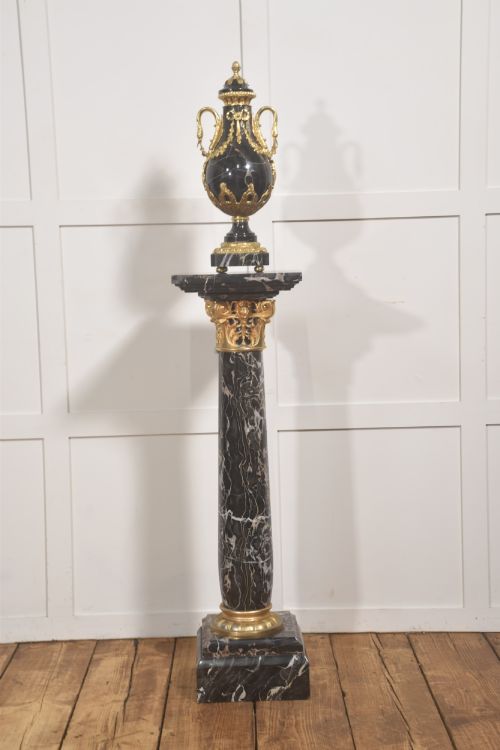
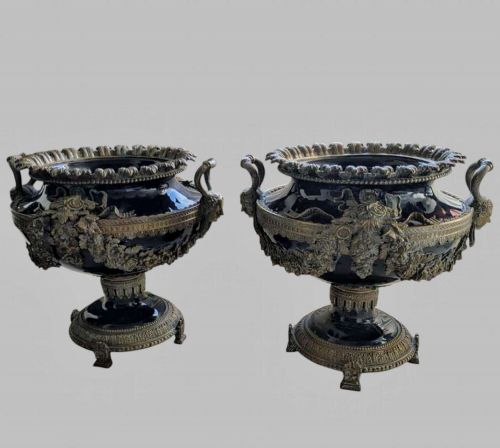
Maker workshops built these objects by combining cast metals with dense stone bases, frequently pairing patinated or gilt bronze with contrasting Siena marble or polished black marble plinths. Ormolu mounts and cast brass details provided crisp architectural accents against the dark surfaces of the main vessels.
Techniques relied on precise metal casting and stone turning, allowing makers to achieve thin-walled campana shapes and stable columnar or block pedestals. Components were often mechanically fastened together, integrating separate metal bodies, handles, and marble bases into unified decorative objects.
Bronze Urns on Pedestals Retail Price Guide 2026
Typical asking prices for bronze urns on pedestals among the pieces listed under this phrase on Sellingantiques today, from the lower quarter to the upper quarter. They describe what is for sale here now, not the wider market.
Listings in this category frequently combine cast bronze with contrasting Siena marble plinths.
Distinctions in Quality
Quality rests in the crispness of the metal chasing and the selection of the supporting stone plinths. Superior examples display sharply articulated classical motifs, deep patination, and heavy, beautifully figured marble bases rather than lighter substitute materials.
The relationship between the upper vessel and its pedestal determines the visual success of the piece. Master workshops achieved balanced proportions where the weight of the metal urn sits harmoniously upon a precisely fitted stone or ormolu-mounted stand.
François Linke·Auguste Cain·Benetfink & Co
The Bronze Urns on Pedestals Glossary
- Tazza
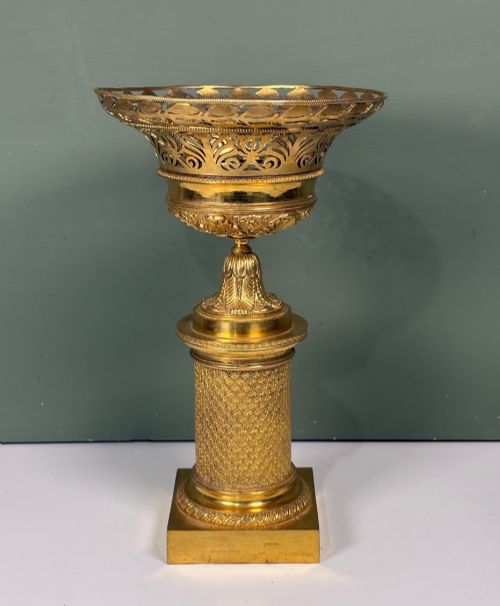
- A shallow bowl or vase raised on a stem and a foot, frequently mounted on a square plinth. These forms were popular during the nineteenth century as classical revival display pieces.
- Campana Urn
- A bell-shaped vessel with an everted rim and flared body, modelled after ancient Roman garden vases. They serve as standard decorative centerpieces in neoclassical design.
- Ormolu
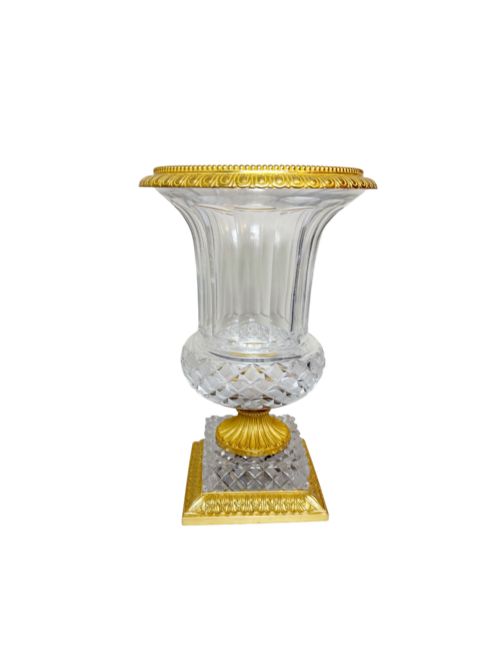
- Gilt bronze produced by applying a mercury-gold amalgam to cast bronze. This technique creates a rich, durable golden surface finish on decorative mounts.
- Cassolette
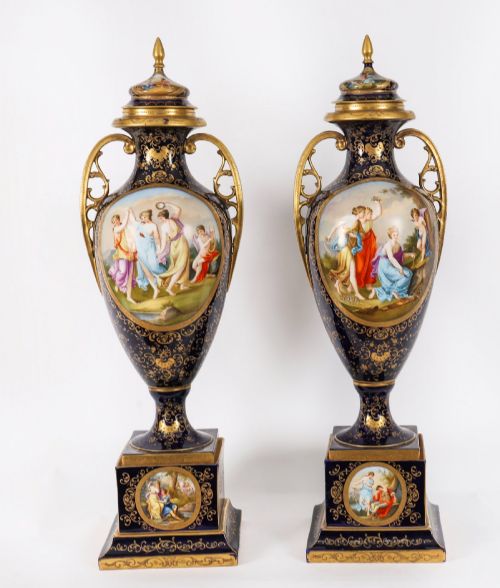
- A dual-purpose decorative vessel featuring a reversible lid that functions either as a closed urn or an open burner. They appear frequently in French Empire and Regency interiors.
- Grand Tour
- A cultural journey undertaken by nineteenth-century elites who acquired classical antiquities and bronze souvenirs. These items directly inspired the decorative vessels found in this category.
Bronze Urns on Pedestals: Frequently Asked Questions
What periods do these bronze urns on pedestals typically date from?
The listings span the nineteenth century, drawing heavily on Regency, Victorian, and French Empire stylistic traditions. Many pieces reflect the widespread European enthusiasm for classical revival design during this era.
Craftsmanship from these decades often references archaeological finds from Pompeii and Rome, reinterpreting ancient forms for nineteenth-century drawing rooms and libraries.
How were these pedestal urns used historically?
These vessels served primarily as architectural ornaments for mantelpieces, sideboards, and dedicated display stands within grand homes. They functioned as visible statements of classical learning and refined taste.
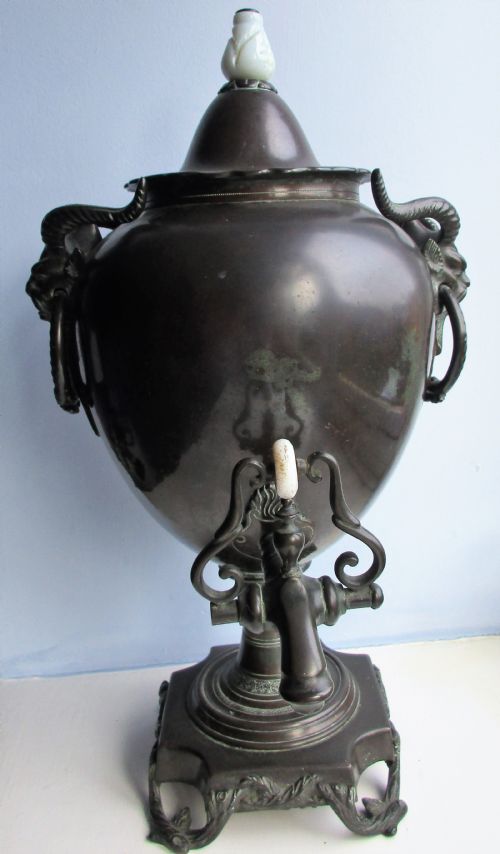
Some variations, such as cassolettes or samovars, incorporated functional elements, though most survived purely as decorative sculptures.
How do I style bronze urns on pedestals in a modern interior?
Their strong vertical lines and classical proportions make them natural focal points for prominent surfaces like console tables, pedestals, or large mantelpieces. Pairing them with architectural books or simple backdrops allows the detailed metalwork to stand out.
Because many survive as matched pairs, they work well to anchor symmetrical arrangements in a room.