


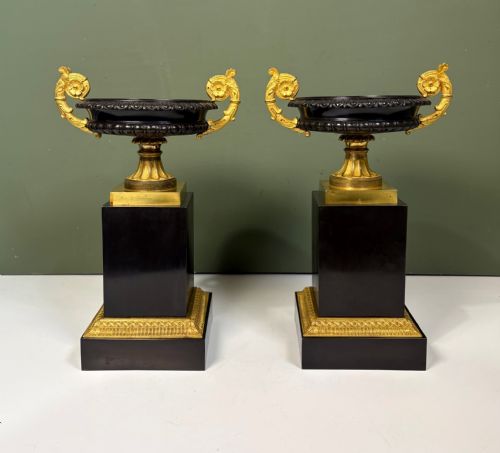

Bronze Urn on Pedestal
A bronze urn on pedestal stands as a classical statement piece, bringing neoclassical grandeur and substantial presence to a room.
Bronze Urn on Pedestal
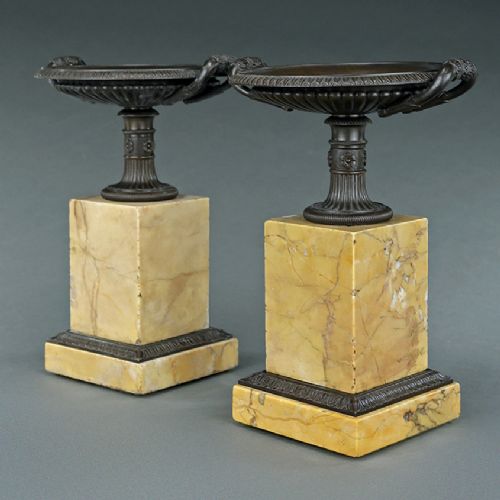
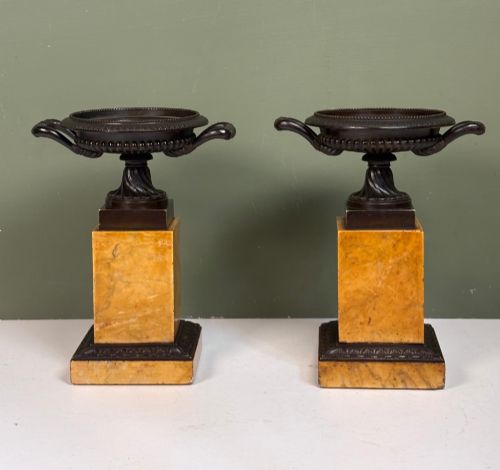
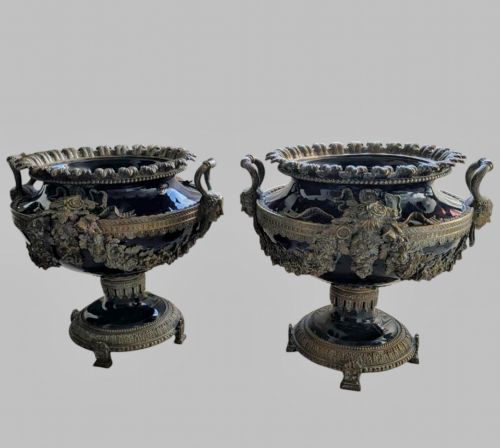
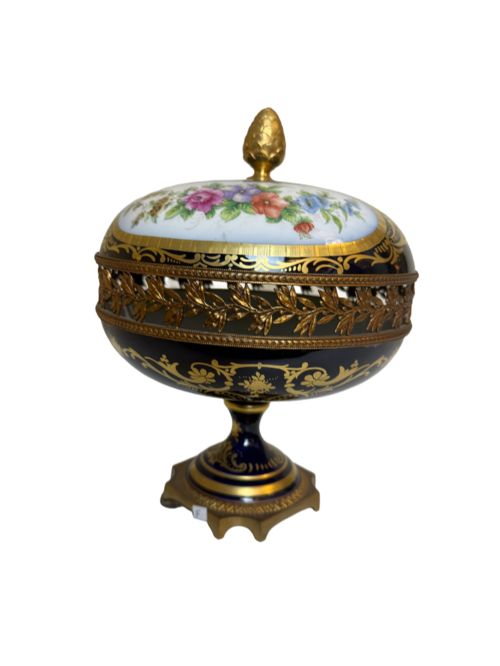
A bronze urn on pedestal encompasses classical vessels, tazzas, and campana forms raised on marble, wooden, or ormolu mounts. These objects derive directly from archaeological discoveries and classical antiquity, frequently created as Grand Tour souvenirs during the nineteenth century.
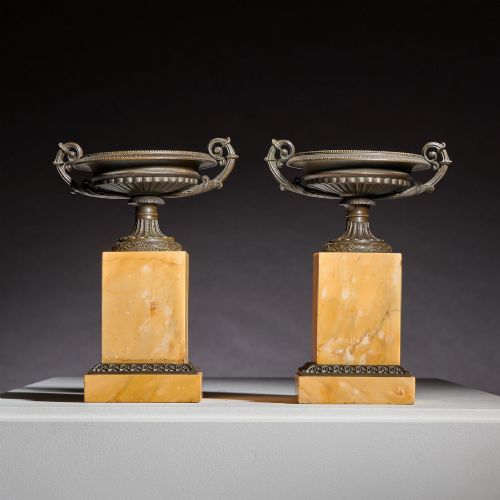
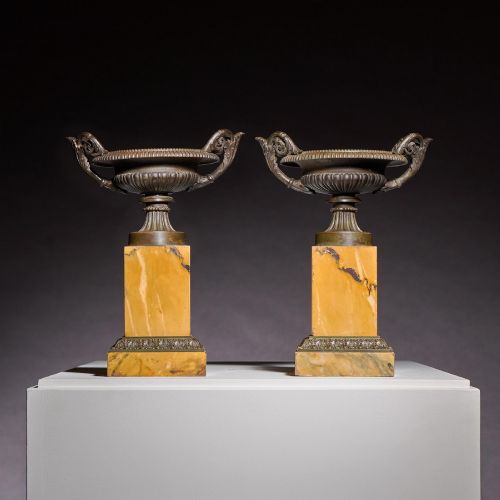
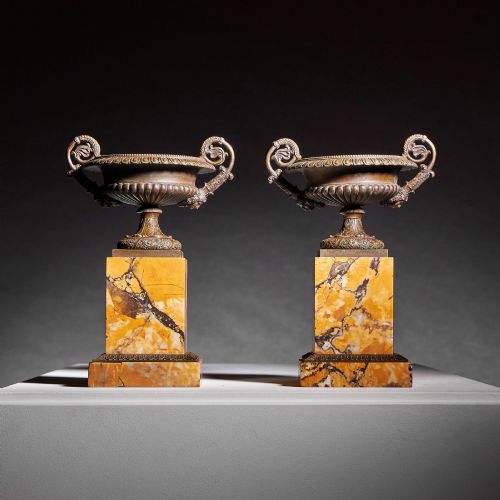
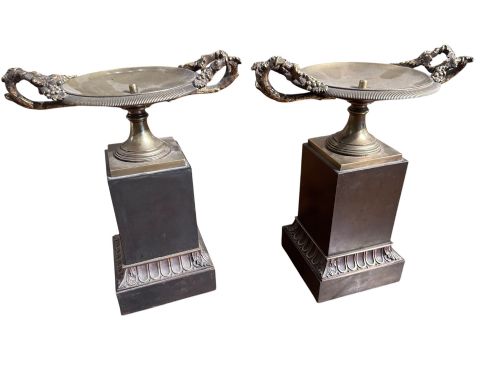
The pieces appearing on this page span the Regency, Victorian, and French Empire styles, executed in cast bronze alongside contrasting materials. Buyers will frequently encounter matched pairs designed for display on mantelpieces, side tables, or dedicated pedestals.
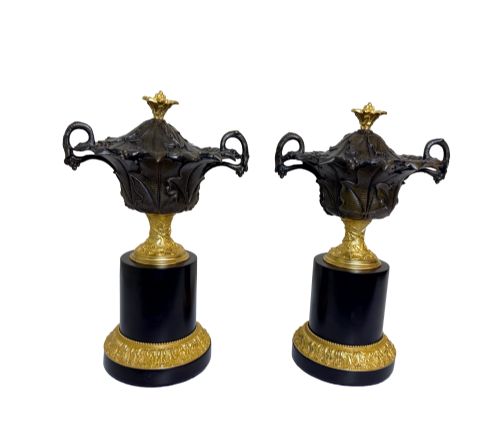
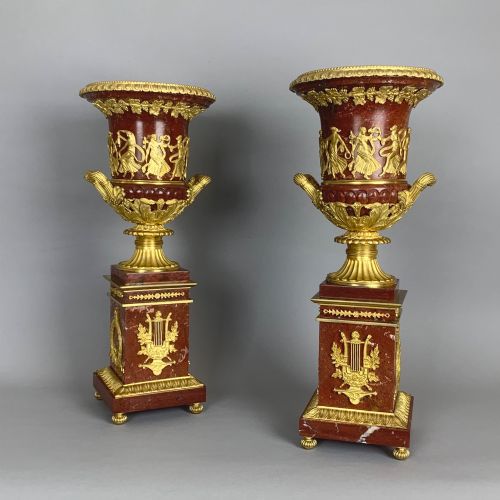
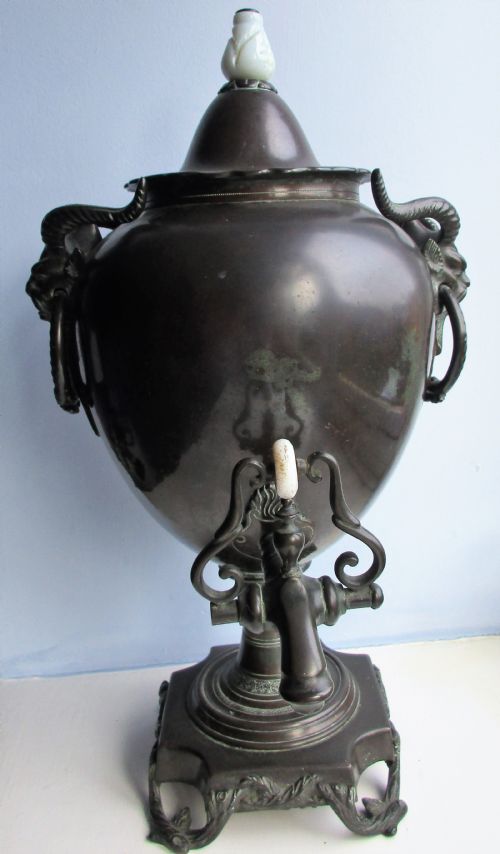
Forms range from lidded cassolettes and wine-coolers to shallow tazzas and large amphora vases. French and Italian workshops dominate the origin of these ornamental vessels.
How They Were Made
Craftsmen utilised lost-wax casting and sand-casting techniques to shape the bronze, producing patinated, silvered, or gilded surfaces. These metal bodies were then paired with turned elements of Siena marble, white marble, or exotic hardwoods.
Mounts, handles, and collars in ormolu and gilt brass provide contrast to the dark patinated bronze. Stonework components were precision-turned and polished to support the heavy metal vessels above.
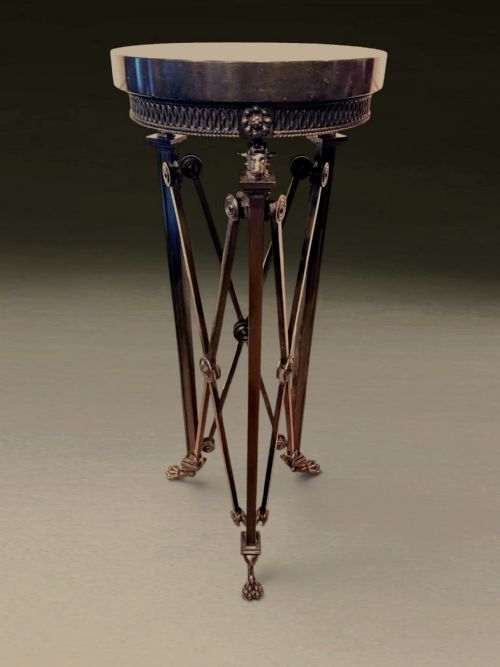
The object forms recorded on this page include campana urns, lidded cassolettes, tazzas, and architectural pedestals from British and continental workshops.
What Varies in Quality
Quality rests upon the crispness of the bronze chasings and the depth of the original patination. Superior examples exhibit fine hand-finishing on classical motifs, acanthus leaves, and figural handles rather than soft, mass-produced contours.
The choice and integration of secondary materials dictate the tier of the piece. Dense, richly veined Siena marble or finely gilded ormolu mounts elevate an item above simpler brass and slate combinations.
Benetfink And Co·Auguste Cain
The Bronze Urn on Pedestal Glossary
- Campana urn
- A bell-shaped vessel with an everted rim, modelled after ancient Roman garden vases. This silhouette remains one of the most prevalent forms in nineteenth-century decorative bronzes.
- Tazza
- A shallow bowl or cup mounted on a stem and pedestal base, often used for display in classical interiors. The form mimics ancient Roman and Greek drinking vessels.
- Cassolette
- A decorative vase with a reversible lid that functions either as a closed urn or an incense burner. These vessels often feature dual-purpose mountings designed for classical interiors.
- Ormolu
- Finely ground high-carat gold applied to a bronze base using a mercury amalgamation process. This technique yields a deep, enduring golden lustre characteristic of French Empire and Regency pieces.
- Grand Tour
- A cultural journey undertaken by wealthy young Europeans to study classical antiquities, resulting in a demand for portable bronzes and marble souvenirs. These acquired objects form the backbone of many nineteenth-century collections.
Bronze Urn on Pedestal: Frequently Asked Questions
What is a bronze urn on pedestal used for?
These decorative objects served primarily as ornamental centerpieces and mantel garnitures in grand nineteenth-century interiors. They were designed to emulate classical antiquities and display refined taste rather than hold functional contents.
Today, they function as sculptural accents on side tables, cabinets, and dedicated architectural stands. Their presence introduces height, classical proportion, and varied texture to a room.
How do I distinguish French Empire from Regency styles?
French Empire pieces typically employ rich ormolu mounts, deep patinated bronze, and strict classical symmetry inspired by Napoleonic archaeology. They lean towards opulent finishes and martial or imperial motifs.
Regency examples reflect British interpretations of classical forms, often combining bronze with Siena marble or dark woods. The aesthetic tends toward austere archaeological accuracy combined with restrained elegance.
What is Grand Tour bronze?
Grand Tour bronzes are nineteenth-century scale reproductions of famous ancient Roman and Greek sculptures, monuments, and vessels. Travellers purchased them across Italy and France as souvenirs of their educational journeys.
These pieces were cast in reduction to fit domestic interiors, maintaining high artistic standards and detailed patination. They represent a distinct subset of nineteenth-century decorative metalwork.
How should I care for patinated bronze and marble?
Maintain bronze surfaces by gently dusting with a dry, soft cloth to prevent the accumulation of airborne particles. Avoid using chemical polishes, which strip the historic patina and damage the underlying metal.
Keep marble bases clean with a slightly damp cloth, followed by immediate drying. Protect the stone from acidic liquids and direct moisture.