


Bronze Spice Mortar
A bronze spice mortar is a heavy metal vessel for crushing aromatics, combining functional utility with centuries of domestic and apothecary history.
Bronze Spice Mortar
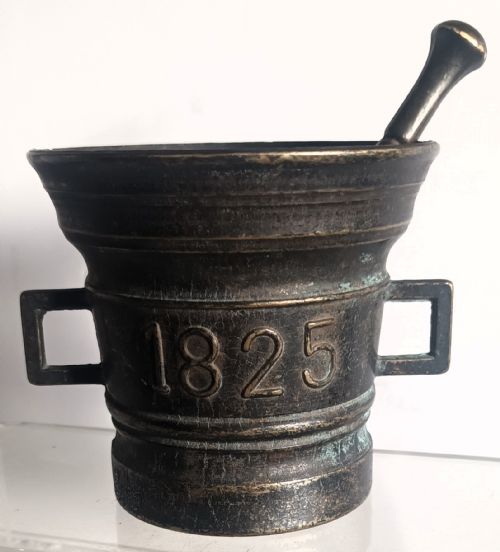
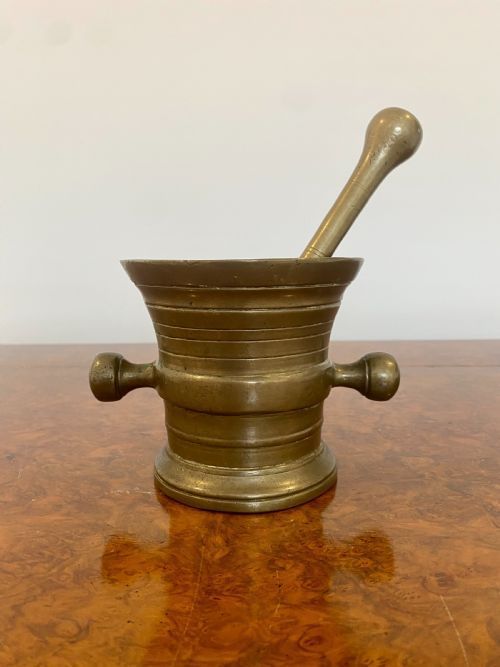
A bronze spice mortar is a robust desktop or kitchen vessel designed for grinding dry ingredients with a matching pestle. The form persists across multiple centuries, appearing in kitchen, chemist, and apothecary contexts.
You are most likely to meet English and Dutch examples spanning the seventeenth, eighteenth, and nineteenth centuries. These include Georgian iterations and pieces dating around seventeen hundred, alongside nineteenth-century interpretations.
The objects frequently present as sets combining the mortar and pestle together, though individual duos and specific decorative motifs like the Tudor rose also emerge in the current selection.
How they were made
Makers cast these vessels using foundational metalworking techniques, primarily utilising bronze and bell metal alongside brass. The casting process produces thick, heavy walls capable of withstanding the repeated impact of a metal pestle.
Surfaces bear the direct evidence of early foundry work, showing patination and tactile tool marks rather than high-gloss modern finishes. The resulting alloy provides the necessary density and acoustic resonance for domestic and apothecary grinding.
Listings feature items spanning the seventeenth, eighteenth, and nineteenth centuries, alongside specific dates like seventeen hundred and seventeen-fifty.
What varies in quality
Quality separates through the crispness of cast detail, the balance of the proportions, and the integrity of the surviving metal surface. Heavier examples often demonstrate a more substantial physical presence and superior material mass.
The distinctiveness of the matching pestle and the clarity of decorative elements, such as Tudor rose motifs or regional casting signatures, elevate certain pieces above standard utilitarian kitchenware.
The Bronze Spice Mortar Glossary
- Bronze
- An alloy consisting primarily of copper, traditionally combined with tin. This dense material forms the heavy body of the vessel.
- Bell Metal
- A hard alloy used for bells and certain mortars, containing higher proportions of tin to produce a resonant quality. It creates a particularly durable grinding surface.
- Pestle
- A heavy handheld club-like tool used with the mortar to crush and grind substances. Surviving matched pairs are particularly valued.
- Apothecary
- A practitioner who prepared and sold medicines and drugs, utilising specialised mortars in daily practice. Many surviving domestic vessels share these utilitarian origins.
- Tudor Rose
- The traditional floral heraldic emblem of England, sometimes cast as a decorative motif on seventeenth-century examples.
Bronze Spice Mortar: Frequently Asked Questions
What is a bronze spice mortar?
A bronze spice mortar is a heavy metal vessel paired with a pestle, designed for grinding roots, seeds, and dry aromatics. These items served both domestic kitchens and apothecary shops for centuries.
They reflect the metalworking traditions of periods ranging from the seventeenth to the nineteenth century, utilising durable alloys like bronze, brass, and bell metal.
How were mortars used historically?
Historically, cooks and chemists used mortars to pulverize ingredients, blend medicines, and prepare culinary spices before the widespread availability of powdered goods. The heavy walls absorbed the impact of the pestle.
This utilitarian function required thick, cast metal construction that could withstand constant physical pressure without cracking or wearing thin.
How do I date an antique mortar?
Dating relies on stylistic clues, casting characteristics, and known period forms such as Georgian proportions or seventeenth-century Tudor rose motifs. Material composition also offers context.
Changes in wall thickness, rim design, and surface patination help distinguish earlier seventeenth-century pieces from later nineteenth-century examples.
Are pestles always original to the mortar?
Pestles may be original matches or later replacements gathered over time, depending on how the set survived through the centuries. Examining the wear patterns and metal alloy helps determine if they share an origin.
Finding a guaranteed period duo remains a notable aspect for collectors seeking complete historical sets.
How do I care for bronze metalware?
Caring for bronze involves dusting gently with a soft cloth and avoiding harsh chemical polishes that strip away historical patination. Keeping the metal in stable humidity prevents active corrosion.
Allowing the surface to age naturally preserves the character developed over hundreds of years of use.