
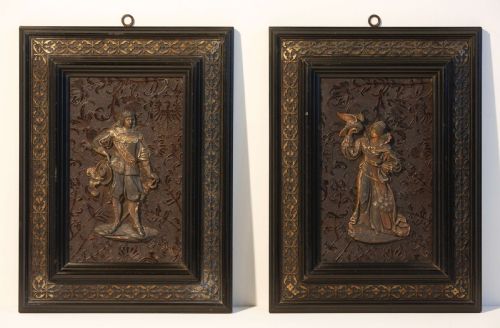


Bronze Relief Sculpture
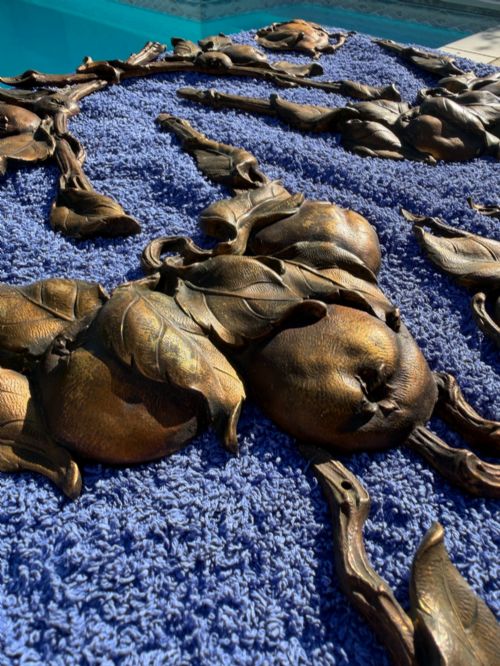
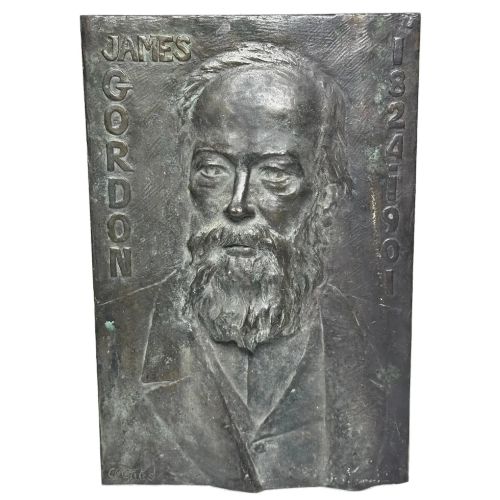
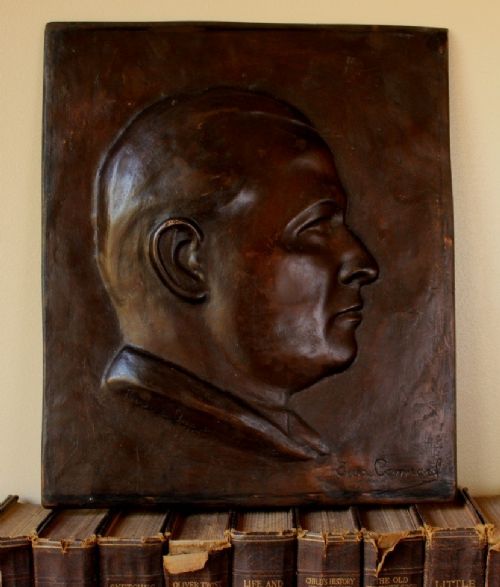
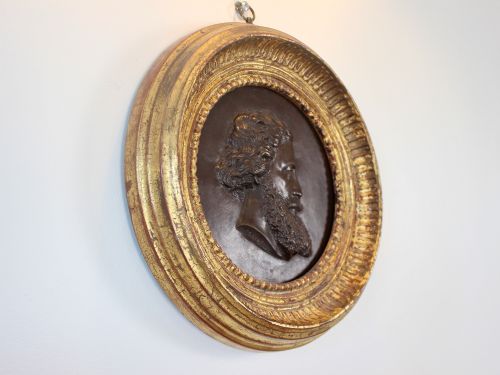
These pieces of bronze relief sculpture bring three-dimensional depth and portraiture to plain walls through cast metal.
Bronze Relief Sculpture
A bronze relief sculpture presents a raised figure or scene projecting from a flat background, combining qualities of drawing and full statuary. When searching for bronze relief sculpture, buyers encounter portrait plaques, wall panels, and decorative appliques designed to hang on interior walls or mount onto furniture.
The selections span from the eighteenth century through the Victorian and Edwardian eras into the Art Deco period. Portrait profiles of historical figures, classical muses, and mythological subjects dominate the wall plaques and architectural mounts available on this page.
Continental foundries and English makers produced these works in various scales, from small profile heads to large framed panels. Wall plaques and mounted portraits represent the most common formats, serving as decorative focal points in period interiors.
Assessing Quality
The crispness of the casting determines the definition in facial expressions, hair, and background motifs. Superior examples retain sharp borders and deep undercut details without relying heavily on later surface chasing.
The quality of the mount and the integrity of the original patination influence the overall value. Rich, undisturbed patinas and well-preserved gilt finishes indicate careful preservation and superior initial metallurgy.
Materials represented across the inventory include solid bronze, gilt bronze, bronzed copper, white metal, ebonised wood, and gilt plaster.
Poix Blin·Alice Gates·Eugene Canneel·Mainfroy·Gian Federigo Bonzagna·Coalbrookdale·Barbedienne·Genryusai Seiya
The Bronze Relief Sculpture Glossary
- Bas-relief
- A sculptural technique where the figures project only slightly from the background plane. Most wall plaques utilise this shallow depth to create perspective.
- Patina
- The surface coloration and sheen developed naturally over time or applied chemically by the foundry. This layer protects the metal and adds visual depth to the shadows of the relief.
- Applique
- A decorative metal ornament designed to be fixed onto a larger object such as furniture or architectural woodwork. These pieces often feature classical motifs or heraldic designs.
- Maquette
- A small preliminary model created by an artist before executing the final full-scale sculpture. These early studies provide insight into the creative process.
- Chasing
- The manual finishing of a metal casting using small punches and hammers to refine details and remove surface imperfections. Skilled chasing elevates the tactile quality of the finished relief.
Bronze Relief Sculpture: Frequently Asked Questions
How were bronze relief plaques displayed?
These pieces usually hung directly on interior walls as independent works of art or served as decorative mounts on wooden furniture panels. Many incorporate original hanging loops or fixing screw holes for secure placement.
Larger plaques often featured fitted wooden frames or ebonised backings to complement Victorian and Edwardian domestic interiors.
What subjects appear on these reliefs?
Portraits of historical figures, literary icons, and classical deities form the primary subject matter of these metal plaques. Collectors frequently encounter profiles of statesmen, mythological figures like Diana and Bacchus, and allegorical muses.
Art Deco examples shift toward theatrical scenes and stylised modern figures rather than classical portraits.
How do I identify the period of a bronze relief?
Stylistic clues such as the lettering of signatures, costume details, and framing materials help determine the approximate date of manufacture. Victorian and Edwardian pieces often rely on classical revival motifs, whereas later twentieth-century works adopt distinct geometric lines.
Foundry marks and artist signatures stamped into the bronze also point to specific manufacturing eras and workshops.
Are white metal and copper reliefs the same as bronze?
While bronze remains the primary alloy of copper and tin, makers also utilised cast copper, white metal, and gilded plaster to achieve similar sculptural effects. Bronzed copper and white metal allowed workshops to produce lighter or more accessible decorative wall panels.
Surface patination often unifies these varied materials, giving them the visual warmth of traditional cast bronze.
How should I care for antique bronze sculpture?
Maintenance requires only gentle dusting with a soft, dry cloth to prevent the accumulation of grit on the raised surfaces. Avoid using commercial metal polishes, as abrasive cleaners can strip away the historical patina and delicate gilt layers.
Keeping the pieces away from excessive moisture preserves both the metal and any wooden backings.