
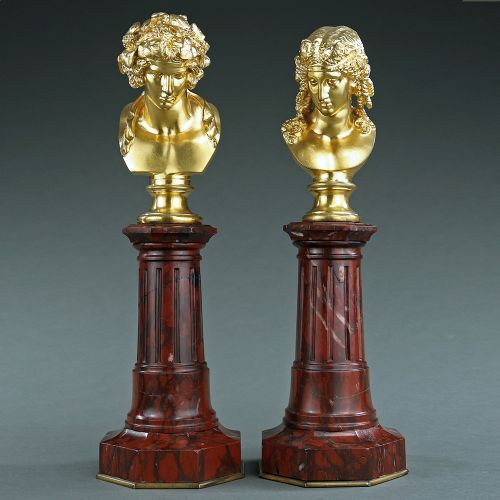


Bronze Portrait Figurine
A bronze portrait figurine brings historical presence into a room, capturing literary figures, rulers and classical subjects with enduring weight and character.
Bronze Portrait Figurine
A bronze portrait figurine represents real historical figures, literary icons and classical subjects captured in metal through the nineteenth and twentieth centuries. These pieces take the form of portrait busts and small sculptures depicting writers, monarchs and allegorical studies.
The selections available span periods from the Victorian era and Edwardian years back to French Restauration and Grand Tour traditions. Most examples emerge from continental foundries and British makers working in bronze, patinated bronze and gilt bronze.
Collectors encounter subjects ranging from Lord Byron and Voltaire to anonymous female models and allegorical figures of the seasons. These works bridge classical antiquity and modern sculpture through enduring portraiture.
Materials and Casting Methods
Foundries utilised traditional bronze casting methods to capture fine facial expressions and detailed drapery on each portrait. Molten metal poured into moulds produced durable figures that accepted patination and gilding with precision.
Makers often mounted finished metal portraits onto supportive bases formed from red marble, portoro marble, alabaster or wood. These contrasting materials added stability and visual weight to the primary bronze sculpture.
Even metal poets like Lord Byron and Sir Walter Scott require a gentle dusting to keep their nineteenth-century bronze locks looking sharp.
Distinctions in Execution
The crispness of the chasing and the subtlety of the surface patination dictate the visual success of the piece. Finer examples display meticulous hand-finishing on hair, expression and clothing textures after the casting process concludes.
The choice and integration of the supporting marble or alabaster base influence the overall presence of the sculpture. Superior works demonstrate harmonious proportions between the metal portrait and its mineral plinth.
Emmanuel Villanis·Georges Van Der Straeten·Sir Thomas Brock·Eugene Laurent
The Bronze Portrait Figurine Glossary
- Patinated bronze
- Bronze treated with chemical solutions to produce a specific surface colour, ranging from dark brown to green tones. This finish protects the metal and defines the sculptural contours.
- Gilt bronze
- Bronze coated with a thin layer of gold or gold amalgam to create a bright, reflective surface finish. This technique highlights decorative details on classical and ornamental subjects.
- Portoro marble
- A distinctive black Italian marble featuring prominent gold and yellow veining. It frequently serves as a luxurious base material for nineteenth-century portrait busts.
- Grand Tour
- A cultural journey undertaken by wealthy Europeans in the nineteenth century that popularized miniature bronze sculptures and classical busts as souvenirs. These pieces reflect antique subjects collected abroad.
- Alabaster
- A fine-grained, translucent stone used for sculptural bases and carved figures. Its soft appearance contrasts effectively with darker patinated bronze.
Bronze Portrait Figurine: Frequently Asked Questions
How should I clean my bronze portrait figurine?
Dust the surface gently with a soft, dry cloth to remove everyday accumulation. Avoid using water, soap or chemical polishes that can damage the historical patination.
Allow a natural protective layer to remain on the metal over time. Professional conservation is advisable if the surface requires deeper attention.
Where were most nineteenth-century bronze busts made?
Many portrait bronzes originated in continental foundries, particularly in France, where skilled artisans produced detailed portraiture. British workshops also created notable portrait studies of domestic literary and political figures.
Foundry marks and signatures inscribed on the base often indicate the specific maker or production house.
How do I identify an Art Nouveau bronze?
Art Nouveau examples typically feature flowing organic lines, stylized hair and naturalistic floral motifs. These pieces often depict female models or allegorical subjects created around the turn of the twentieth century.
Signatures from sculptors active during the eighteen-nineties and nineteen-hundreds further confirm the aesthetic movement.
What is the purpose of marble bases on these sculptures?
Marble and alabaster bases provide structural stability and visual contrast for relatively heavy bronze portrait figures. Materials like red marble or portoro marble added decorative luxury to the presentation.
These integrated plinths became standard practice for nineteenth-century desk and mantel sculptures.