


Bronze Napoleon Figure
A bronze napoleon figure captures the imposing military commander in metal, offering collectors a striking piece of nineteenth century history for the mantel or desk.

Bronze Napoleon Figure
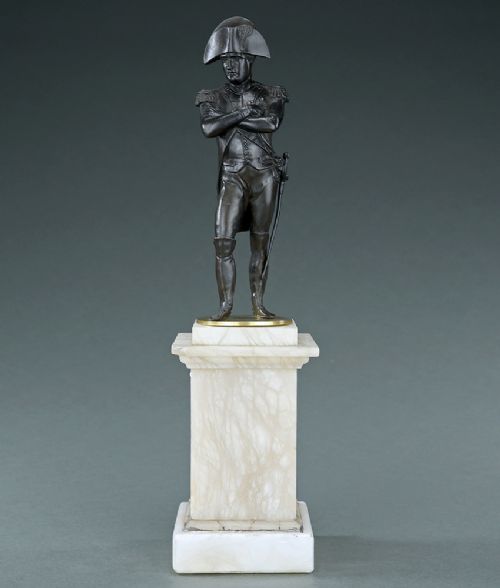
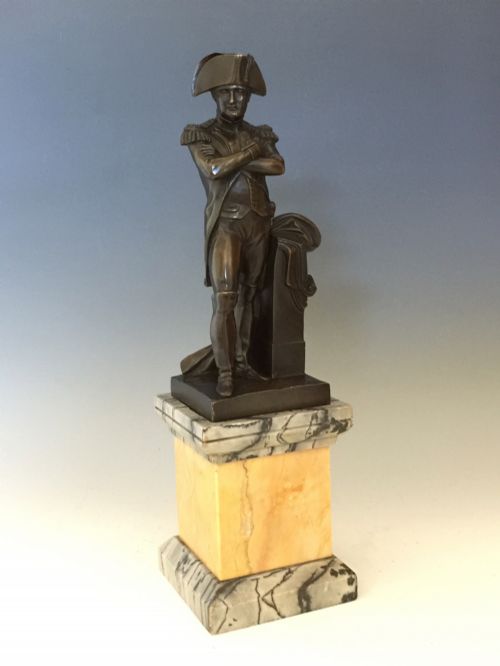
A bronze napoleon figure brings nineteenth century French military history directly into a room, taking the form of standalone sculptures, horseback portrayals, and library ornaments. These pieces span the Victorian era, the 1850s, 1860s, 1870s, and 1890s, emerging primarily from French workshops in styles such as French Empire, Napoleon III, and Second Empire.
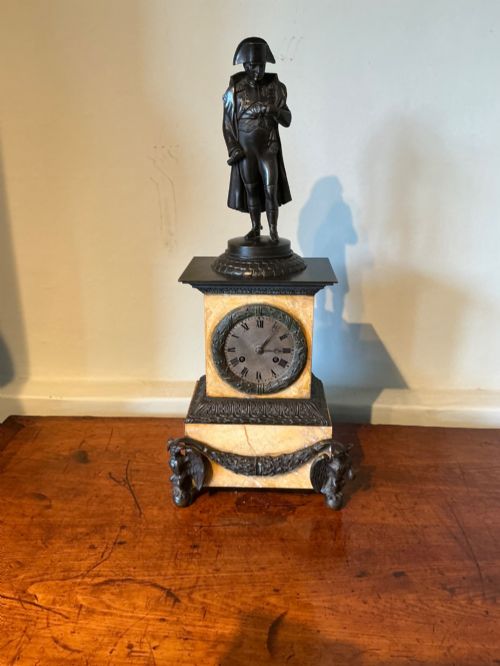
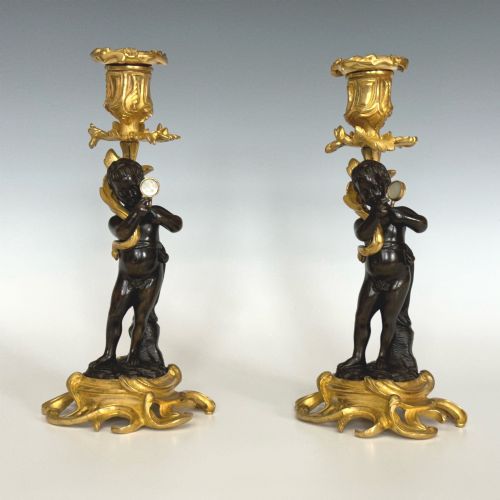
Beyond single standing sculptures, the subject often integrates into larger decorative objects rather than standing alone. Buyers encounter the emperor mounted on horseback atop marble bases, or incorporated into mantel clocks, clock garniture sets, candlesticks, inkstands, centrepieces, and tazzas.
The aesthetic draws heavily on French Empire and Napoleon III design vocabularies, reflecting both contemporary reverence for the ruler and later nineteenth century revivals. Whether cast as a library bronze or cast after known sculptors like Emile Guillemin and Lerolle Fres, each item reflects the enduring fascination with the Bonaparte legacy.
Materials and casting methods
Foundries utilised traditional metalworking techniques to cast these works in bronze, frequently applying gilt or ormolu finishes to highlight military regalia and architectural mounts. Silvered bronze also appears among the listings, offering a contrasting monochromatic finish to standard patinated metal.
Many sculptures and clock figures are set upon heavy marble bases, anchoring the composition and providing a classical contrast to the dark patination of the bronze. Ormolu mounts and details frequently accompany these marble elements, alongside occasional porcelain, enamel, glass, and metal components in complex garniture sets.
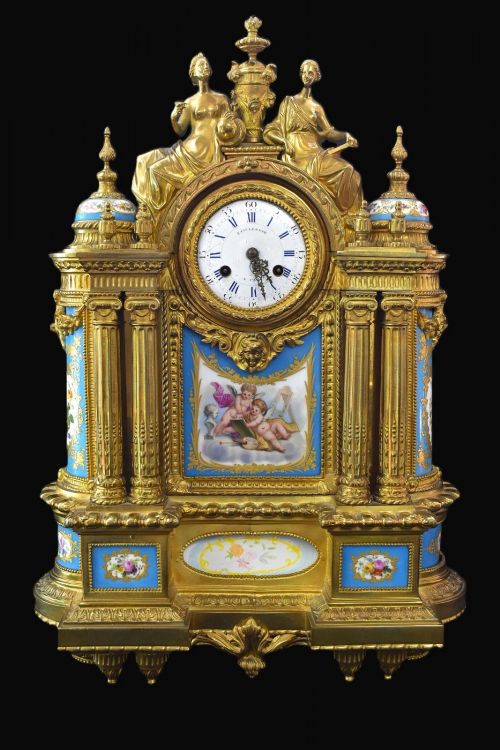
Napoleon maintains his commanding posture even when quietly keeping time inside a French mantel clock.
Distinctions in craftsmanship
The choice and integration of secondary materials also dictate the overall standard of the piece. Heavy, well-veined marble bases and finely fire-gilded ormolu mounts elevate the status of a clock or sculptural group above simpler utilitarian castings.
Emile Guillemin·Etienne Lenoir·Lerolle Fres·Phillipe H. Mourey
The Bronze Napoleon Figure Glossary
- Bronze
- A copper and tin alloy prized for its tensile strength and ability to capture fine detail during casting. It develops a rich patina over decades of handling and exposure to the air.
- Ormolu
- Gilt bronze created by applying a mixture of gold and mercury to a base metal object and heating it to vaporise the mercury. This technique produces a lasting golden surface common in French decorative arts.
- Patina
- The surface sheen and coloration acquired by bronze through age, oxidation, and natural wear. Collectors value an undisturbed patina as evidence of genuine antiquity.
- Garniture
- A set of matching decorative objects, typically comprising a central mantel clock flanked by two matching side pieces such as vases, urns, or candlesticks. These sets dominated nineteenth century interior display.
- Tazza
- A shallow saucer-like ornamental cup mounted on a stem and foot, often cast in bronze during the nineteenth century. They served decorative functions on sideboards and tables.
Bronze Napoleon Figure: Frequently Asked Questions
What periods do these figures come from?
The available pieces originate primarily from the nineteenth century, encompassing the Victorian era and the Napoleon III or Second Empire periods.
Dates range from the 1850s through to the 1890s, reflecting both contemporary production during the Second Empire and later Victorian revivals.
Are these figures mounted on bases?
Many examples are mounted on heavy marble bases, which provide stability and a classical aesthetic foundation for the metalwork.
Equestrian models particularly benefit from this presentation, allowing the heavy bronze horse and rider to rest securely on a flat surface.
How do these pieces function in a room?
They serve as focal points on mantelpieces, desks, and side tables, functioning either as standalone sculptures or as functional items like clocks and inkstands.
Clock garniture sets provide a symmetrical arrangement when placed across a mantelpiece or large sideboard.
What styles influence the design?
French Empire and Napoleon III styles predominate, drawing on neoclassical motifs and imperial grandeur associated with nineteenth century France.
Some pieces also show influences from French Rococo Revival aesthetics, incorporating ornate scrolling and floral mounts.