
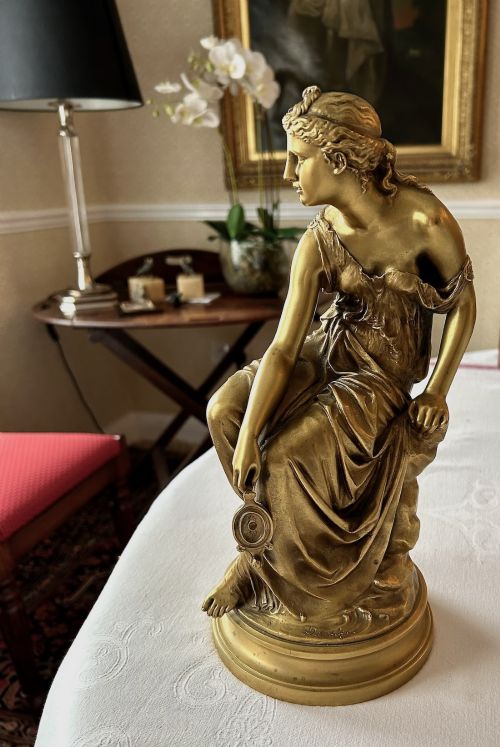

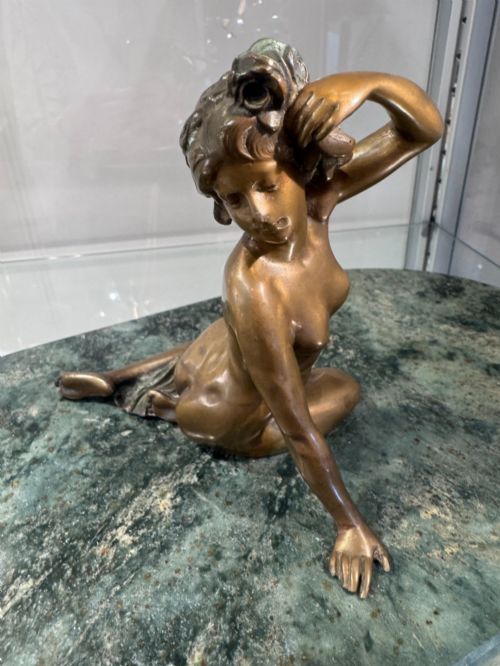

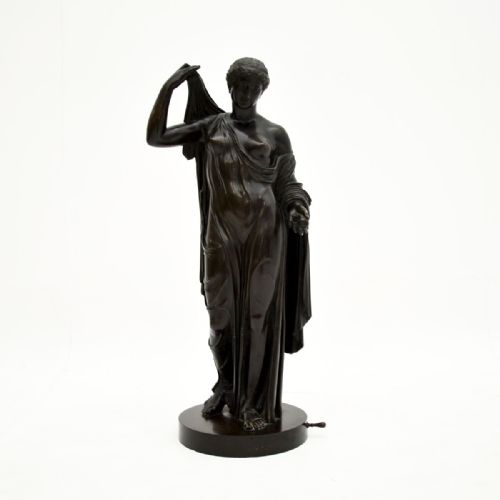
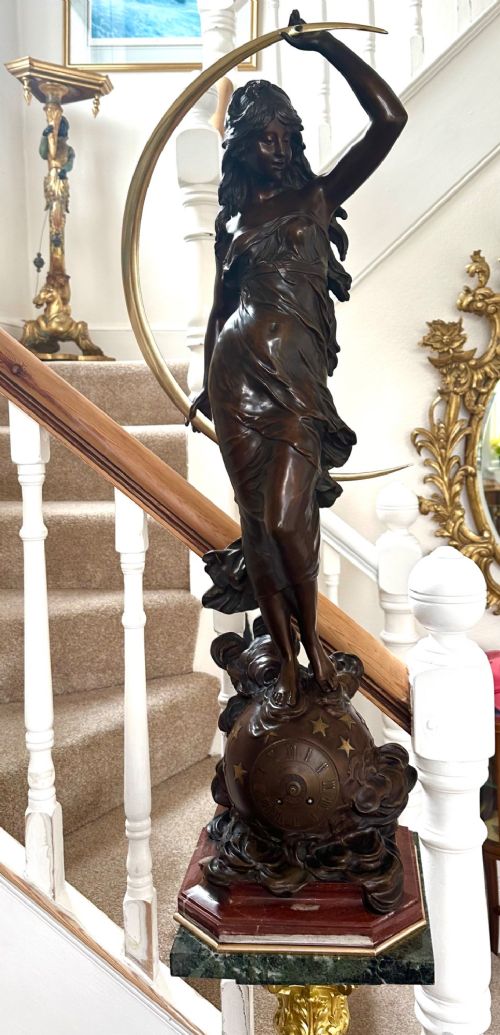
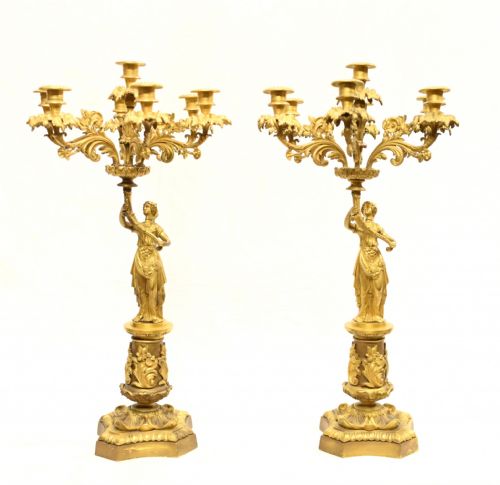


Bronze Maiden Figure
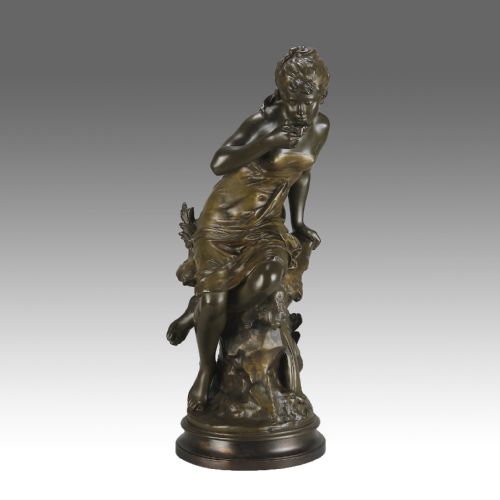
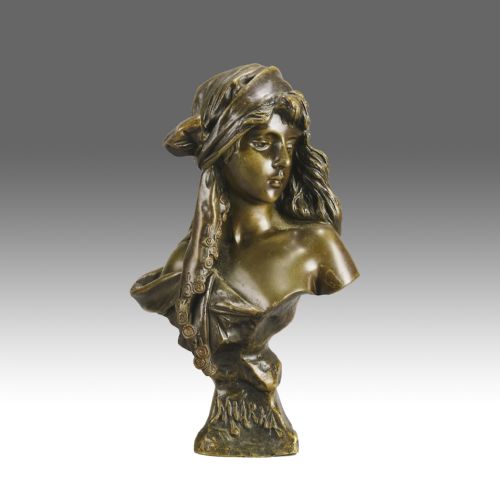
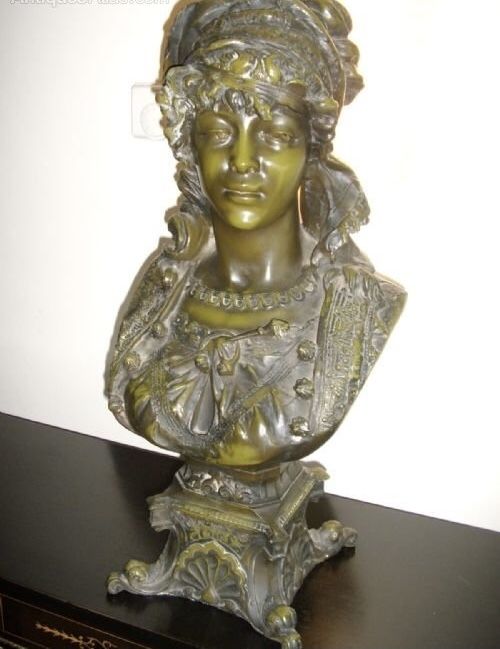
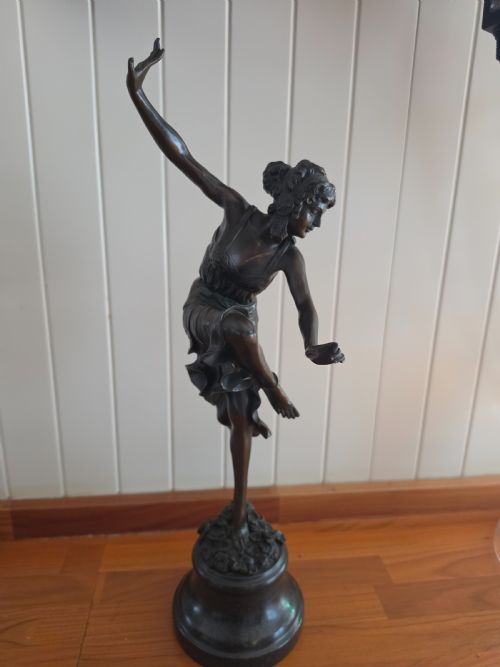
These bronze maiden figure works capture classical grace and romantic ideals through sculpted metal.
Bronze Maiden Figure
When you search for a bronze maiden figure, you encounter sculptural depictions of female subjects spanning the nineteenth and early twentieth centuries. These works take the form of freestanding statues, busts, table lamps, and candelabras produced predominantly in French and Austrian workshops. The subjects range from classical deities and mythological nymphs to Art Nouveau dancers and allegorical figures.
The versions most commonly met on this page are nineteenth-century French foundry casts and Art Deco studies of female dancers or robed ladies. Many incorporate functional elements such as clock garnitures, lighting shafts, or centrepiece bowls alongside the primary sculptural cast. Smaller cabinet bronzes and cabinet busts appear frequently alongside larger gallery-scale statues.
Makers and foundries from Paris and Vienna dominate the physical evidence, working within Neoclassical, Art Nouveau, and Art Deco idioms. Subjects frequently draw on classical literature, orientalist themes, or pastoral allegories such as water carriers and harvest maidens. Collectors also encounter substituted or mixed media pieces where bronze is mounted on marble plinths or paired with terracotta and plaster.
How they were made
Foundries utilised the lost-wax casting method or sand casting to achieve intricate detail in molten metal, followed by hand chasing with chisels and files. Surface finishes were achieved through chemical patination, cold painting, or the application of gold leaf and ormolu gilding. Many figures were cast in multiple separate pieces and mechanically joined together.
Bases frequently utilise contrasting materials such as veined marble, slate, or onyx to provide stability and visual weight to the metallic figures. Alternative mediums recorded in the evidence include bronzed plaster, earthenware, and cast spelter for more commercial production runs. Chryselephantine figures combine carved ivory elements with cast bronze components.
The inventory spans the Victorian era, the nineteenth century, and the early twentieth-century Art Nouveau and Art Deco movements.
What varies in quality
Patination depth and integrity separate standard commercial output from master foundry productions. Rich, multi-layered patination shows subtle tonal variations, whereas inferior surfaces appear flat or unevenly applied. The quality of the mounting, particularly the density and polish of the accompanying marble base, also signals the tier of manufacture.
Etienne-Henri Dumaige·Bruno Zach·Moreau Family·August Moreau·Mathurin Moreau·Emmanuel Villanis·Henry Wissen Senior·C J R Colinet·Zoldan Kovats·S. Kinsburger·Clodion·Claudius Marioton·Ferdinand Preiss·Georges Van Der Straeten·Goldscheider·Guillot·Maurice Bouval·Houdebine·C Neuhaus·Jean Jacques Pradier·Victor Paillard·Devaulx·Charlotte Monginot·Hans Schork
The Bronze Maiden Figure Glossary
- Lost-wax casting
- A method of metal casting in which a molten metal is poured into a mould that has been created by means of a wax model. Once the wax is melted away, the bronze fills the exact cavity.
- Patination
- The process of treating the surface of metal with chemicals, heat, or acids to produce a coloured oxide layer. This finish protects the metal and defines the aesthetic tone of the sculpture.
- Chryselephantine
- A term used to describe statues made of cold-painted bronze combined with carved ivory for the flesh parts. This technique was particularly favoured by Art Deco sculptors.
- Ormolu
- Gilt bronze produced by applying a finely ground high-carat gold-mercury amalgam to an object of bronze. The mercury is then driven off by heat, leaving a rich golden coating.
- Grand Tour
- Cultural travel undertaken by wealthy young Europeans in the eighteenth and nineteenth centuries to collect classical antiquities and small-scale bronze copies of famous sculptures.
- Spelter
- A zinc alloy used as a less expensive alternative to bronze for sculptural figures. It is softer than bronze and typically carries a heavier patinated or painted surface coating.
Bronze Maiden Figure: Frequently Asked Questions
What is a bronze maiden figure?
A bronze maiden figure is a cast metal sculpture depicting a female subject, ranging from classical goddesses to Art Deco dancers. These pieces were produced primarily in European foundries during the nineteenth and early twentieth centuries as decorative art.
Collectors prize them for their sculptural movement, expressive faces, and varied patination techniques. They serve as desktop ornaments, mantel displays, and central architectural accents within period interiors.
How were these figures displayed originally?
These sculptures were placed on mantelpieces, library tables, and pedestals within formal nineteenth-century drawing rooms and bourgeois apartments. Larger figures stood on dedicated columns or floor plinths, while functional pieces like lamps illuminated reading desks.
Mid-century collectors often integrated them into curated side tables alongside ceramics and glass. Their placement was intended to demonstrate classical learning and refined artistic taste.
How do I care for antique bronze?
Bronze requires minimal intervention beyond gentle dusting with a soft, dry brush to prevent particulate accumulation. Avoid using chemical polishes, oils, or water, as these substances can strip the original historic patination from the metal surface.
Stable indoor humidity and protection from direct sunlight preserve both the bronze casting and any attached marble or ivory elements. Allowing a natural protective layer to remain safeguards the metal over decades.
How can I tell the period of a figure?
Stylistic markers offer the most reliable guide, with Neoclassical figures showing strict classical drapery, Art Nouveau pieces featuring flowing organic hair, and Art Deco works displaying geometric lines. Foundry stamps, artist signatures incised into the base, and casting methods further narrow down the date.
Associated materials like cast spelter or specific marble bases often point towards particular manufacturing decades. Examining the construction joins helps distinguish nineteenth-century sand casts from later reproductions.