
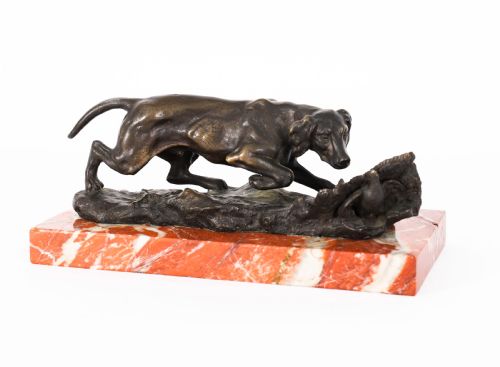
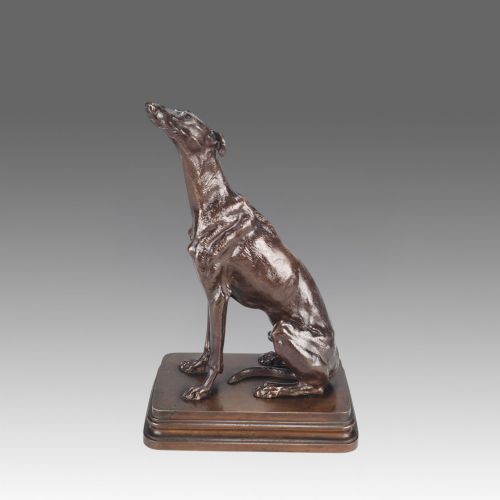
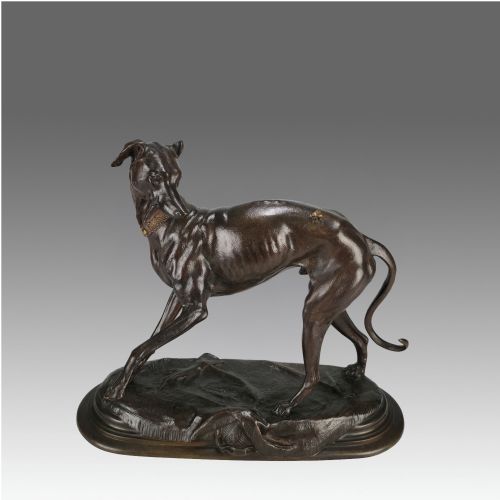


Bronze Hound Statue
A bronze hound statue captures the muscular tension and alert grace of the animal, bringing nineteenth-century animal sculpture straight into the room.
Bronze Hound Statue
When you search for a bronze hound statue, you encounter sculptural works spanning the nineteenth century through the Art Deco era of the nineteen-thirties. These pieces portray various breeds such as greyhounds, sighthounds, bassets, and setters in resting, hunting, or running poses.
You meet French animalier bronzes most frequently on this page, alongside English and Russian examples. Many incorporate naturalistic bases of marble, onyx, or wood, while others depict hunting scenes involving birds or prey.
Materials and casting methods
Sculptors utilised traditional metal casting techniques to shape molten bronze into lifelike animal forms. Surfaces received hand-applied patination to accentuate muscle tone and texture.
Many figures are mounted onto heavy stone plinths made of marble or onyx, whilst alternative pieces utilise spelter or cast iron with ormolu details.
Several hounds share their sculptural space with unexpected companions, including birds, balls, and even fleeing prey.
Judging quality and execution
The integration between the metal figure and its stone or marble base reveals the care taken during assembly. Foundries known for rigorous standards produced cleaner edges and more convincing anatomical movement.
Carl Kauba·Alfred Dubucand·Alfred Barye·Pierre Jules Mene·Auguste Nicholas Cain·Arthur Waagen·Geo Maxim·Antoine Louis Barye·Joseph Francois Victor Chemin·Christophe Fratin·John Willis Good·Nikolai Lieberich·L Bureau
The Bronze Hound Statue Glossary
- Animalier
- A nineteenth-century artistic movement focused on the realistic portrayal of animals. Practitioners specialised in capturing accurate anatomy and natural behaviour.
- Patina
- The surface coloration and finish applied to bronze through chemical treatment or heat. It protects the metal and defines the visual tone of the sculpture.
- Spelter
- A zinc alloy commonly utilised as a less expensive alternative to bronze during the art deco period. It often received a bronze-like coating to mimic heavier metal.
- Ormolu
- Gilded bronze ornamentation applied to mounts or decorative details. This technique adds bright metallic contrast to darker patinated figures.
Bronze Hound Statue: Frequently Asked Questions
How do I identify a nineteenth-century animalier bronze?
Nineteenth-century animalier pieces display careful anatomical observation and heavy bronze construction, often featuring signatures or foundry marks on the base.
They frequently sit on shaped marble or slate plinths and show naturalistic patination developed over decades.
What is the difference between bronze and spelter?
Bronze is a durable copper alloy that takes fine detail and deep patination during casting. Spelter is a softer zinc-based metal that feels lighter and appears more frequently in Art Deco figures.
Closer inspection of the underside or worn areas reveals the different base metals beneath the surface finish.
Where were these dog sculptures made?
The majority of these sculptures originated in French foundries, driven by the nineteenth-century animalier school in Paris. English and Russian workshops also produced notable hunting groups and hound figures.
Foundry stamps and artist signatures often indicate the specific workshop of origin.
How should I display a heavy marble base sculpture?
Place these substantial pieces on sturdy furniture where the combined weight of the bronze and stone base is fully supported. Avoid areas exposed to direct moisture to protect the stone and metal finish.
Routine dusting with a soft cloth maintains the patinated surface without damaging the material.