
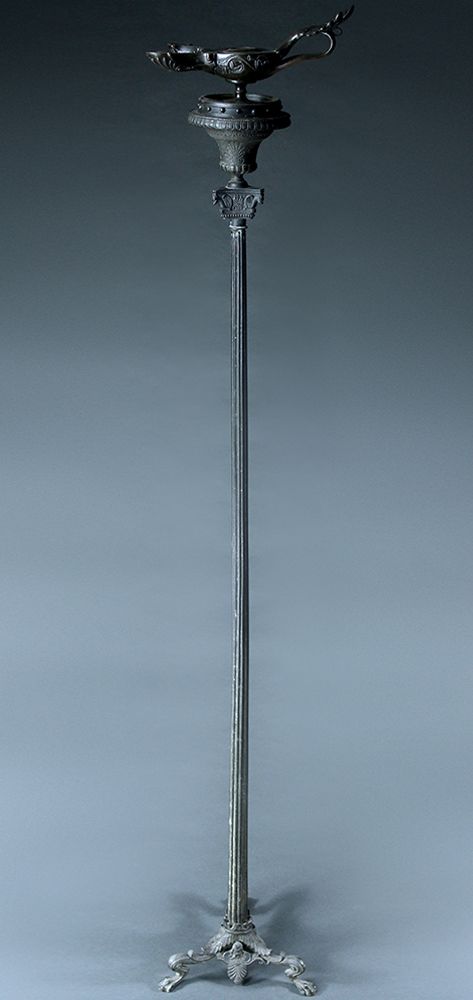


Bronze Floor Lamp
A bronze floor lamp brings architectural presence and steady illumination to a room, spanning periods from Regency to Art Deco.
Bronze Floor Lamp
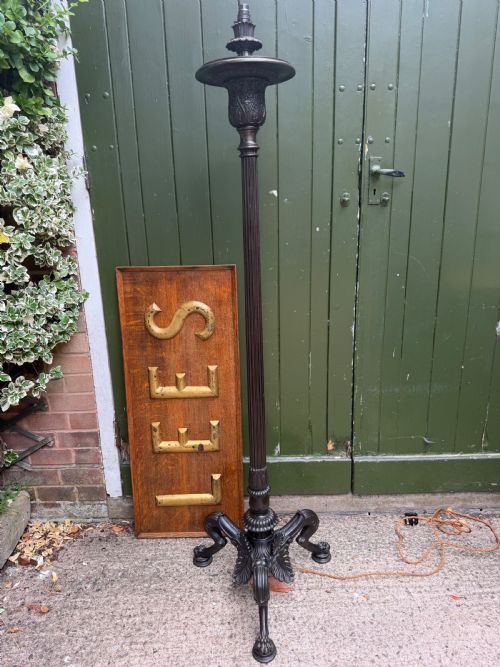
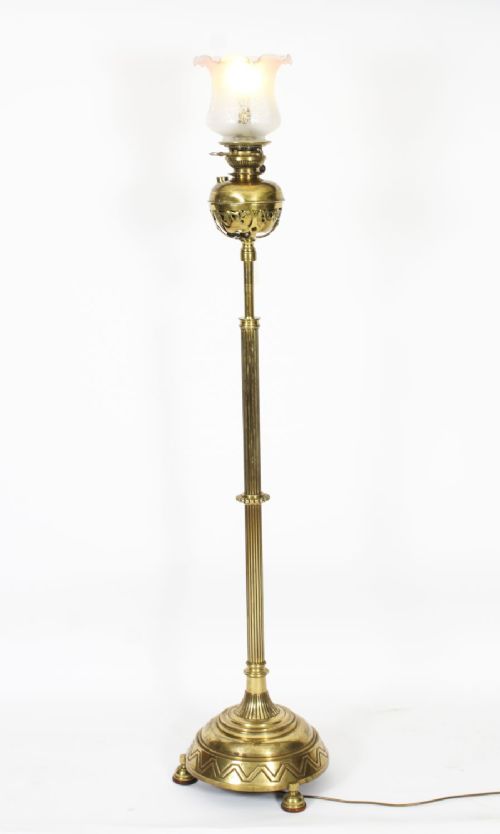
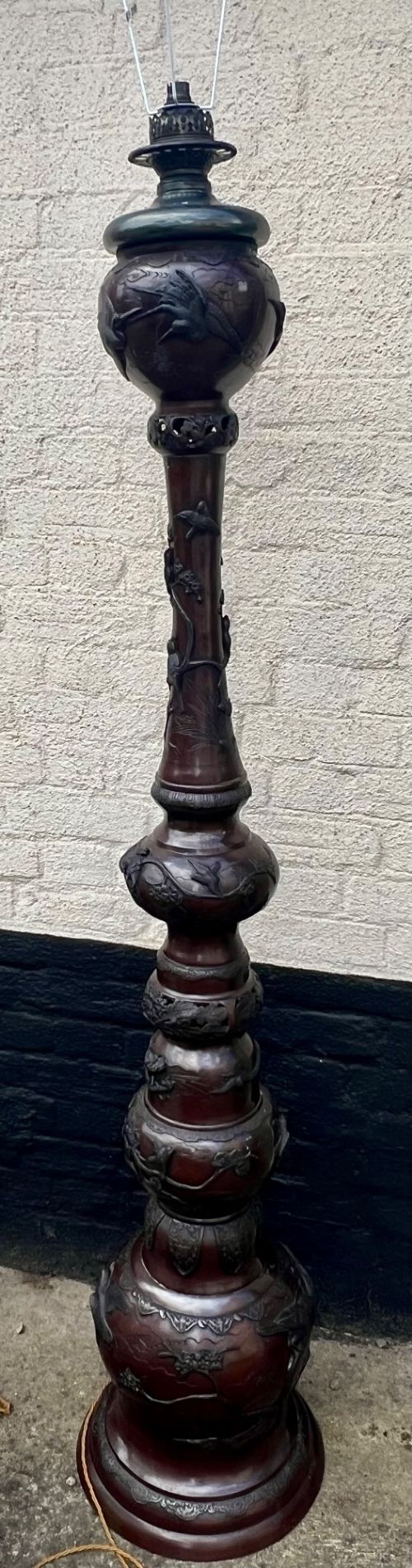
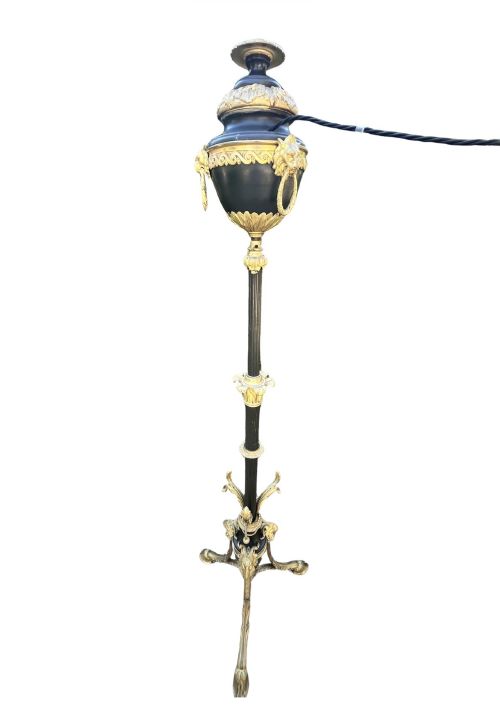
A bronze floor lamp is a substantial standing light source, taking forms such as standard lamps, torcheres, and floor candle holders. When searching for a bronze floor lamp, buyers encounter varied iterations including heavy patinated castings, slender classical revivals, and elaborate figural designs. The pieces on this page span the nineteenth century, the Edwardian era, and the art deco period, reflecting diverse stylistic lineages from neoclassical to Japanese Meiji.
Makers and designers recorded in the archive and current listings range from Humphrey Hopper and Faraday & Son to sculptors such as F. De Luca, François-Christophe-Armand Toussaint, and Coutan. Standard lamps from these eras frequently adapt earlier lighting technologies, converting oil reservoirs or candle holders for electricity while retaining their original metalwork integrity. Buyers find both single statement pieces and matched pairs suitable for formal drawing rooms and libraries.
What varies in quality
Quality in these standing lights rests upon the crispness of the bronze casting, the depth of the hand-applied patina, and the architectural proportion of the shaft and base. Superior examples demonstrate meticulous chasing in figural details, robust weight distribution through marble or heavy metal bases, and authentic integration of period components rather than later assembled parts.
Materials recorded across the inventory include patinated bronze, gilt bronze, brass, marble, plaster, glass, and fabric.
Humphrey Hopper·Faraday and Son·F. De Luca·Coutan
The Bronze Floor Lamp Glossary
- Torchere
- A tall stand or floor lamp designed to hold a light source high above the floor. These pieces often feature classical motifs derived from ancient Greek and Roman forms.
- Ormolu
- Finely ground high-carat gold applied to a bronze object using a mercury amalgamation process. This technique produces a durable, rich golden surface characteristic of fine nineteenth-century French and English metalwork.
- Patinated bronze
- Bronze treated with chemical solutions to produce a controlled surface colour ranging from deep brown to greenish black. This finish protects the underlying metal while enhancing sculptural definition.
- Standard lamp
- A British term for a floor-standing lamp base designed to support a shade and bulb. They appear frequently in Edwardian and Victorian interiors as movable focal points for reading and ambient light.
Bronze Floor Lamp: Frequently Asked Questions
How do I identify a nineteenth century bronze floor lamp?
Nineteenth century examples typically display heavy sand-cast bronze or brass components, hand-chased surface details, and patinations that show natural wear over decades. Look for construction methods using threaded rods and heavy square or circular bases rather than modern welded joints.
Period wiring adaptations also offer clues, as many standing lamps transitioned from oil or gas to electricity during the late Victorian and Edwardian eras.
Are these lamps safe for modern electrical use?
Most antique standing lamps require rewiring to meet contemporary safety standards, which a qualified electrician can perform easily. The original metal standards and weighted bases remain entirely stable for modern fittings and contemporary bulb weights.
Preserving the original brass bulb holders and switches where present maintains historical integrity while ensuring safe operation.
How do I clean patinated bronze safely?
Dust bronze and brass surfaces regularly with a soft, dry lint-free cloth to prevent particulate accumulation. Avoid chemical polishes, abrasive cloths, or water, as these can strip historical patinas and damage gilt surfaces.
Consult a metal conservator if deeper cleaning or wax application becomes necessary to protect the original finish.