
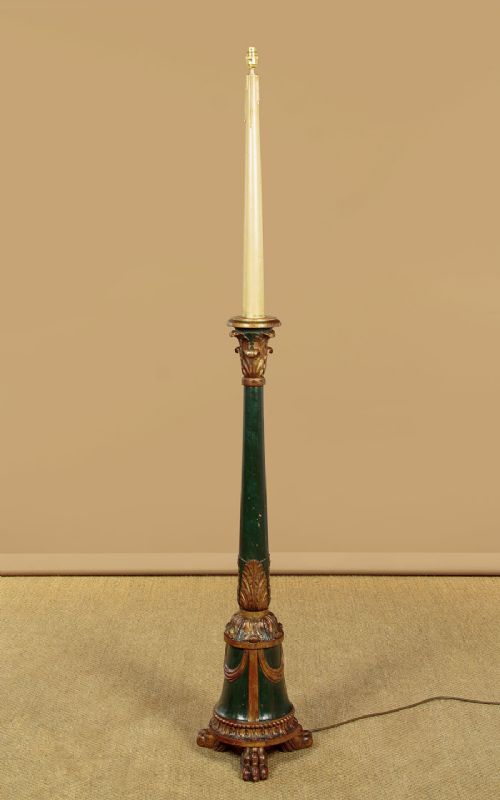
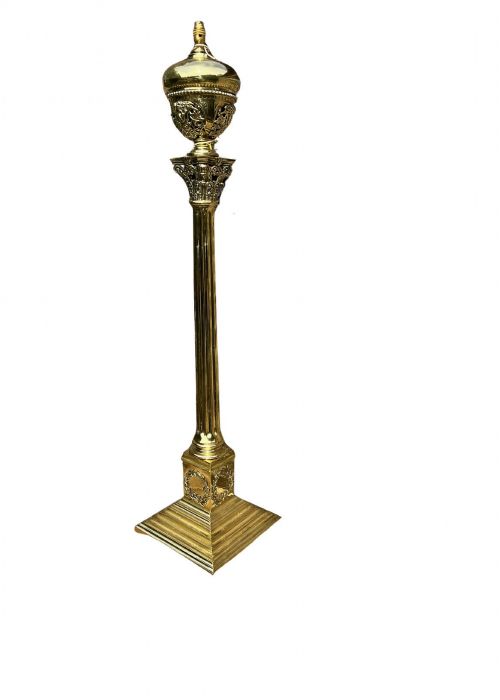


Classical Tall Standing Light
These pieces known as a classical tall standing light bring architectural presence and height to a room, spanning grand candelabras and slender floor lamps.
Classical Tall Standing Light
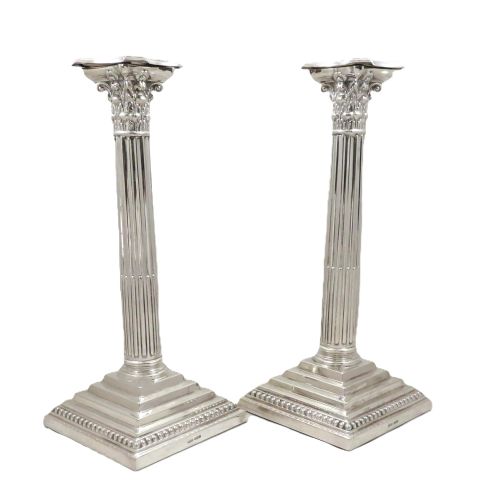
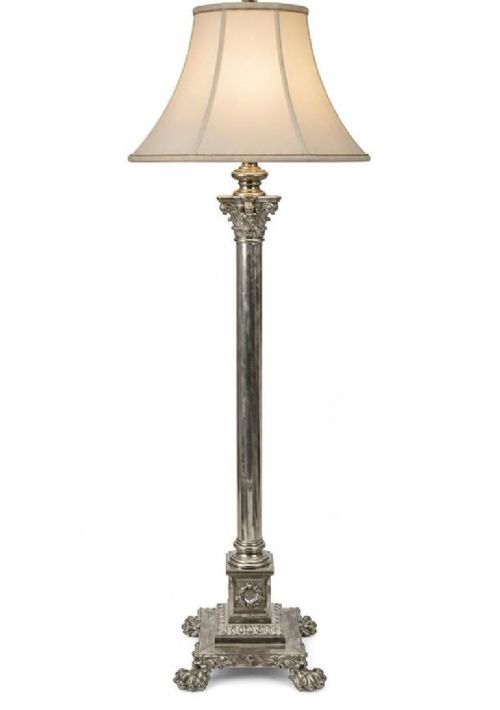
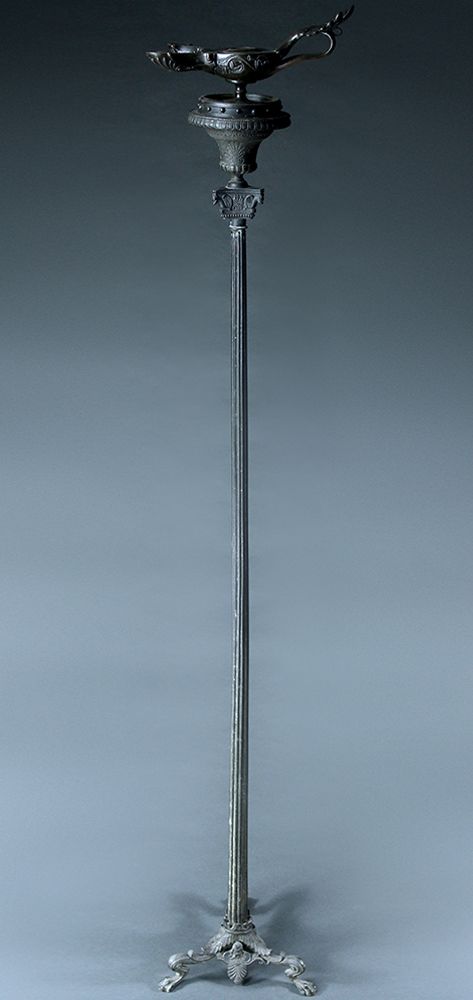
A classical tall standing light encompasses floor-standing lamps, standard lamps, and tall pedestals adapted for illumination, alongside large tabletop candlesticks that achieve height through columnar forms. These objects draw heavily on historical architectural vocabulary, referencing ancient columns and ritual torch stands to create vertical focal points in a domestic interior.
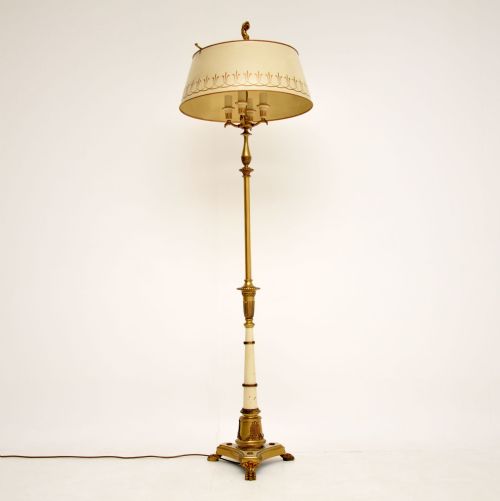
The pieces appearing on this page range from nineteenth-century brass columns and Edwardian standard lamps to twentieth-century giltwood torcheres and silver-plated floor pieces. Neoclassical and Regency revivals dominate the selection, bringing disciplined proportions, fluted shafts, and classical orders into nineteenth and twentieth-century homes.
Floor lamps and standard lamps are the most frequent formats encountered here, often paired with fabric shades to diffuse light across a living space. Alongside them, heavy brass and silver-plated candlesticks provide monumental scale for tabletop or low surface placement.
Materials and construction methods
Metalworking forms the backbone of these pieces, utilising cast brass, bronze, silver plate, and silvered metals to achieve sharp architectural details such as Corinthian capitals and reeded columns. Foundries cast these components in sections before assembling them around weighted internal rods to ensure stability at height.
Carved wood and giltwood provide an alternative sculptural medium, shaped into standard lamps and torcheres with parcel gilt or painted finishes. Artisans applied thin layers of gold leaf over prepared gesso grounds on carved timber bases, creating reflective surfaces that catch ambient light.
Listings feature standard lamps, floor lamps, and torcheres in materials including brass, giltwood, bronze, and silver plate.
Distinctions in craftsmanship and design
Quality in these upright forms rests on the crispness of the casting or the depth of the wood carving, where finely chased brass capitals and sharp acanthus leaves signal superior workshop output. Mass-produced later adaptations often display softer, blurred details where decorative motifs lose their architectural definition.
Proportion and structural integrity dictate the standing presence of each piece, requiring heavy, balanced bases to support significant height without sway. Finer examples maintain rigorous symmetry and solid material thickness throughout the entire vertical axis.
The Classical Tall Standing Light Glossary
- Standard lamp
- A tall floor lamp designed to stand independently on the floor and hold a shade at upper eye level. These fixtures became popular in late Victorian and Edwardian interiors for reading and ambient room illumination.
- Torchere
- A tall ornamental stand or candlestick originally designed to carry a torch and later adapted for oil or electric lighting. They frequently feature slender carved wooden shafts and tripod bases.
- Corinthian column
- An architectural column style defined by an ornate capital decorated with carved acanthus leaves. This motif appears frequently on brass and silver candlesticks and lamp standards.
- Pricket candlestick
- A heavy candlestick featuring an upward-pointing metal spike that impales the base of a wax candle rather than sitting inside a socket. Grand examples in bronze and brass form part of the standing lighting tradition.
- Grand Tour
- A cultural journey undertaken by nineteenth-century travellers who collected classical antiquities and bronzes across Europe. Pieces associated with this movement often replicate archaeological finds from Pompeii and Rome.
Classical Tall Standing Light: Frequently Asked Questions
How do I choose between a floor lamp and a candlestick?
Floor lamps and standard lamps provide general room illumination and require floor space, whereas large candlesticks are typically placed on furniture or low surfaces to provide accent light.
Selecting the right format depends on the ceiling height and the existing furniture scale within the room.
What periods do these standing lights represent?
The selection spans eighteenth-century forms alongside Victorian, Edwardian, and twentieth-century revivals that look back to classical antiquity.
Neoclassical and Regency revival styles are particularly common, reflecting nineteenth and early twentieth-century interpretations of ancient Greek and Roman architecture.
Are these lamps safe for modern electrical use?
Many older standard lamps have been rewired during their history, while others retain older fittings that require inspection by a qualified electrician before use.
Buyers should check the internal wiring and bulb holders to ensure they meet current safety standards for domestic lighting.
How do I care for giltwood and brass finishes?
Brass and bronze benefit from gentle dusting and occasional cleaning with appropriate metal polishes, avoiding abrasive materials that can strip patination. Giltwood requires delicate dry dusting only, as moisture and chemical cleaners will damage the fragile gold leaf surface.