




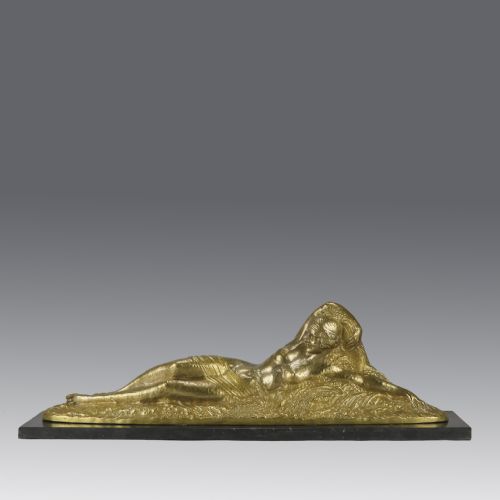


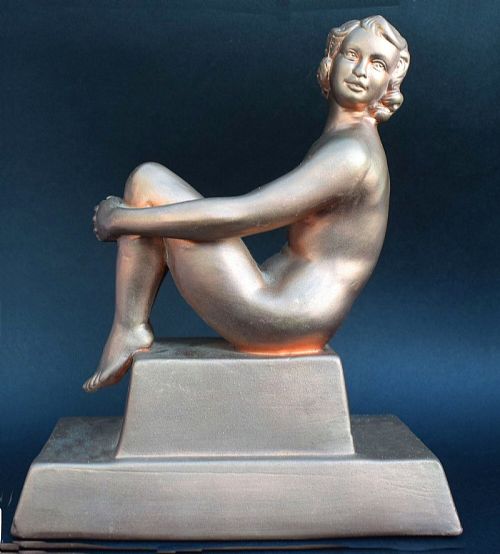

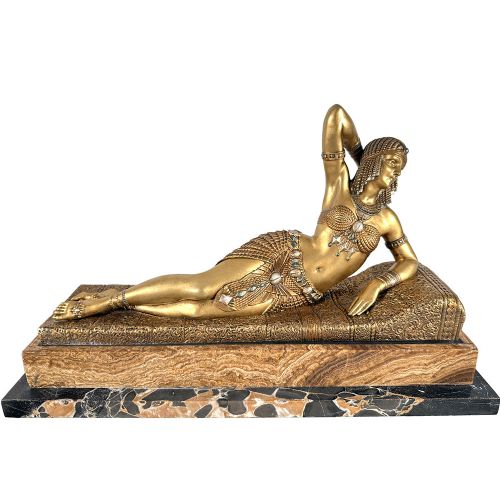


Bronze Female Nude Statue
A bronze female nude statue brings classical grace and modernist line into a room through enduring metal.
Bronze Female Nude Statue
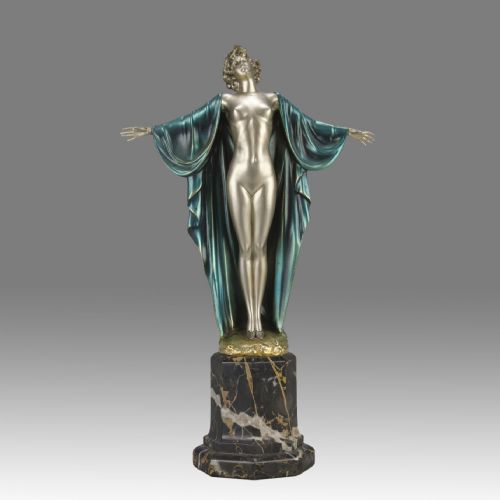
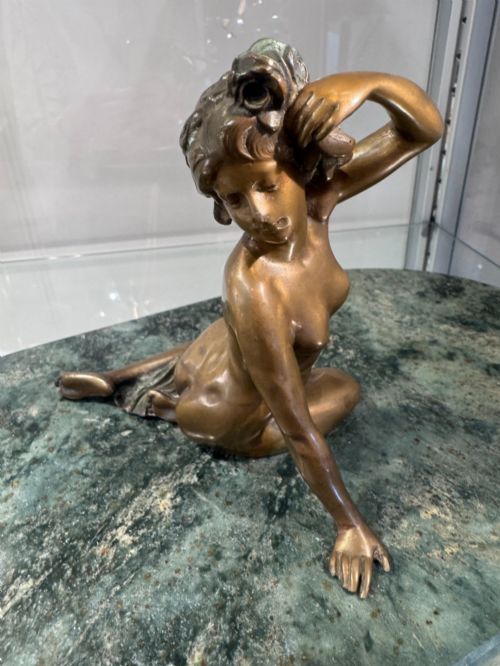
A bronze female nude statue spans the nineteenth century through the art deco period, taking the form of standing figures, dancers, lamps, and car mascots. These sculptures appear most often as French or Austrian works, rooted in classical revival or modernist aesthetics.
The nineteenth-century pieces lean heavily on classical and grand tour themes, depicting maidens and mythological figures in patinated or gilt bronze. By contrast, the early twentieth-century examples embrace art nouveau fluidity and art deco styling.
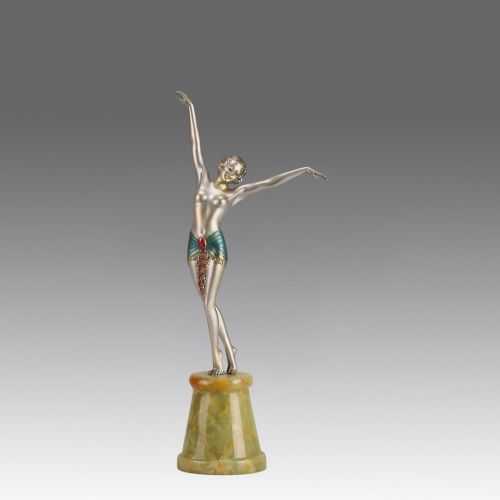
Many figures integrate bases of marble or onyx to anchor the heavy metal casting. Buyers encounter everything from small cabinet statuettes to large table lamps.
Casting materials and surface techniques
The primary material is bronze, cast using traditional methods, alongside variations such as silvered bronze, gilt bronze, and patinated metal or spelter. Foundry work often involved specialist houses such as Barbedienne, Susse Freres, or Hebrard.
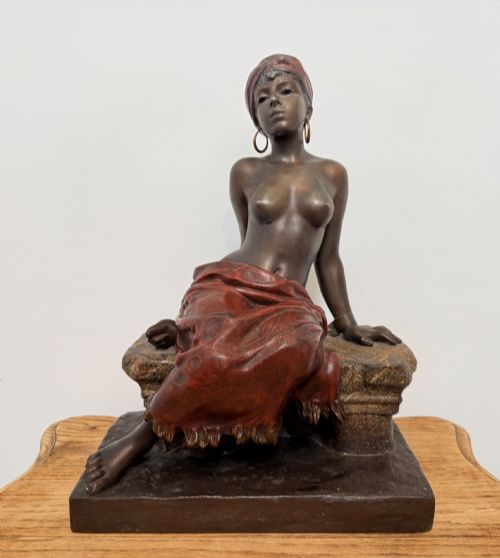
Cold painting and enamel were frequently applied to bronzes, particularly in Austrian workshops, to add vibrant colour to garments, skin, and details. Marble and onyx plinths provide contrasting stone textures beneath the metal figures.
Some Austrian makers hid entire Egyptian dancers inside nested sarcophagi, ensuring the bronze nude enjoyed a theatrical reveal.
Distinctions in sculpture quality
Quality rests in the crispness of the casting detail, the smoothness of the surface chasing, and the depth of the patination. Master founders achieved subtle musculature and facial expression that lesser editions miss.
The integration of the figure with its stone base and the fidelity of the signature or foundry mark further separate standard studio output from exceptional pieces.
Ferdinand Barbedienne·Ferdinand Preiss·Josef Lorenzl·Demetre Chiparus·Franz Bergman·Pierre Le Faguays·Claire Jeanne Roberte Colinet
The Bronze Female Nude Statue Glossary
- Patinated bronze
- Bronze treated with chemical solutions to produce a specific surface colour or tone. This finish protects the metal and defines the shadows of the casting.
- Cold-painted bronze
- Metal painted after casting without subsequent firing, a technique prominent in Austrian workshops. It allows for intricate polychrome surface detail.
- Spelter
- A zinc alloy frequently used as a cheaper alternative to bronze during the art deco period. It mimics bronze when patinated.
- Grand tour
- A nineteenth-century tradition of collecting classical antiquities and reductions of famous statues in Europe. These bronze reductions were brought home as souvenirs.
- Lost-wax casting
- A metal casting method where a wax model is melted out to create a mould for the bronze. This technique allows for high fidelity and intricate detail.
Bronze Female Nude Statue: Frequently Asked Questions
How do I identify art deco bronzes?
Art deco pieces display stylised geometric lines, streamlined forms, and often depict dancers or athletes. They date predominantly from the 1920s and 1930s.
Such figures frequently combine patinated bronze with carved marble or onyx bases, marking a clear departure from nineteenth-century classicism.
What is cold-painted bronze?
Cold painting involves applying oil paints or enamel directly onto the cold metal surface after casting. This method was widely used in Vienna.
Collectors should handle these pieces carefully to avoid chipping the delicate pigment.
Are these figures solid bronze?
Many sculptures are cast using the lost-wax method, which can result in either solid metal or a hollow core with a thick wall. Foundry standards varied across France and Austria.
Weight is a reliable indicator of density, though mixed media pieces incorporate heavy stone plinths.
How should I clean a bronze statue?
Dust the surface gently with a soft, dry cloth to prevent accumulation. Avoid chemical polishes that strip the original patina.
Applying a very light microcrystalline wax can protect the metal finish from moisture and handling.