



Bronze Dog Art
Bronze dog art brings together animal sculpture and utility through the dynamic styling of the twentieth century.
Bronze Dog Art
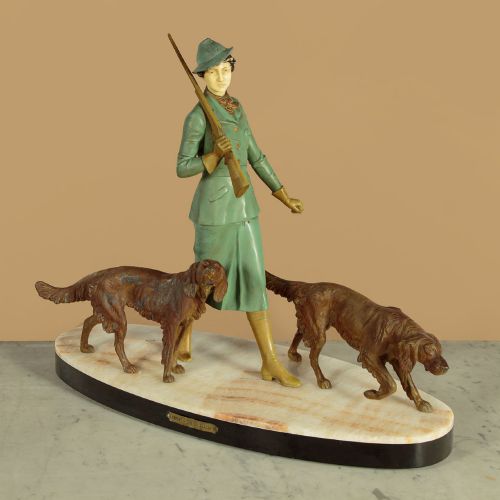
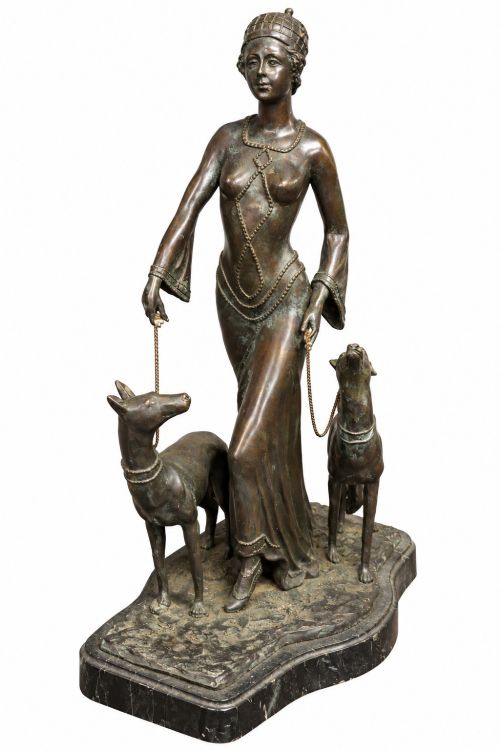
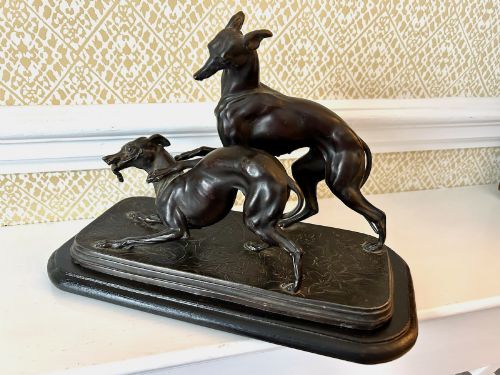
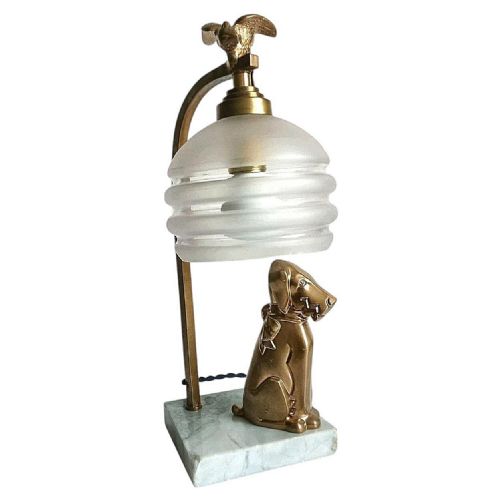
Bronze dog art encompasses sculptures, bookends, table lamps, and clocks produced primarily during the Art Deco period and the early twentieth century. These pieces capture hounds, greyhounds, whippets, poodles, and spaniels in motion or repose, often mounted on heavy stone bases.
Buyers seeking bronze dog art will find works ranging from metal figures and night lights to automotive mascots and clock sets. The selection spans spelter, patinated metal, and bronze, reflecting both high-end studio output and more accessible decorative foundry work.
How they were made
Foundries utilised traditional casting methods for metal figures, capturing fine anatomical detail in bronze, spelter, and silvered bronze. Many figures were then cold painted or given patinated finishes to accentuate the fur and musculature of the animals.
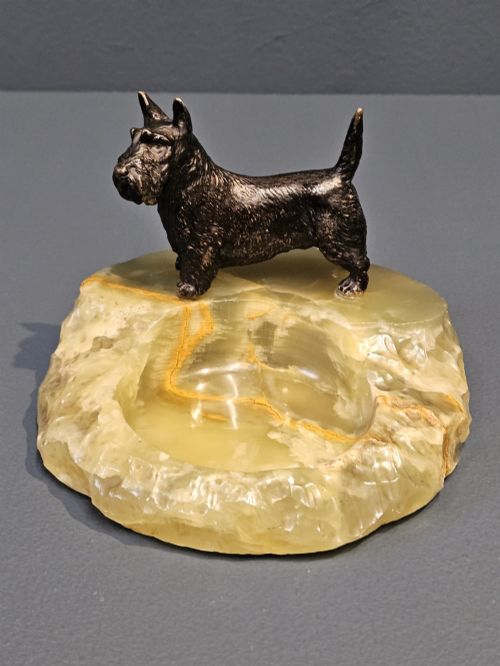
Bases were cut from contrasting materials such as marble and onyx to support the weight of the metal sculptures. Wrought iron and brass components were incorporated into functional items like andirons and table lamps.
Bronze Dog Art Retail Price Guide 2026
Typical asking prices for bronze dog art among the pieces listed under this phrase on Sellingantiques today, from the lower quarter to the upper quarter. They describe what is for sale here now, not the wider market.
Greyhounds appear more frequently than any other canine breed, capturing the jazz age fascination with speed and sleek geometry.
What varies in quality
The choice and finish of the mounting base contribute significantly to the overall presence of the object. Solid marble or onyx plinths with harmonious proportions elevate the sculptural group above standard mass-produced items.
Georges Gori·Karl Hagenauer·Alexandre Kelety·Geo Maxim·C Masson
The Bronze Dog Art Glossary
- Spelter
- A zinc alloy commonly utilised as a less expensive alternative to bronze for sculptural figures in the early twentieth century.
- Patinated metal
- Metal treated with chemicals or heat to produce a coloured surface finish, often simulating aged bronze.
- Cold painted
- A technique where paint is applied to a cold metal object without subsequent firing, popular on small decorative bronzes.
- Automobilia
- Collectable items associated with motor cars, including metal mascots mounted on radiator caps.
Bronze Dog Art: Frequently Asked Questions
What periods do these pieces date from?
The listings span the nineteenth century through to the 1940s, with a strong concentration of pieces from the Art Deco era of the 1920s and 1930s. Victorian works also appear alongside early twentieth-century examples.
Design aesthetics shifted from ornate nineteenth-century casting styles toward the clean, stylised geometries characteristic of the interwar years.
How were these decorative items used?
Many of these pieces served practical functions in period homes, operating as bookends, table clocks, night lights, and mantel clocks. Others were purely ornamental sculptures or mounted as mascot figures on motor cars.
Functional forms integrated animal figures into everyday objects, combining utility with decorative sculpture.
What materials are commonly found?
Bronze and spelter form the primary medium for the animal figures, frequently paired with marble or onyx bases. Additional materials include silvered bronze, brass, wrought iron, and patinated metal.
Lamps and night lights also incorporate glass elements to diffuse light through the figural groupings.