
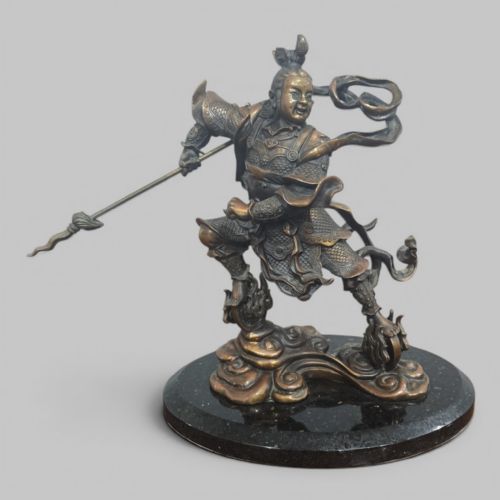
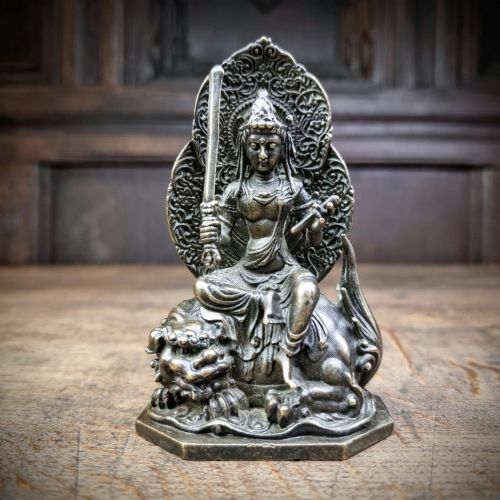


Bronze Deity Sculpture
These bronze deity sculpture works bring sacred figures from Asian and European traditions into domestic spaces.
Bronze Deity Sculpture
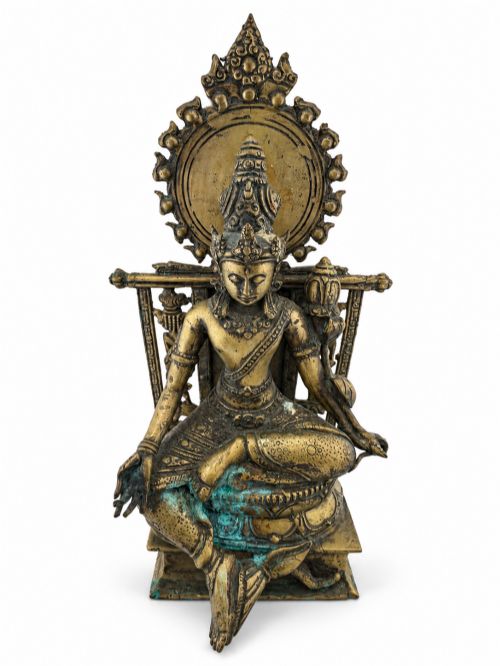
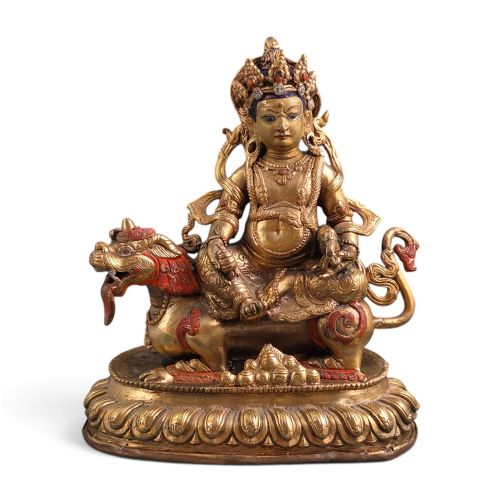
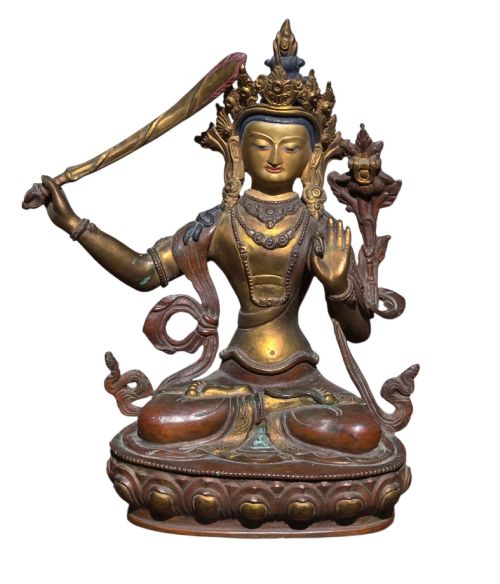
When you search for bronze deity sculpture, you encounter figures cast across many centuries, from pre-sixteenth-century Javanese and Indonesian examples to nineteenth-century Sino-Tibetan and Indian statues. The selection spans Buddhist, Hindu, and Jain subjects, alongside occasional classical figures such as Athena and Zeus from Grand Tour traditions.
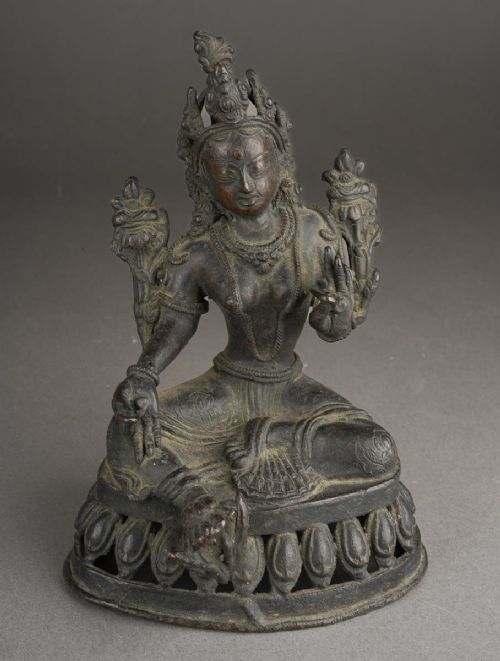
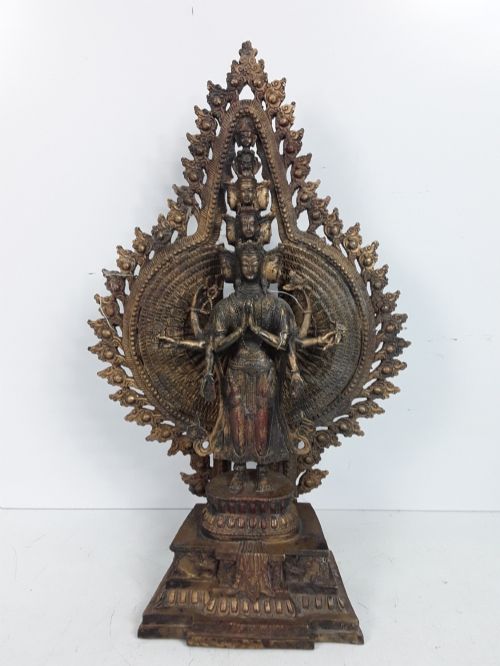
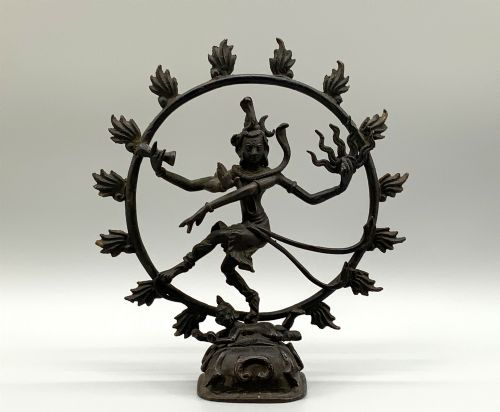
The regional styles vary widely, encompassing Tibetan and Nepalese shrines, Burmese Buddhas, Thai patinated bronzes, and South Indian figures of Shiva. Depictions range from small domestic shrine statues to larger temple pieces representing deities such as Tara, Avalokiteshvara, and Ganesh.
Materials and Casting
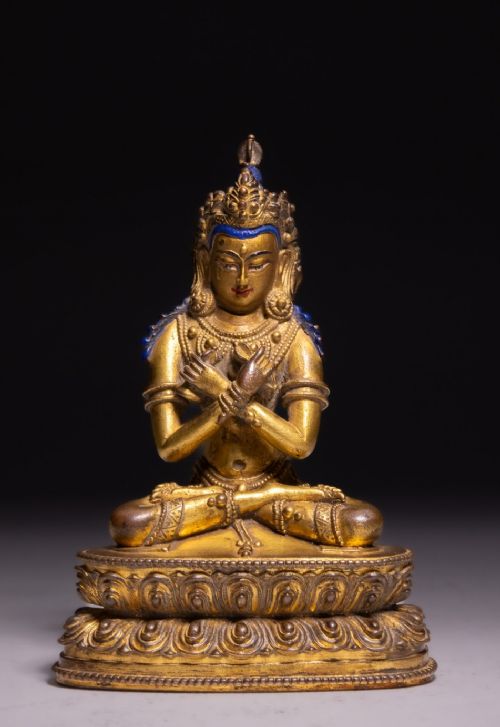
The objects are primarily cast in bronze, copper alloy, and brass, utilising traditional lost-wax methods that allow for intricate detailing in robes and ornaments. Many pieces receive a layer of gilding, creating gilt bronze surfaces that highlight the divine attributes of the figure.
The listings span from pre-sixteenth-century Javanese copper alloy figures to early twentieth-century Sino-Tibetan gilt bronze statues.
Execution and Detail
The distinction between tiers rests upon the crispness of the casting and the sensitivity of the chasing work on facial expressions and ornamentation. Finer examples display deeply defined drapery folds, well-delineated hand gestures, and securely set mineral inlays.
Proportion and stance contribute significantly to the presence of a figure, with superior pieces maintaining balanced postures and harmonious anatomical details. The application of gilt surfaces or pigment remains intact on higher-grade examples, preserving the original ritual intent.
The Bronze Deity Sculpture Glossary
- Bodhisattva
- An enlightened being who defers Buddhahood to assist others on the spiritual path. These figures frequently appear in Tibetan and Sino-Tibetan art adorned in princely garments.
- Gilt Bronze
- Metal coated with a thin layer of gold through fire gilding or similar historic techniques. This finish signifies the high status of the deity represented.
- Lost-Wax Casting
- A metalcasting process where a molten metal is poured into a mould that has been created by means of a wax model. The wax is melted and drained away to leave the cavity for the bronze.
- Copper Alloy
- A broad term for metals containing copper mixed with tin, zinc, or other elements. Many early Indonesian and Himalayan sculptures use this metal composition rather than standard bronze.
- Tara
- A female Buddha in Tibetan Buddhism associated with protection and compassion. Statues frequently depict her seated with one leg pendant on a lotus throne.
Bronze Deity Sculpture: Frequently Asked Questions
How do I identify a Tibetan bronze deity sculpture?
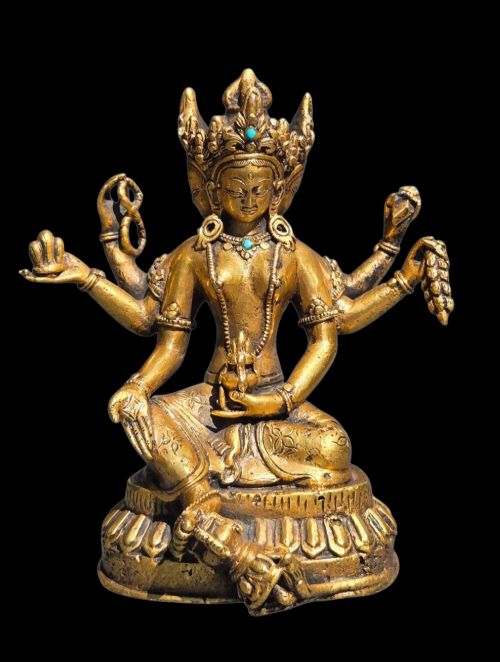
Look for specific stylistic markers such as lotus bases, intricate jewellery set with turquoise or mineral inlays, and iconographic postures associated with Vajrayana Buddhism.
Regional casting techniques and traditional facial proportions also help distinguish Himalayan examples from Indian or Southeast Asian works.
Where were these statues originally placed?
Many figures served as focal points in domestic shrines, private temples, or monastic settings across Asia. Others were created as devotional objects for ritual use.
Grand Tour pieces, by contrast, were collected by European travellers as souvenirs of classical antiquity.
How should I clean a bronze deity sculpture?
Dust the surface gently with a soft, dry brush to prevent the accumulation of particles in recessed areas. Avoid using liquid cleaners, polishes, or abrasive cloths.
Harsh substances can strip away historic patination, pigment, and delicate gilding applied to the metal.
What does a multi-armed deity signify?
Multiple arms represent the simultaneous power, omnipresence, and capacity of the deity to perform various benevolent actions. Each hand typically holds a specific ritual attribute.
These attributes help scholars identify the exact identity and lineage of the figure.