



Bronze Decorative Light Fixture
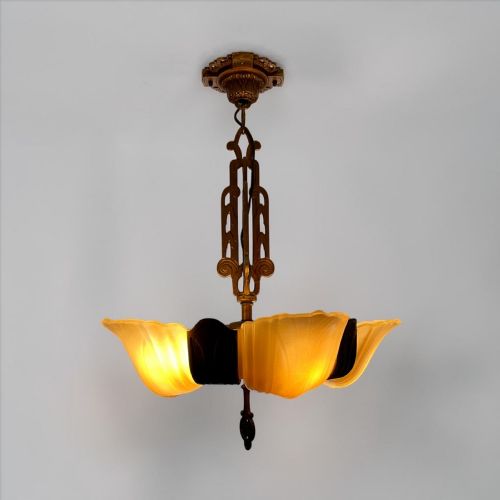
These bronze decorative light fixtures bring weight and warmth to a room, ranging from grand French chandeliers to delicate Art Nouveau figural lamps.
Bronze Decorative Light Fixture
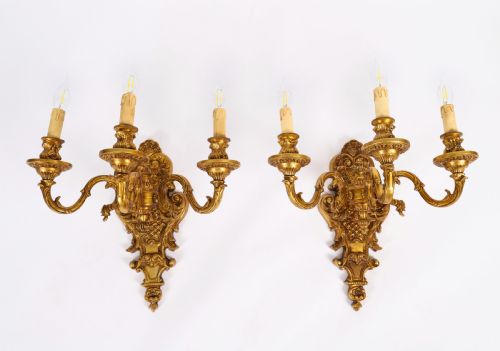
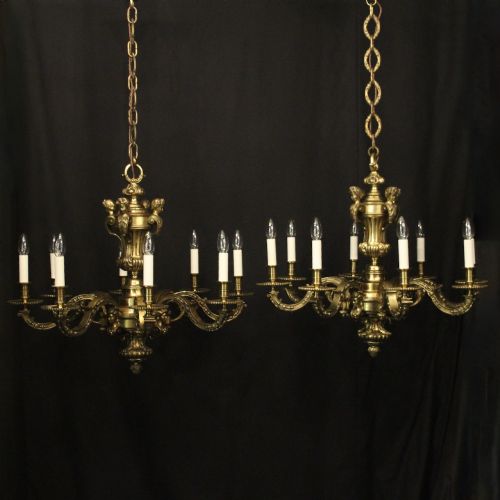
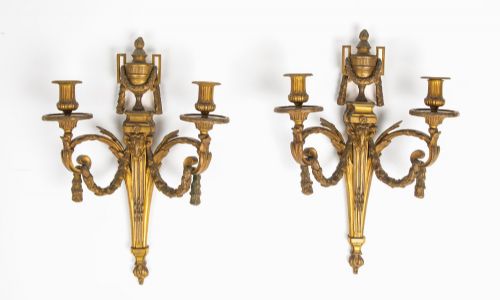
A bronze decorative light fixture covers a broad spectrum of interior illumination, from imposing multiple-branch chandeliers to paired wall sconces and bedside table lamps. When exploring this selection, buyers frequently encounter French designs drawing on Rococo and Louis XVI styles, alongside striking Art Deco and Art Nouveau examples.
The objects span from the late nineteenth century through the 1930s, taking forms such as open-cage chandeliers, ceiling lights, wall appliques and figural lamps. Many incorporate elements of cast metal and gilt bronze, often paired with glass, crystal or porcelain to enhance their decorative impact.
How they were made
Construction relies heavily on cast metal techniques, utilising bronze, gilt bronze and brass to form the structural bodies, arms and mounts of each fixture. Artisans shaped these metals through casting and chasing, achieving intricate surface details like ram's head masks and organic botanical motifs.
Many fixtures integrate delicate hanging elements, such as cut glass and crystal fruits including grapes, apples and pears, or utilise specialist slip shades. Porcelain bodies and fabric components also appear alongside the metal framework, combining structural rigidity with varied textural finishes.
Bronze Decorative Light Fixture Retail Price Guide 2026
Typical asking prices for bronze decorative light fixture among the pieces listed under this phrase on Sellingantiques today, from the lower quarter to the upper quarter. They describe what is for sale here now, not the wider market.
One chandelier comes laden with coloured crystal apples, bringing an orchard harvest indoors.
What varies in quality
Quality rests in the crispness of the metalwork and the depth of the chasing, where sharper, more deliberate detailing distinguishes superior castings from softer, more generalised production. The finesse of the gilding and the weight of the bronze armature also dictate the overall presence of the piece.
The integration of secondary materials defines the upper tier of execution, seen in hand-cut crystal drops, high-fired porcelain inserts, and signed artistic bronzes. Fixtures that maintain balanced proportions across multiple branches demonstrate a higher standard of period design.
Henri Honore Ple
The Bronze Decorative Light Fixture Glossary
- Ormolu
- Gilded bronze, where a layer of gold amalgam is applied to a bronze base. This technique was widely utilised in French decorative arts to create a rich, golden surface finish.
- Applique
- A wall-mounted light fitting designed to direct illumination outwards into a room. These fixtures often feature multiple branches and coordinate with matching chandeliers.
- Slip shade
- A type of moulded glass shade dropped into a metal frame, characteristic of Art Deco lighting design. They diffuse light evenly while displaying geometric or stylized patterns.
- Famille rose
- A palette of Chinese ceramic enamels dominated by pink or rose colours. Vases decorated in this style were frequently converted into table lamps during the nineteenth century.
Bronze Decorative Light Fixture: Frequently Asked Questions
How do I clean a bronze light fixture?
Dust gently with a soft, dry brush to remove accumulated particles without disturbing the metal surface. Avoid abrasive cleaners that might strip away original gilding or patina.
For glass and crystal components, wipe carefully with a damp cloth and dry immediately. Ensure the power is completely disconnected before undertaking any maintenance.
Can antique chandeliers be rewired?
Most antique fixtures require rewiring to meet modern electrical safety standards and local regulations. Professional electricians can replace internal wiring while preserving the original metal structure and sockets.
Rewiring also allows for the safe integration of modern bulb types that generate less heat, protecting delicate glass and fabric elements from damage.
What is the difference between an applique and a sconce?
Both terms generally describe wall-mounted light fixtures, though applique often denotes a specifically French decorative style involving gilt bronze or ormolu. Sconce is a broader term used across various periods and English-speaking regions.
Both forms were historically designed to hold candles before being adapted for electricity during the late nineteenth and early twentieth centuries.
How do I date a bronze light?
Dating relies on stylistic markers such as the organic asymmetry of Art Nouveau, the strict geometric lines of Art Deco, or the classical restraint of Louis XVI revival pieces. The construction methods, screw threads, and wiring channels also provide clues to the era of manufacture.
Maker signatures, registry marks, and the specific composition of the bronze or brass further help narrow down the production period.