

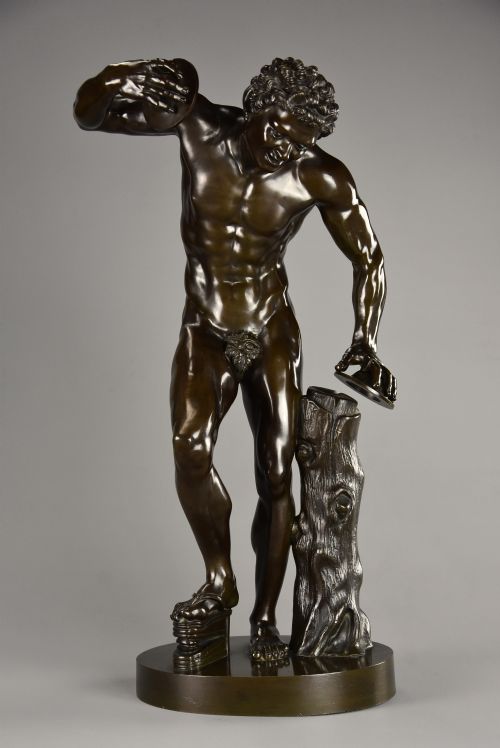
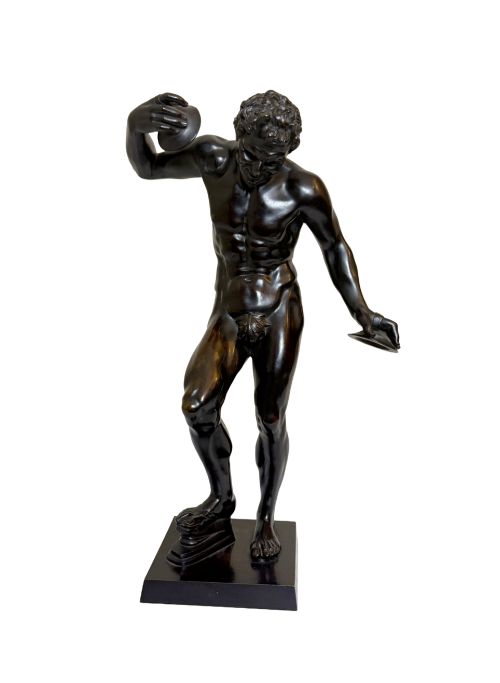
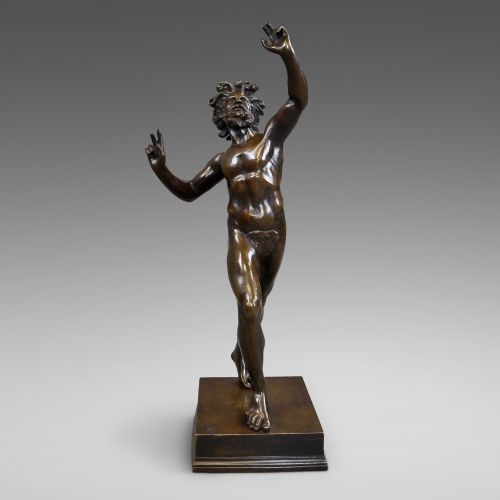


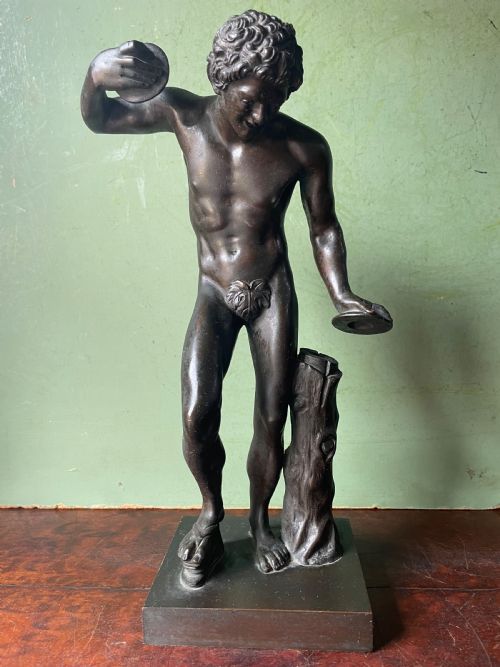


Bronze Dancing Faun Sculpture
A bronze dancing faun sculpture captures the spirited movement of classical antiquity, bringing lively mythological presence and refined patination into a room.
Bronze Dancing Faun Sculpture
A bronze dancing faun sculpture represents the classical mythological figure depicted in famous excavations at Pompeii, translating ancient excavation discoveries into cabinet-sized works of art. These pieces emerge predominantly from nineteenth-century European foundries catering to travellers undertaking the Grand Tour across Italy.
The most common form encountered here is the smaller souvenir reduction after the antique, cast in bronze or patinated metal to capture the dynamic posture of the dancing faun. Alongside these metal casts, collectors also find occasional plaster figures and variants depicting Bacchus or Pan holding cymbals and clappers.
Originating largely from Italian and French workshops, these sculptures reflect the neoclassical taste of the Victorian era. Buyers searching for a bronze dancing faun sculpture typically select between rich dark patinas and subtle green finishes that mimic ancient burial surfaces.
Materials and casting methods
Foundries utilised traditional bronze casting techniques to create these reductions, shaping molten metal into detailed statues supported by marble or stone bases. The application of a dark bronze patina or green patination was carefully managed to simulate the aged appearance of excavated antiquities.
Selected pieces incorporate white marble plinths or stone mounting, providing a stable classical base that contrasts sharply with the dark metal of the sculpture. Plaster was occasionally employed for alternative study pieces, though bronze and patinated metal remain the primary mediums of the period.
Bronze Dancing Faun Sculpture Retail Price Guide 2026
Typical asking prices for bronze dancing faun sculpture among the pieces listed under this phrase on Sellingantiques today, from the lower quarter to the upper quarter. They describe what is for sale here now, not the wider market.
Listings feature nineteenth-century materials including bronze, patinated bronze, metal, plaster, marble, and stone.
Distinctions in quality
The depth and stability of the patination, together with the quality of the supporting marble or stone base, mark the distinction between mass-produced items and finer neoclassical commissions. Maker stamps and documented signatures further elevate the standing of an individual casting.
Duchemin·Augusto Rivalta
The Bronze Dancing Faun Sculpture Glossary
- Grand Tour
- A traditional educational journey of Europe undertaken by upper-class young men in the eighteenth and nineteenth centuries, resulting in the acquisition of classical art souvenirs. These bronze figures served as tangible reminders of Italian museum collections and archaeological sites.
- Reduction
- A scale copy of a larger sculpture, often produced in bronze to allow collectors to display famous antiquities within domestic interiors. These reductions were meticulously measured from original museum pieces in Naples and Rome.
- Patination
- The chemical treatment or natural weathering applied to the surface of bronze to alter its colour and protect the metal. Green and dark brown patinations were deliberately chosen to imitate ancient buried statues.
- Cymbals
- Small metal plates held in the hands of the dancing faun to create rhythmic accompaniment, frequently cast as separate removable elements in higher quality pieces. They define the specific iconography of the Pompeian statue.
- Neoclassical
- A style revived during the eighteenth and nineteenth centuries that drew direct inspiration from the classical art and culture of ancient Greece and Rome. This aesthetic governed the design and proportion of Grand Tour souvenirs.
Bronze Dancing Faun Sculpture: Frequently Asked Questions
What is a bronze dancing faun sculpture?
These pieces are nineteenth-century metal casts modelled after the famous ancient Roman statue discovered at the House of the Faun in Pompeii.
They served as portable works of art for collectors acquiring classical antiquities during European travels.
Where were these sculptures made?
The majority of these pieces originated in Italian and French foundries operating during the Victorian era.
Craftsmen produced them specifically to supply the demand from international travellers visiting museums and archaeological excavations.
How do I identify a Grand Tour piece?
Look for nineteenth-century casting techniques, characteristic dark or green patination, and mounting upon stone or marble plinths.
Many bear foundry marks, workshop stamps, or signatures indicating French or Italian origin.
How should I display a bronze faun?
Place the sculpture on a sturdy surface where light can catch the contours of the patinated metal and the details of the marble base.
Keep the piece away from direct heat sources and clean it gently with a dry, soft cloth.