



Bronze Dancer Marble Base
A bronze dancer marble base brings kinetic energy and geometric clarity into a room.
Bronze Dancer Marble Base
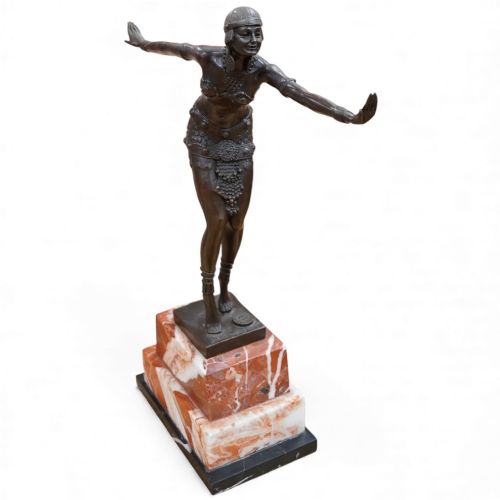
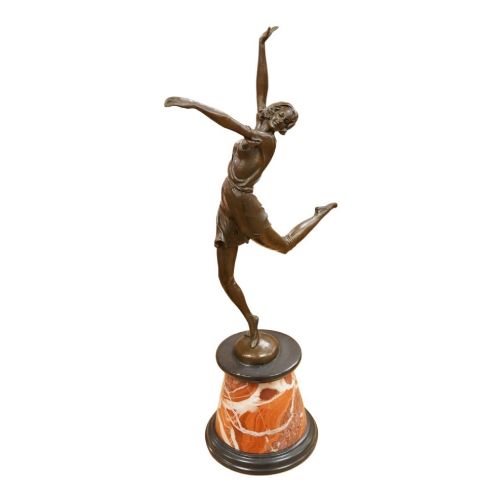
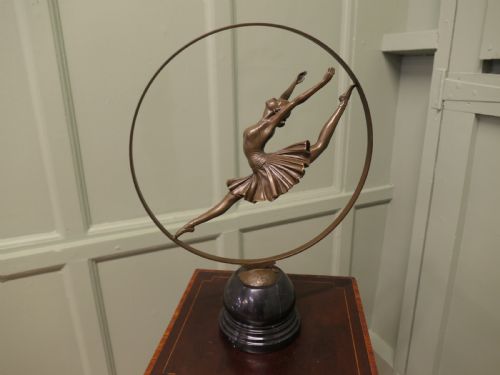
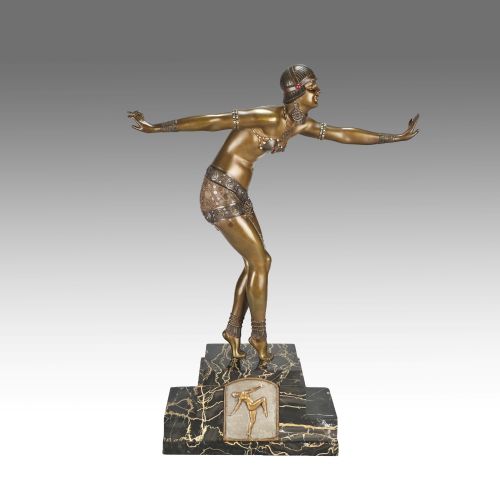
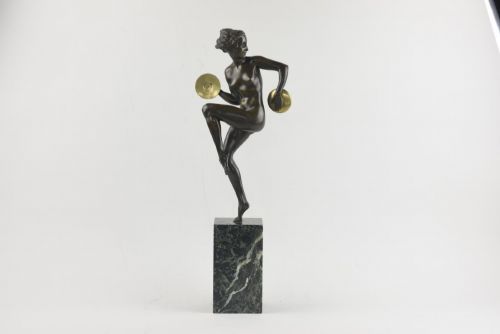
A bronze dancer marble base combines cast metal figures with stone plinths, most commonly seen in works from the 1920s and 1930s. These pieces capture movement through figures such as scarf dancers, hoop dancers, and figures inspired by ancient or theatrical traditions.
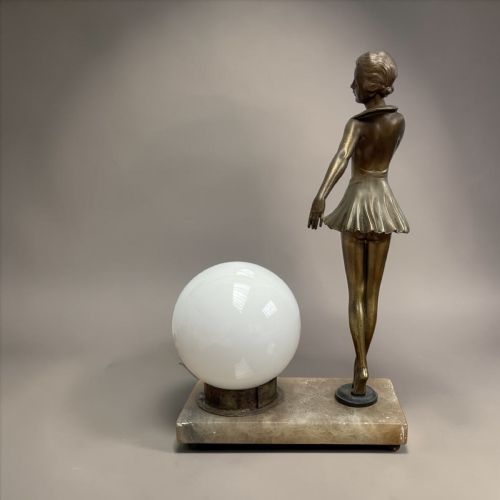
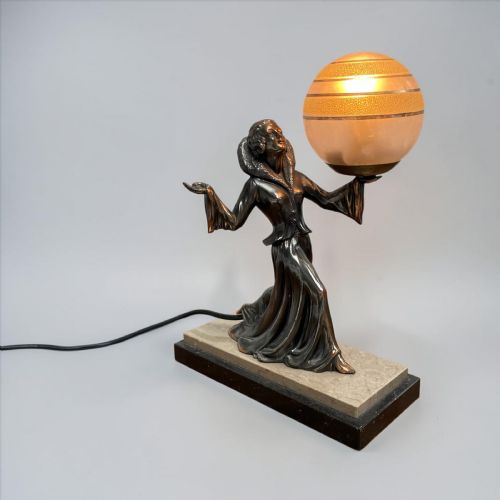
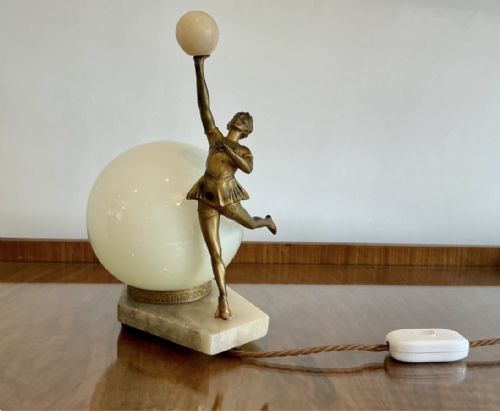
Art Deco and Art Nouveau styles dominate these listings, alongside 19th Century French examples. The figures range from small desk sculptures to substantial table lamps that incorporate glass elements.
Originating largely from French workshops, these sculptures reflect the sculptural ambitions of the early twentieth century. Buyers encounter both cold-painted finishes and silvered surfaces mounted firmly upon contrasting stone.
Materials and methods
Foundries utilised traditional casting methods for the metal components, employing bronze, gilt bronze, silvered bronze, and patinated metal. Spelter also appears as an alternative base metal in figures from the 1930s.
The heavy plinths rely on marble or onyx, providing a stable foundation for dynamic poses. Artisans finished surfaces through cold painting, gilding, or patination to accentuate the drapery and costume details of each dancer.
Current listings feature works created across four decades, spanning from the nineteenth century into the 1930s.
Factors of quality
The choice and density of the marble or onyx base contribute significantly to the overall presence of the object. Heavier, variegated stone plinths provide better structural integration with the metal figures mounted upon them.
Pierre le Faguays·Demetre Chiparus·Maurice Guiraud Riviere·Claire Jeanne Roberte Colinet·Josef Lorenzl
The Bronze Dancer Marble Base Glossary
- Cold-painted bronze
- A metal sculpture painted with natural pigments after casting rather than fired in a kiln. This technique allows for rich, multi-coloured costume details on dancer figures.
- Spelter
- A zinc alloy utilised as a less expensive alternative to bronze during the early twentieth century. It often receives a patinated finish to mimic heavier metal.
- Patinated metal
- A chemically treated surface that alters the colour of the metal to achieve tones ranging from deep brown to verdigris. This layer protects the underlying material while adding visual depth.
- Onyx
- A banded variety of chalcedony quartz frequently utilised for lamp bases and sculptural plinths. Its translucent qualities contrast with opaque metal figures.
- Gilt bronze
- Bronze coated with a thin layer of gold leaf or gold amalgam. The process heightens the reflective qualities of decorative sculptures.
Bronze Dancer Marble Base: Frequently Asked Questions
Are these figures solid bronze?
Many sculptures use cast bronze, while others employ patinated metal or zinc-based spelter. Each material has distinct weight and surface characteristics.
Examining the underside or the mounting points often reveals the base material beneath the surface finish. Spelter typically feels lighter and shows a different grain than cast bronze.
What periods do these pieces represent?
The selection spans from the late 19th Century through the Art Nouveau period and peaks during the 1920s and 1930s Art Deco era. Each decade introduced distinct stylistic interpretations of the human form in motion.
Twentieth-century examples often favour stylised geometry and theatrical costume. Earlier 19th Century French pieces tend toward classical naturalism.
How are lamps integrated into these sculptures?
Certain Art Deco lady lamp designs incorporate illumination directly into the sculptural composition, often pairing frosted glass elements with metal figures. The light source highlights the contours of the dancer.
Electrical components in older lamps require professional inspection to ensure safety standards meet current requirements. Original wiring should be assessed before regular use.