





1930s Spelter Dancer Sculpture
A 1930s spelter dancer sculpture captures the unmistakable geometric energy of the period through dynamic female figures.
1930s Spelter Dancer Sculpture
A 1930s spelter dancer sculpture embodies the stylish momentum of the interwar period. These decorative figures capture dynamic female forms in motion, often adopting poses associated with the dance styles of the era.
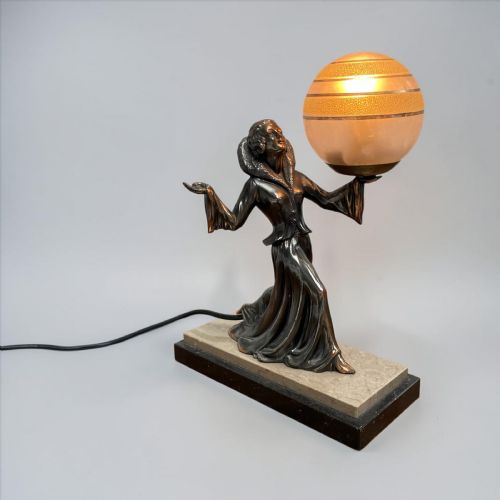
Most examples found on this page date from around 1930, though some pieces emerge from the 1920s. They take various functional and decorative forms, appearing as standalone figures, table lamps, and even table lighters.
Makers of the era designed these pieces to be displayed prominently on mantelpieces and sideboards. The figures frequently interact with architectural bases, balancing dramatic gestures against solid geometric foundations.
How these sculptures were made
The primary material is spelter, an alloy typically based on zinc that allowed workshops to cast intricate details economically. This metal took patination exceptionally well, allowing artisans to simulate the appearance of more expensive bronzes.
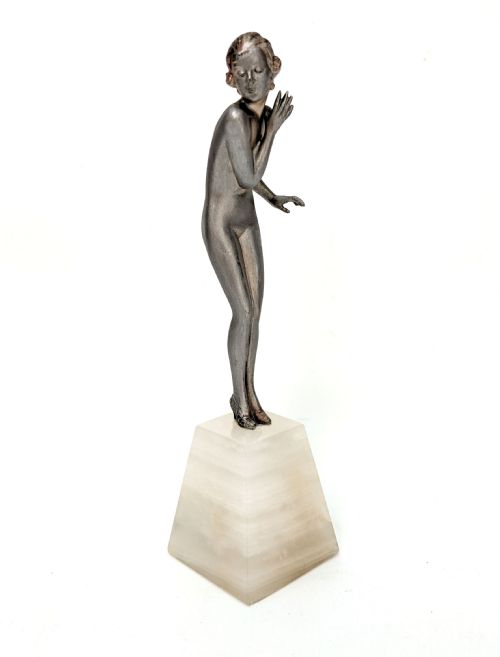
Makers mounted these metallic figures onto heavy contrasting plinths. Marble and onyx provide dense, decorative foundations that balance the slender proportions of the dancing figures.
Some multi-component pieces integrate delicate elements such as frosted glass into the composition. These glass components often serve as lamp shades or glowing globes held aloft by the dancer.
The inventory records functional objects from the era, including table lamps and table lighters incorporating dancing figures.
What varies in quality
The choice of base materials influences the overall presence of the piece. Dense, richly veined onyx and genuine marble plinths elevate the visual weight compared to simpler supports.
Josef Lorenzl
The 1930s Spelter Dancer Sculpture Glossary
- Spelter
- A zinc-based alloy commonly used in the twentieth century as an economical alternative to bronze. It accepts metallic finishes and patination readily.
- Patinated metal
- Metal treated with chemical solutions to produce a specific surface colour or aged finish. This technique highlights the contours of the dancer's form.
- Onyx
- A banded variety of chalcedony prized for its translucent layers and decorative patterns. It frequently serves as a heavy, polished base for figurative sculptures.
- Alabaster
- A fine-grained, translucent stone used for sculptural bases and architectural elements. Its soft appearance contrasts with the metallic body of the dancer.
- Frosted glass
- Glass treated by acid-etching or sandblasting to create a diffusing, matte surface. It appears in sculptural lighting designs from the period.
1930s Spelter Dancer Sculpture: Frequently Asked Questions
What is spelter?
Spelter is a zinc-based alloy that makers utilised widely during the early twentieth century for decorative figures and lamps. It provided a cost-effective alternative to bronze while maintaining fine casting detail.
Artisans applied various patination methods to the surface to imitate aged bronze or create metallic finishes suited to the aesthetic of the period.
How were these sculptures used?
These pieces served primarily as decorative ornaments for the home, capturing the modern artistic spirit of the interwar years. Many examples were also integrated into functional items such as table lamps and table lighters.
Owners displayed them prominently on mantelpieces, sideboards, and occasional tables where their dynamic silhouettes would stand out against contemporary interior backgrounds.
Why are they mounted on stone bases?
Mounting the metallic dancer on a heavy stone base provided essential physical stability for the tall, slender figures. Materials like marble and onyx added structural weight to prevent tipping.
The dense stone plinths also introduced contrasting colours and polished textures that enhanced the overall composition of the sculpture.
How do I identify the period?
Sculptures from this era display distinct stylistic traits associated with the geometric aesthetic of the interwar decades. The poses, costuming, and facial styling reflect the popular culture of the period.
Materials like patinated spelter combined with onyx or marble bases serve as reliable indicators of manufacturing methods common around nineteen thirty.