




Bronze Cherub Candle Holders
Bronze cherub candle holders combine figurative sculpture with functional lighting, bringing classical French styling into domestic interiors.
Bronze Cherub Candle Holders
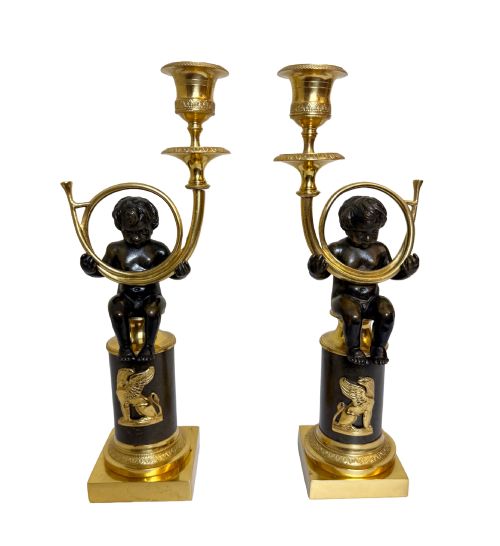
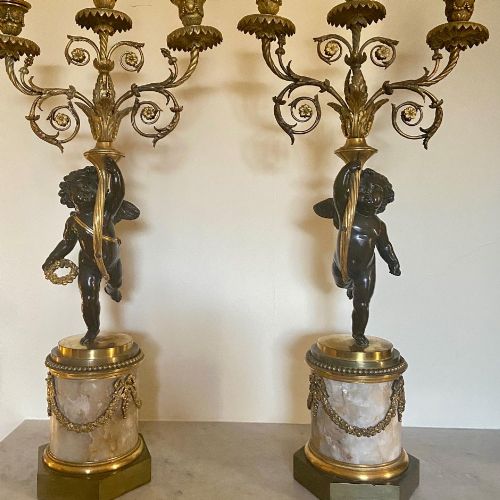
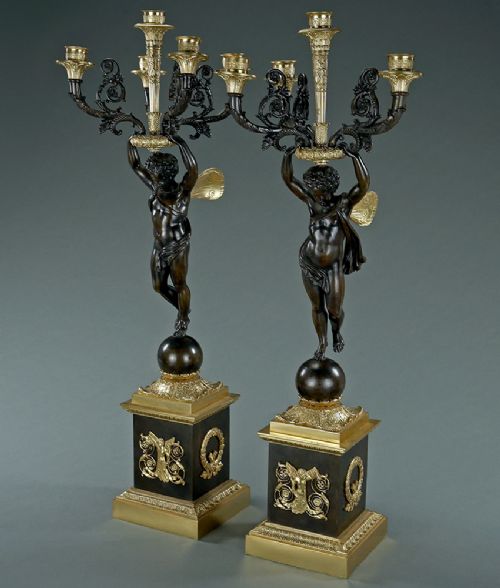
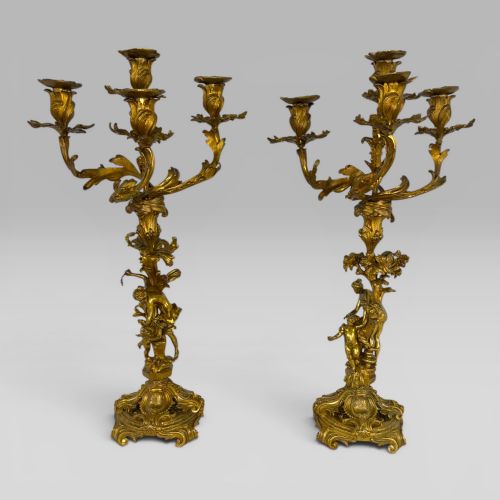
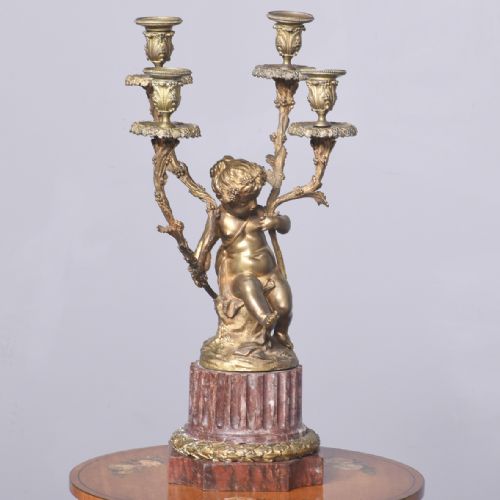
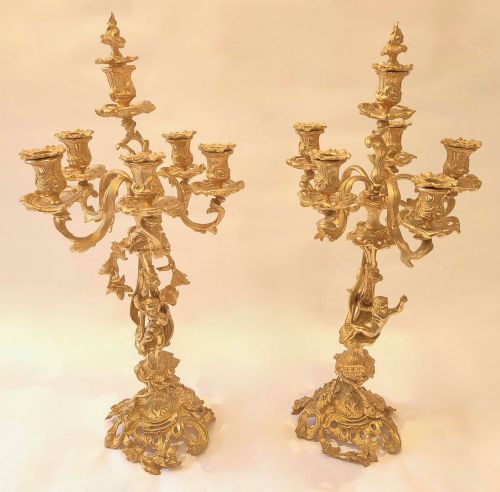
Bronze cherub candle holders encompass pairs of candlesticks, multi-arm candelabra, and clock garnitures featuring winged putti or cher figs. These pieces predominantly date from the nineteenth century, including Victorian, Regency, and Napoleon III periods, alongside earlier eighteenth-century examples.
The objects frequently pair patinated or gilt bronze with white marble bases, incorporating styles derived from French Empire, Louis XVI, and Rococo revivals. Buyers encounter single candlesticks and grand multi-light candelabra designed for mantelpieces and desks.
Materials and Technique
Casting utilises bronze, ormolu, and gilt or patinated metals combined with carved marble plinths and occasionally enamel or fluorspar inserts. Artisans employed lost-wax and sand-casting methods to shape the intricate figures of putti before chasing the metal surfaces by hand.
Gilding and chemical patination finish the bronze components, creating contrasts between bright ormolu highlights and dark patinated bodies. Metal branches and drip pans attach securely to the main figural stems to support multiple candles.
Listings feature items from the eighteenth and nineteenth centuries, spanning Regency, Victorian, and Napoleon III periods.
Craftsmanship and Proportion
Quality rests in the crispness of the bronze chasing and the anatomical modelling of the cherubs, where superior examples show distinct facial expressions and feather detail on the wings. Finer pieces integrate the marble bases harmoniously with the metalwork rather than relying on heavy, unrefined mounts.
The balance between the figural supports and the candle branches dictates overall harmony, with better-executed items maintaining stable proportions across multi-arm configurations.
Claude Clodion·Francois Redmond
The Bronze Cherub Candle Holders Glossary
- Ormolu
- Gilded bronze produced by applying a mercury and gold amalgam to the metal base and heating it. This technique creates a durable, golden surface finish common in French decorative arts.
- Putto
- A representation of a plump, naked male child, often winged, used extensively as a decorative motif in classical sculpture. These figures form the central cherub subjects of the candle holders.
- Candelabra
- A branched candlestick holding multiple lights on separate arms. These fixtures stand on decorative bases and often incorporate central figural columns.
- Clock Garniture
- A matching set comprising a central mantel clock flanked by side objects such as candelabra or urns. They share unified materials and decorative themes.
- Patinated Bronze
- Metal treated with chemical solutions to produce a darkened or coloured surface layer. This finish contrasts with bright gilt highlights.
Bronze Cherub Candle Holders: Frequently Asked Questions
How do I clean bronze cherub candle holders?
Dust gently with a soft, dry brush to prevent the accumulation of dirt in the crevices of the chased metal. Avoid chemical polishes that can strip original gilding or patination from the surface.
Keep them away from direct moisture and handling oils, using only soft cloths for maintenance. Professional conservation is recommended for stubborn tarnish.
What is the difference between ormolu and gilt bronze?
Ormolu specifically refers to historic fire-gilding where a mercury-gold amalgam was bonded to bronze through heat. Gilt bronze is a broader term that can include various modern or historical plating methods.
Both finishes yield a bright golden appearance, but historic fire-gilding possesses a distinct lustre and texture.
Were these pieces originally wired for electricity?
These items were manufactured exclusively for wax candles before electric lighting existed. Many surviving examples retain their original drip pans and sockets without modification.
Converting them for modern electrical use alters the original structure, so many collectors prefer to keep them in their original configuration.
How can I tell a nineteenth-century piece from an earlier one?
Nineteenth-century pieces often reflect Revival styles like Louis XVI or French Empire, utilising specific casting techniques and marble selections common to that era. Examination of assembly screws, threading, and wear patterns helps indicate age.
Markings, patination characteristics, and the sharpness of the bronze chasing further assist in determining the period of manufacture.