

Bronze and Marble Urns
These bronze and marble urns combine patinated metalwork and heavy stone bases, bringing classical proportion and nineteenth-century craftsmanship into domestic interiors.
Bronze and Marble Urns
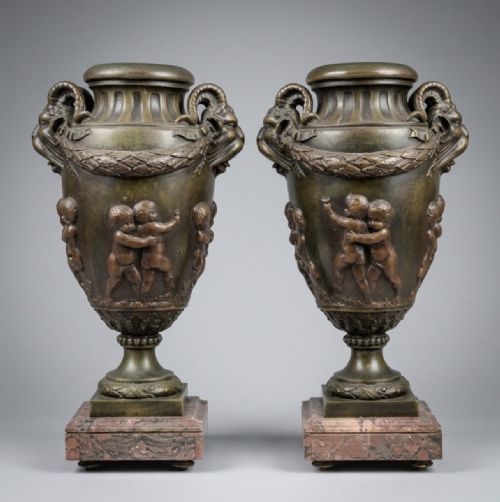
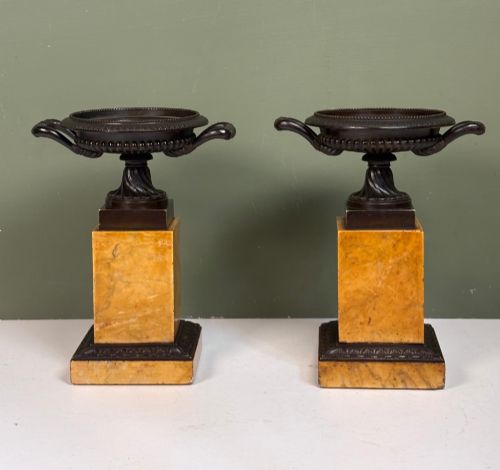
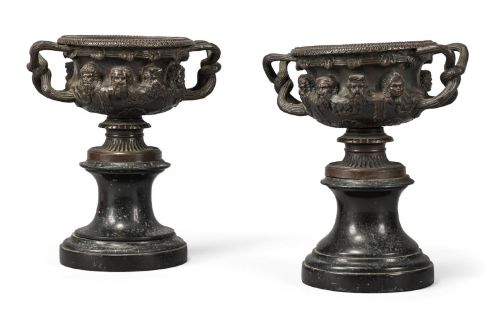
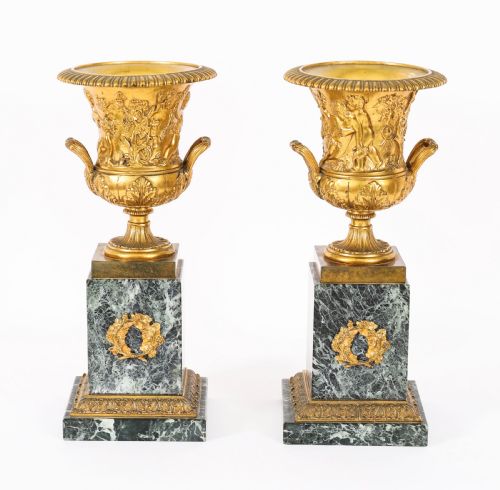
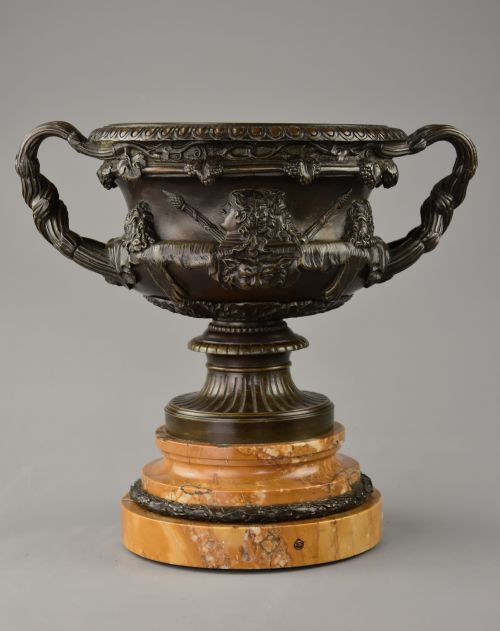
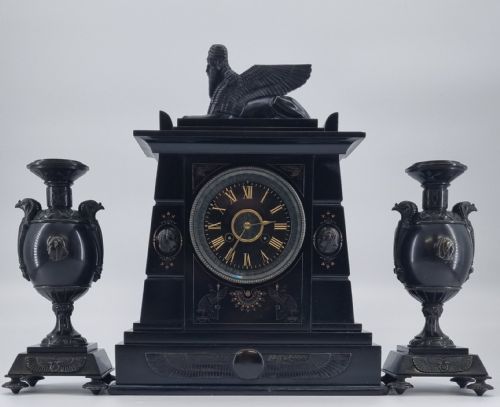
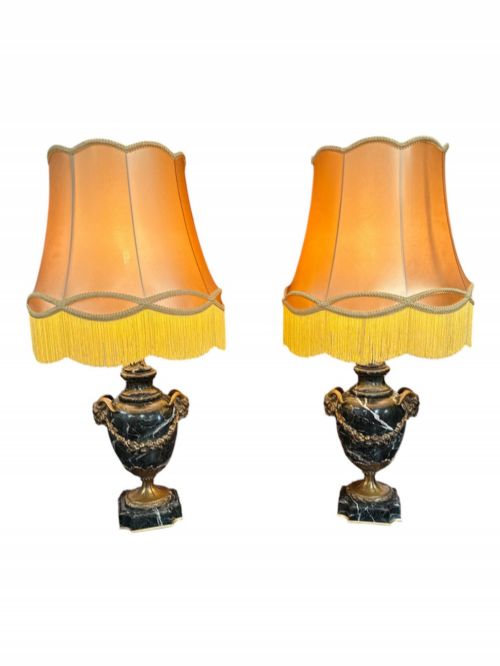
Bronze and marble urns draw heavily on classical antiquity, frequently taking the form of Campana, Medici, or Warwick models produced during the nineteenth century. These decorative vessels often appear paired as garnitures, mantel ornaments, or later adaptations fitted as table lamps.
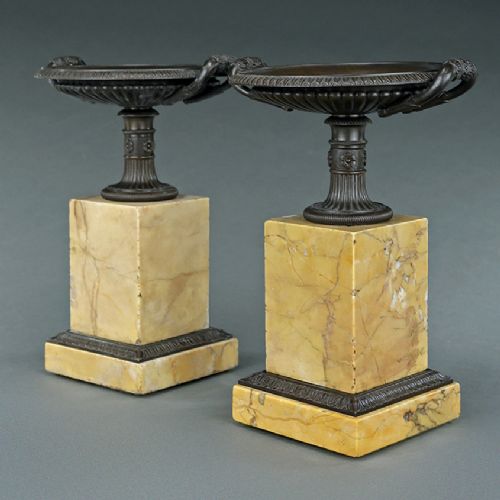
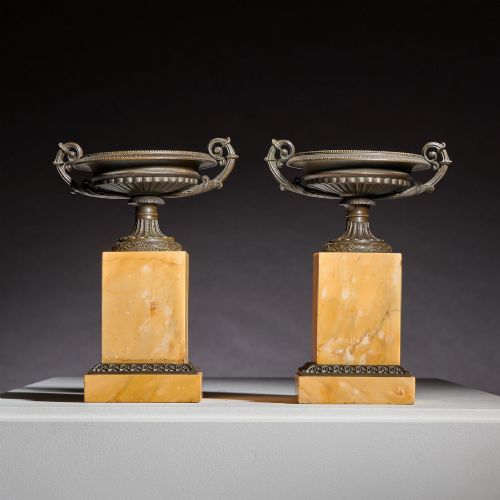
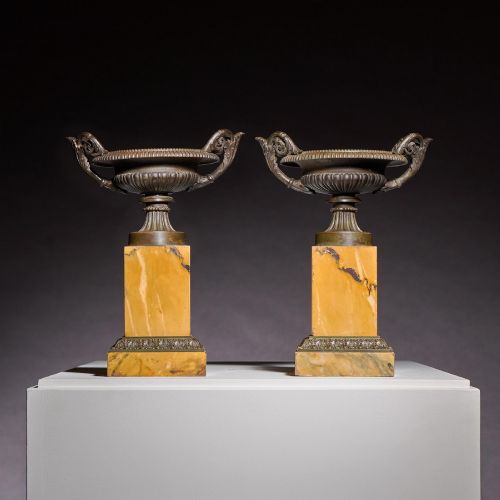
French workshops dominate the surviving output, particularly pieces reflecting French Empire, Louis XVI, and Egyptian Revival aesthetics. Alongside traditional urns, the category encompasses related ornamental forms such as tazzas, cassolettes, and inkwells sharing the same metal and stone vocabulary.
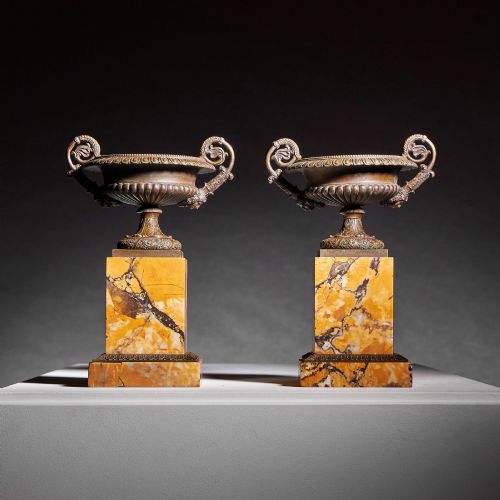
Grand Tour souvenirs form a significant portion of these objects, bringing miniature reductions of ancient monuments back to European drawing rooms. White, rouge, and Sienna varieties of marble provide substantial plinths for patinated or gilded metal components.
Materials and construction methods
Foundries cast the metal components in bronze, brass, or spelter before applying patination, gilding, or ormolu finishes to highlight classical relief details. Master founders chased the cooled metal surfaces by hand to sharpen foliage, Bacchic masks, and figural friezes.
Turned and carved marble forms the structural base or central body of the vessels, secured with internal threaded metal rods through the core. Siena, white, and rouge varieties are paired with cast mounts using traditional adhesives and mechanical fittings.
Early collectors often brought home miniature temples alongside their bronze urns, turning modest Victorian mantelpieces into miniature archaeological excavations.
Distinctions in execution and finish
Quality rests principally in the crispness of the metal chasing and the depth of the original mercury gilding or patination. Finer examples exhibit sharply rendered classical motifs without softness in the casting, whereas lesser pieces rely on simpler cast surfaces or later replacement bases.
The selection and density of the marble plinth also signal distinction, with rich fossilisation and well-balanced proportions separating standard decorative items from superior cabinet pieces.
The Bronze and Marble Urns Glossary
- Ormolu
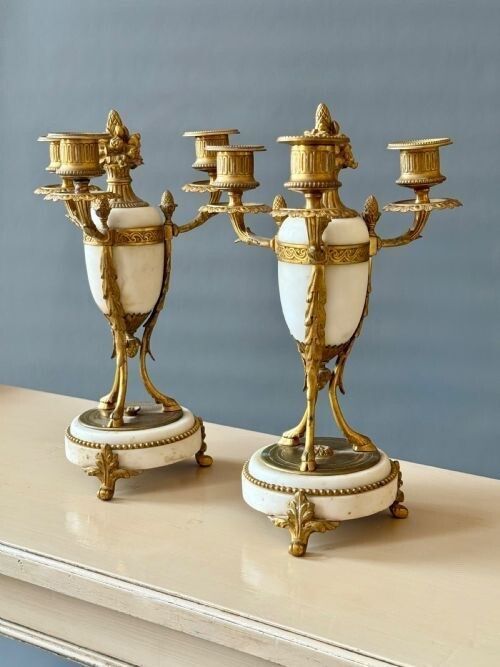
- Gilt bronze produced by applying a mixture of gold and mercury to a bronze base and firing it in a kiln. This technique creates a durable, golden finish characteristic of French decorative arts.
- Campana urn
- A bell-shaped vessel with a flaring rim and foot, originating from ancient Roman pottery. These forms are frequently rendered in bronze and mounted on square marble plinths.
- Tazza
- A shallow saucer-shaped vessel raised on a stem and foot, often utilised as a decorative centrepiece. They appear frequently in nineteenth-century cabinet collections.
- Grand Tour
- A cultural journey across Europe undertaken by wealthy young men during the eighteenth and nineteenth centuries. Travellers collected miniature bronzes and marble antiquities as evidence of their travels.
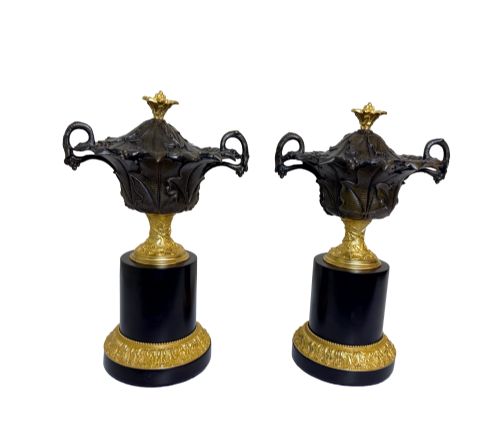
- Cassolette
- A decorative vessel with a reversible lid that functions either as an urn or a perfume burner. Many feature combined marble bodies with cast bronze mounts.
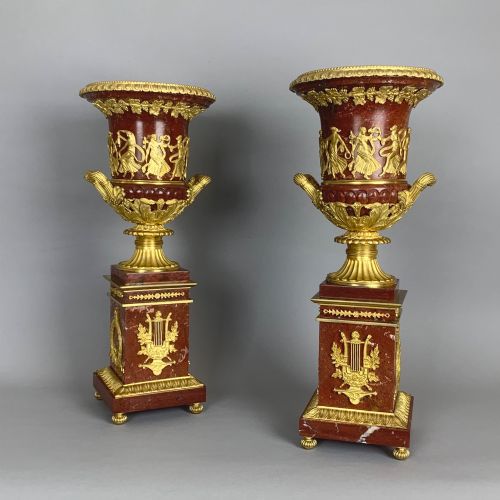
- Medici urn
- A large bell-shaped krater carved with classical figural reliefs, named after the marble antique housed in Florence. Nineteenth-century founders reduced these monuments into domestic bronze and marble ornaments.
Bronze and Marble Urns: Frequently Asked Questions
What is a Grand Tour urn?
Grand Tour urns are nineteenth-century reductions of famous classical monuments created for travellers exploring Italy. They served as scholarly souvenirs for private libraries and drawing rooms.
Craftsmen cast these pieces in bronze and mounted them on coloured marble bases to replicate ancient archaeological finds in miniature.
How do you clean antique bronze and marble?
Dust bronze surfaces gently with a dry microfibre cloth and avoid abrasive polishes that strip historic patination. Marble requires simple wiping with a damp cloth, steering clear of acidic cleaners that etch the polished stone.
Preserving the original surface skin maintains the integrity and visual depth of both materials.
Are these urns waterproof?
Most antique bronze and marble urns are decorative objects rather than functional vases. Their internal construction often includes metal rods securing the stone base to the upper vessel.
Placing water directly inside them risks damaging internal iron fittings, old adhesives, or the unsealed interior stone.
Why are some urns fitted as lamps?
Many nineteenth-century urns and cassolettes were converted into table lamps during the twentieth century to suit changing domestic lighting needs. Electric wiring typically runs through the central core without permanently altering the main decorative body.
Unconverted pairs remain scarcer and are generally preferred by purist collectors of classical garnitures.