

Bronze and Gilt Candlesticks
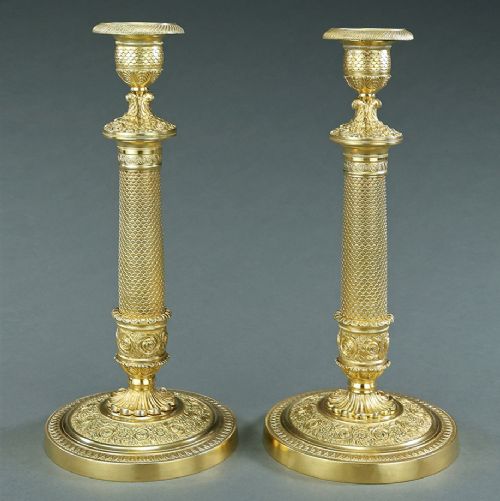
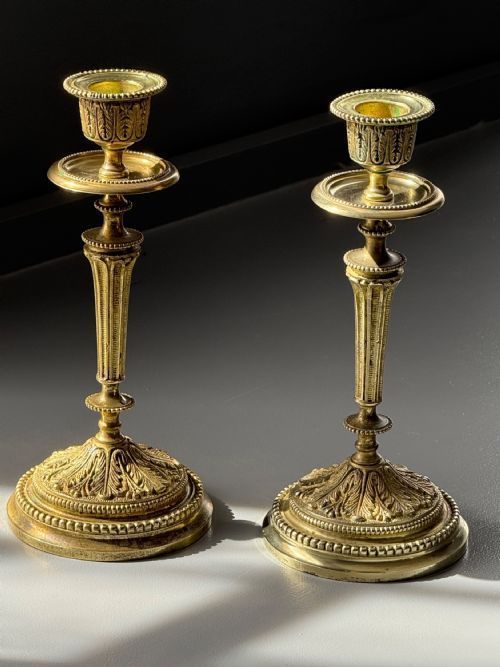
Bronze and gilt candlesticks bring the heavy, gleaming presence of nineteenth-century French and English salons straight onto a mantelpiece.
Bronze and Gilt Candlesticks
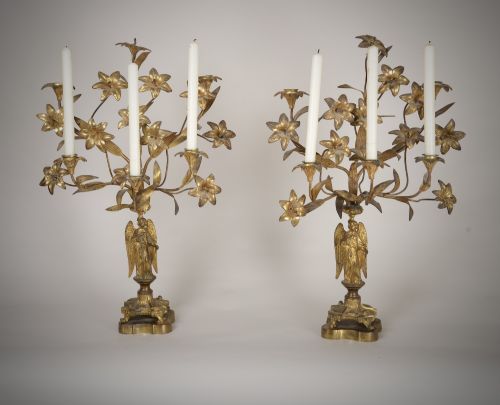
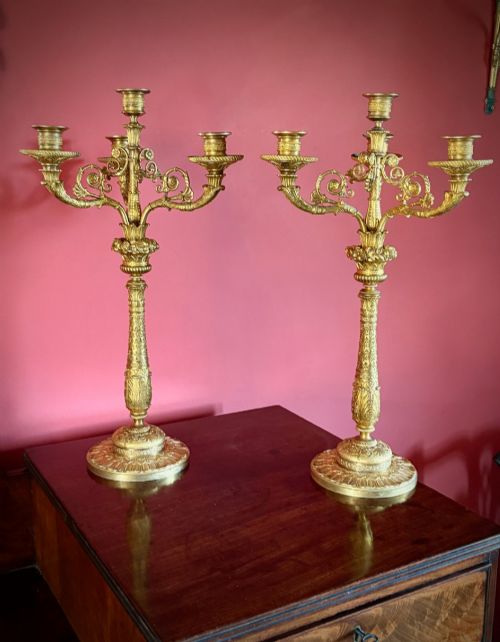
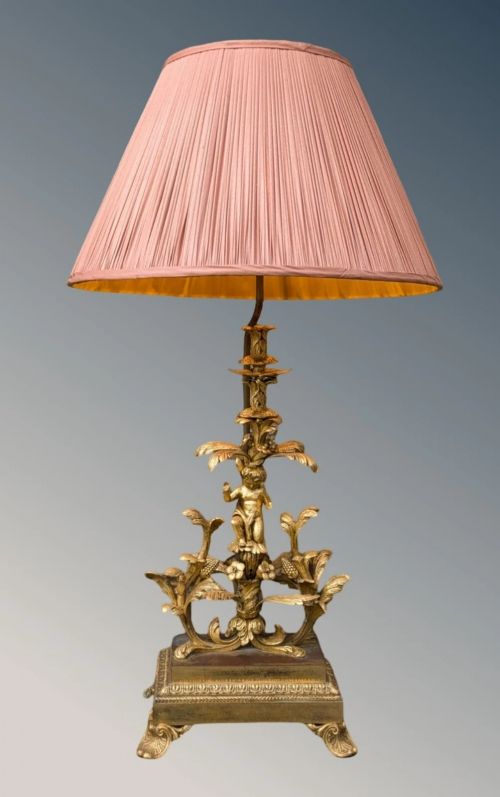
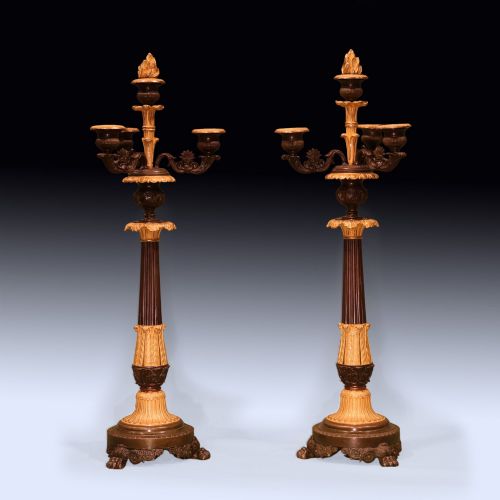
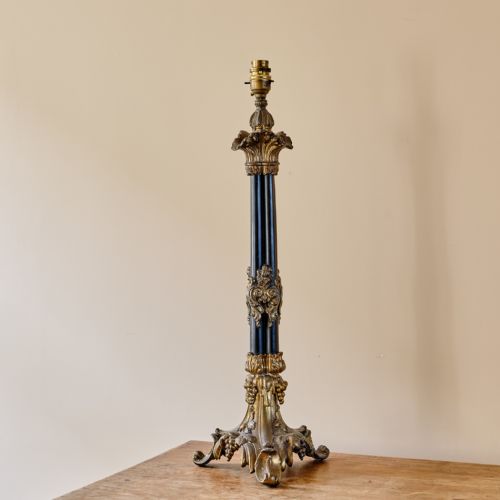
When you search for bronze and gilt candlesticks, you encounter pairs cast in styles ranging from French Empire and Louis XVI to Regency and Gothic Revival. These lighting pieces take the form of standard single-sconce candlesticks, multi-branch candelabra, and occasional table lamps converted from earlier oil fittings.
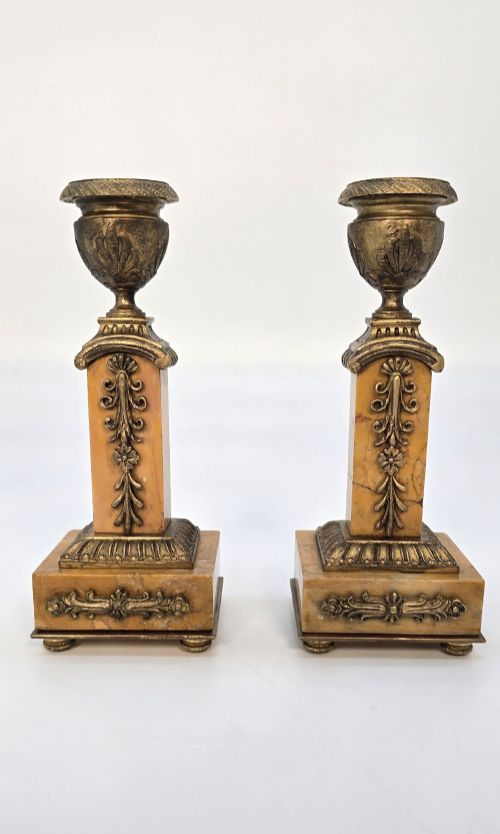
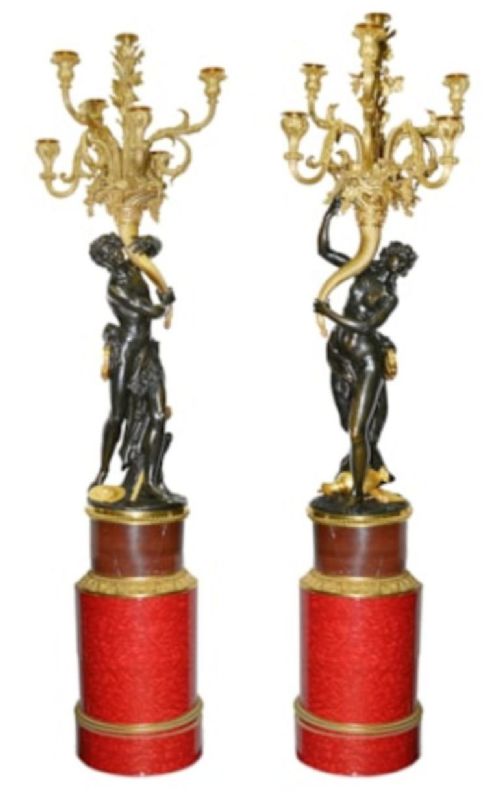
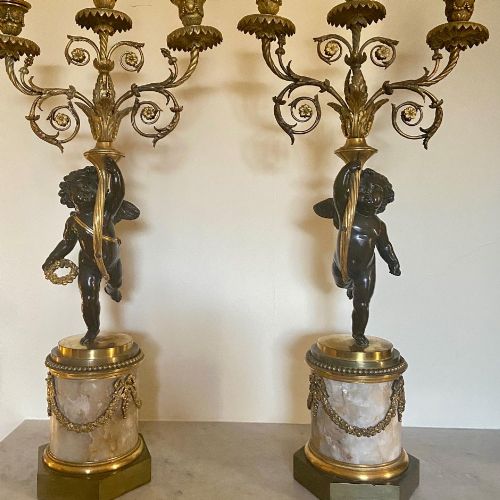
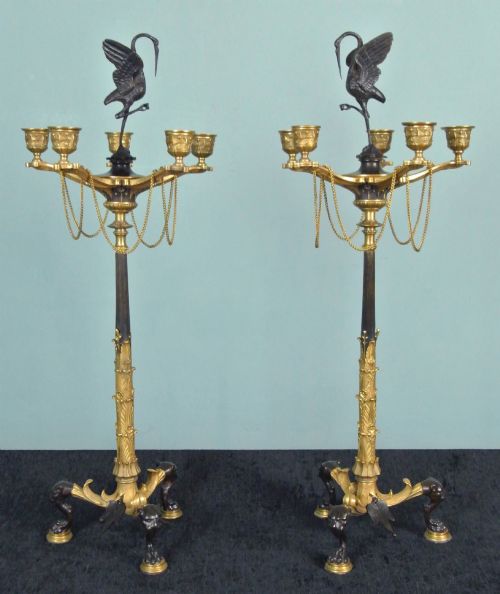
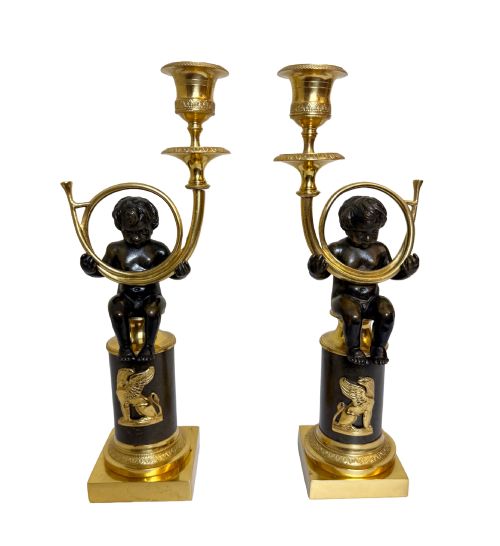
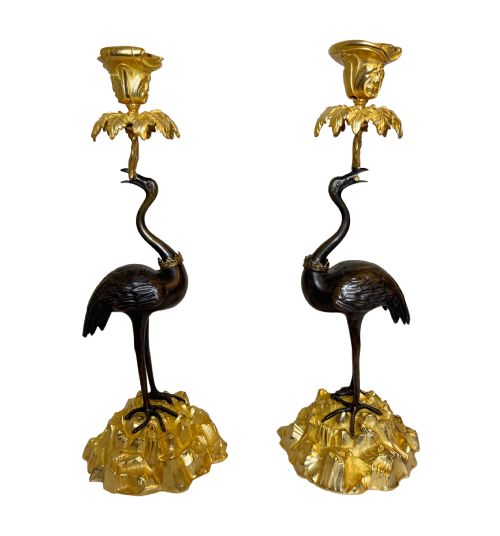
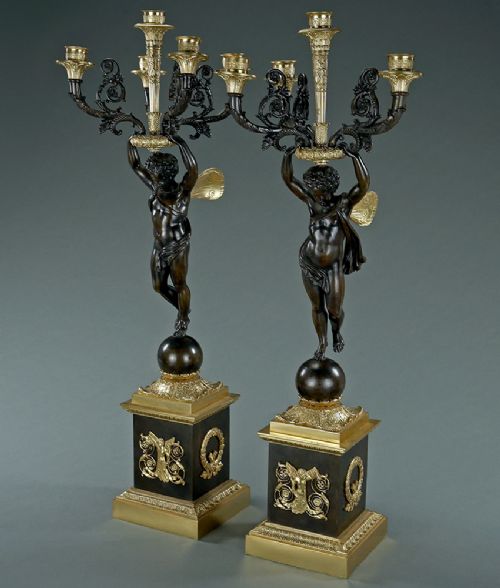
The selection here draws heavily from nineteenth-century production, particularly French workshops inspired by classical antiquity, incorporating figures like putti, caryatids, and animals amidst foliage. Pairs mounted on white marble or onyx bases dominate the offerings, alongside sculptural models cast as trees or columns with lion's paw feet.
Materials and casting methods
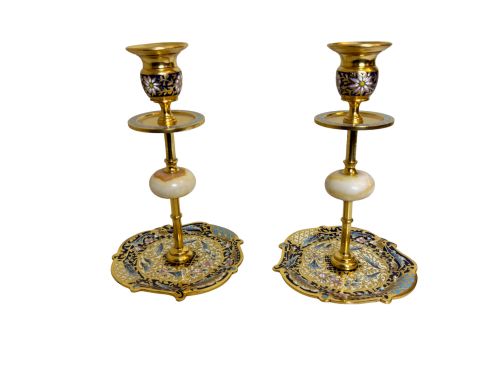
Maker's workshops built these objects using cast bronze, patinated dark or left in its natural metallic state, paired with bright ormolu or fire-gilt bronze for contrast. Artisans also integrated white marble, onyx, fluor spar, and champlevé enamel into the design to add colour and textural weight to the bases and stems.
The manufacturing process relied on lost-wax or sand casting to achieve sharp detail in the sculptural elements, followed by meticulous chasing of the metal surface. Mercury gilding or electroplating applied the gold finish, while components were mechanically joined with threaded screws and pins.
Bronze and Gilt Candlesticks Retail Price Guide 2026
Typical asking prices for bronze and gilt candlesticks among the pieces listed under this phrase on Sellingantiques today, from the lower quarter to the upper quarter. They describe what is for sale here now, not the wider market.
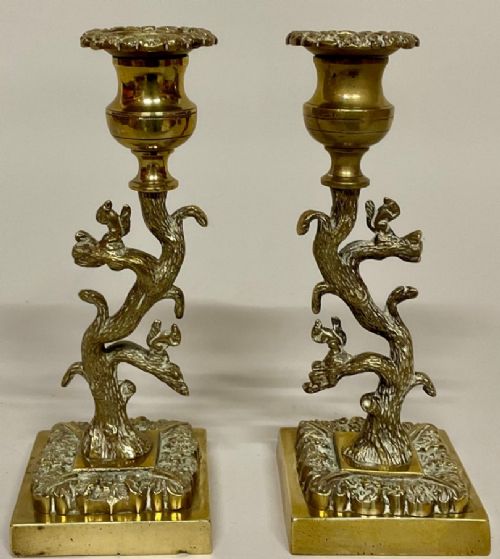
Squirrels clamber up cast bronze tree trunks among flickering candle flames in the more whimsical Regency designs.
Distinctions in execution
The richness and durability of the gilding further divide the ordinary from the exceptional, as genuine mercurial or heavy ormolu layers hold a warm, deep lustre compared to thin, brassy galvanic coatings. The choice and stability of secondary materials, such as solid carved marble or heavy onyx plinths rather than lightweight substitutes, signal superior workshop standards.
Francois Redmond·Dugourc·Barbedienne·Thomas Hope·Abel Landry
The Bronze and Gilt Candlesticks Glossary
- Ormolu
- Finely chopped gold amalgamated with mercury and applied to bronze, then heated to drive off the mercury and leave a durable gold surface. This technique produces a rich, matte-gold finish characteristic of high-end French metalwork.
- Champlevé
- An enamelling technique where troughs or cells are hollowed out of the metal surface and filled with vitreous enamel powder before firing. It creates colourful decorative patterns on nineteenth-century pieces.
- Caryatid
- A sculpted female figure serving as an architectural support or stem in place of a column. These figures frequently appear supporting the sconces on classical revival pieces.
- Campana
- A bell-shaped socket or sconce designed to hold the base of a taper or candle securely. The shape derives from classical Roman urns.
- Patinated bronze
- Metal treated with chemical solutions to produce a dark brown, green, or near-black surface coating. This dark finish provides visual contrast against bright gilt elements.
Bronze and Gilt Candlesticks: Frequently Asked Questions
Were these originally for candles?
The majority of these pieces were cast specifically for wax candles during the nineteenth century or earlier. Sconces and drip pans caught the melting wax before it reached the table.
Many surviving examples have subsequently been wired for electricity as table lamps. Look for original sockets and unplugged wiring channels to determine if the conversion is modern.
How can I tell French from English work?
French production generally leans toward neoclassical figures, crisp mercury gilding, and intricate cast mounts involving putti, caryatids, and mythological motifs. The proportions tend to be theatrical and decorative.
English pieces, such as those influenced by Regency designers, often emphasise architectural restraint, heavy patination, and naturalistic fauna like squirrels or stags among oak branches.
Why are some mounted on marble?
Marble and onyx plinths provided weight and stability to tall, top-heavy candelabra and sculptural candlesticks. The stone also introduced contrasting tones of white, green, or grey beneath the gleaming bronze.
These plinths are integral to the nineteenth-century neoclassical aesthetic, echoing ancient architectural fragments and stone pedestals.