




British Topographical Watercolour Art
British topographical watercolour art records landscape and townscape views with pigment on paper, offering a direct record of places past.
British Topographical Watercolour Art
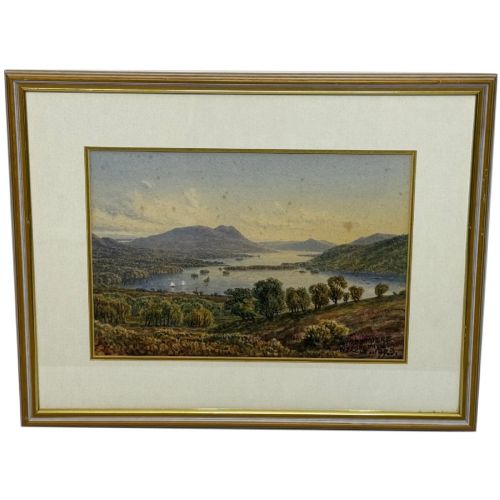
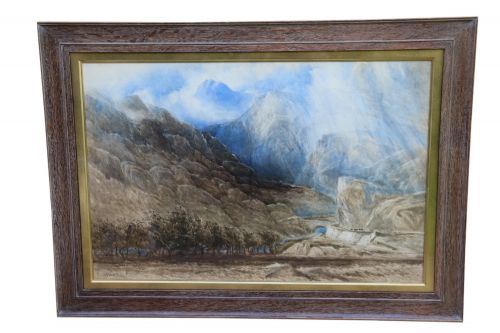
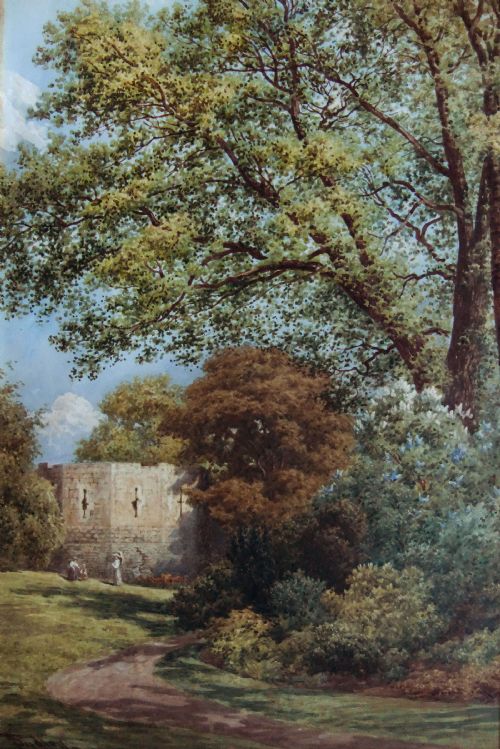
British topographical watercolour art captures specific locations, ranging from Welsh mountain passes and Yorkshire rivers to city scenes along the Thames in London. These works take the form of watercolour paintings and wall art framed behind glass, often in wood or gilt wood frames.
The selections span multiple periods, including Georgian, Victorian, Edwardian, and mid-twentieth century examples. Viewers encounter pieces dated from eighteen hundred through the nineteen fifties, reflecting changing techniques across the centuries.
How they were made
Artists apply watercolour pigment onto paper supports using fluid washes and fine brushwork to delineate architectural details and natural scenery. Many examples combine the paper painting with protective glass and wooden framing, occasionally enhanced with gilt finishes.
The execution relies on water-soluble pigments handled with precision to capture light and atmosphere outdoors or in the studio from initial sketches.
Listings feature works across multiple periods, ranging from the early nineteenth century through Edwardian times and into the nineteen fifties.
What varies in quality
Quality rests upon the skill of the draughtsman in rendering perspective, scale, and the specific character of a named location. Stronger works display confident brush handling and careful observation of light rather than mechanical repetition.
The condition of the paper and the vibrancy of the pigments separate fine examples from faded or heavily discoloured sheets. Original framing and attribution to a named hand also influence the character of an individual piece.
William Taylor Longmire·Henry Martin Pope·A. G. Hayward·H. E. Tidmarsh·Amos Green·Tom Dudley·Claude Muncaster·William A. Macdonald·Herbert John Finn·J. D. Walker·T Fairfax
The British Topographical Watercolour Art Glossary
- Topographical art
- Artworks depicting specific, recognizable real-world locations such as towns, rivers, and buildings. These pieces serve as visual records of places at a given date.
- Watercolour
- A painting method where natural or synthetic pigments are suspended in a water-based solution. The medium relies on the white of the paper to provide luminosity through translucent washes.
- Edwardian
- A period spanning the reign of King Edward the Seventh up to the First World War. Works from this era often exhibit lighter palettes and impressionistic tendencies.
- Gilt wood
- Wood treated with a thin layer of gold leaf or metallic gilt paint. It is commonly utilised for picture frames accompanying antique watercolours.
British Topographical Watercolour Art: Frequently Asked Questions
What is British topographical watercolour art?
These works are paintings created with pigment on paper that depict specific geographic locations, buildings, and landscapes across Britain.
They serve as historical records of towns and countryside views spanning the Georgian era to the mid-twentieth century.
How should I display watercolour art?
Watercolours require protection from direct sunlight to prevent the pigments from fading over time.
Display them on interior walls away from moisture and heavy temperature fluctuations using appropriate glass framing.
How can I tell the period of a watercolour?
Dating relies on the costume of any figures depicted, architectural details, artist signatures, and framing styles.
Paper quality and mounting techniques also offer clues to whether a piece originates from the nineteenth or twentieth century.
Were these painted outdoors?
Artists often executed preliminary sketches and washes on site in the open air to capture accurate topographical details.
Final works were frequently completed in the studio using these direct observations.